In 2017, Taco Bell announced plans to open 300 to 350 Cantina locations by 2022, each one serving beer, wine, sangria, and the chain's signature spiked Twisted Freezes. It was the boldest alcohol play in quick-service history. Nine years later, roughly 50 Cantinas exist.
That gap between ambition and reality is not a failure story. It is a data point, and perhaps the most honest assessment available of what alcohol actually does for QSR unit economics.
The allure is obvious. Draft beer carries a pour cost of 15 to 18 percent, translating to gross margins above 80 percent. Cocktails and spirits land at 75 to 82 percent. Compare that to restaurant food, where cost of goods sold typically runs 28 to 35 percent, and the arithmetic seems irresistible. But the path from gross margin to net profit in a quick-service setting is littered with costs that casual dining operators never had to think twice about.
From Wicker Park to Fisherman's Wharf#
The first Taco Bell Cantina opened in Chicago's Wicker Park neighborhood on September 22, 2015, an open-kitchen, drive-thru-free concept designed for dense urban neighborhoods. Then-COO Mike Grams described Cantinas as "urban learning labs" built to capitalize on millennial migration to city centers. The concept gained its highest-profile outpost in Las Vegas, where a location with a wedding chapel and DJ booth reportedly became the busiest Taco Bell in the world.
By August 2023, Nation's Restaurant News reported approximately 50 Cantinas operating across more than a dozen states. Recent openings at San Francisco's Fisherman's Wharf (January 2026) and a forthcoming Denver International Airport location (mid-April 2026, the first U.S. airport Cantina) suggest Taco Bell continues to add units. But the pace bears no resemblance to the 300-plus target from seven years earlier.
The chain's current growth strategy, branded RING (Relentlessly Innovative, Never Generic), targets $3 million average unit volumes (up from $2.2 million), 10,000 domestic restaurants, and $5 billion each in beverage and Cantina Chicken system sales by 2030. Notably, the RING strategy does not set a Cantina-format store count target. The $5 billion beverage goal is anchored by Live Mas Cafe, a non-alcoholic specialty drink concept, not by alcohol-serving Cantinas.
Yum Brands' Q4 2025 earnings showed Taco Bell generating $18.36 billion in global system sales, 7 percent same-store sales growth, and 24.4 percent restaurant-level margins across 9,030 units. The company does not break out Cantina-format financial performance in its SEC filings.
The Margin Mirage#
The gross margin case for alcohol is real. According to data compiled by BackBar, Toast, and Barmetrix, pour costs by category break down as follows:
| Category | Pour Cost | Gross Margin |
|---|---|---|
| Draft beer | 15-18% | 82-85% |
| Cocktails/spirits | 18-25% | 75-82% |
| Bottled beer | 24-28% | 72-76% |
| Wine by the glass | 35-45% | 55-65% |
| QSR food (comparison) | 28-35% | 65-72% |
Those numbers explain why every few years a QSR executive looks at the bar down the street and asks why they cannot capture some of that margin. But the gap between gross margin and net incremental profit is where the math falls apart for most QSR operators.
Licensing costs vary from manageable to prohibitive depending on jurisdiction. A Texas TABC Mixed Beverage Permit runs $5,300 for two years, plus county surcharges of up to 50 percent. Nevada charges $5,000 in application fees plus $2,400 annually. New York's restaurant wine license costs $1,280 to $2,000 for two years, with a 22-to-26-week processing timeline that can leave a finished build-out sitting idle. But in quota states where governments cap the number of available licenses, secondary market prices explode: $140,000 to $170,000 in Los Angeles, up to $400,000 in San Francisco, and $20,000 to $400,000 in Florida depending on the county, according to GGS Licensing, California ABC, and Liquor License FL data.
Insurance adds another layer. Liquor liability coverage averages $542 per year nationally according to Insureon, ranging from $228 annually in Illinois to $1,560 in New York. Dram shop laws in 43 states expose alcohol-serving operators to liability for damages caused by intoxicated customers.
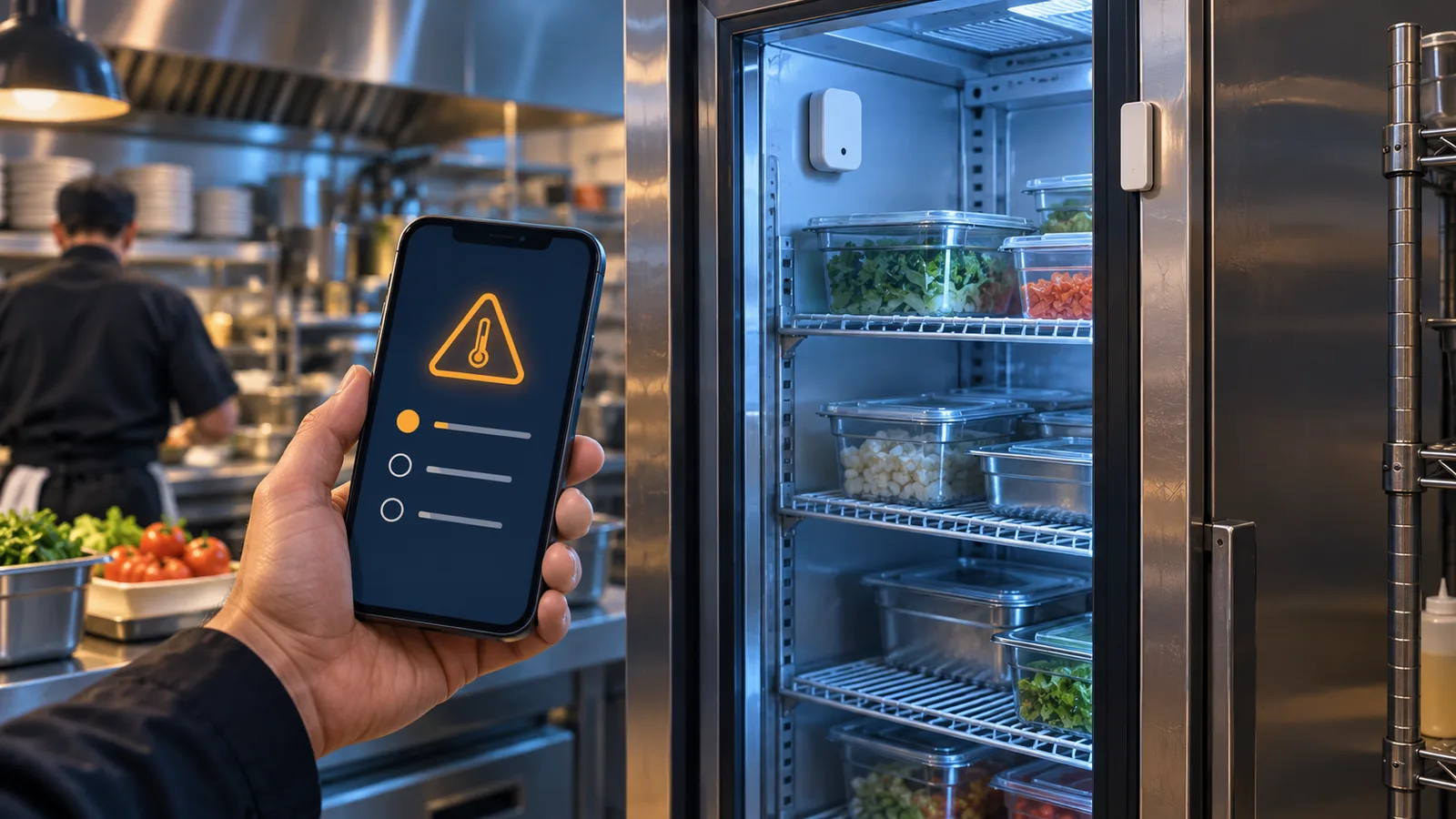
Labor is where the economics get particularly unfavorable for QSR. The Bureau of Labor Statistics reports bartender median wages at $16.12 per hour (May 2024 data), compared to $14.47 for fast-food workers. TIPS certification costs $40 to $50 per person and is valid for three years; ServSafe Alcohol runs $69 to $189. In an industry with annual turnover exceeding 100 percent, those training costs repeat constantly.
Chicago Cantina franchisee Neil Borkan described a telling operational wrinkle to Restaurant Business Online in 2016: because minors cannot ring up alcohol sales, he had to reverse the typical QSR staffing model, placing older workers on registers and younger employees on the food line. He also hired a private service to audit ID-checking compliance. These are costs that never appear on a casual-dining operator's radar, because casual dining was designed around a staffing model that already accommodates alcohol.
A Patchwork of Red Tape#
The regulatory environment may be the most underappreciated barrier to scaling alcohol in QSR. In November 2021, Washington State's Liquor and Cannabis Board issued Policy Statement PS21-07, declaring that it "will not issue liquor licenses to fast food restaurants," citing concerns about "increased youth access to alcohol," "increased outlet density," and "lack of interaction with customers to monitor alcohol sales." It is the first blanket state-level prohibition of QSR alcohol service.
Washington remains an outlier for now. But the policy reflects broader regulatory friction that complicates expansion in individual municipalities. A planned Taco Bell Cantina in Boulder, Colorado, closed after failing to secure alcohol permits, according to Westword. Geographic restrictions requiring minimum distances from schools, churches, and other alcohol-serving establishments limit the available real estate in many markets.
What the Competition Has Learned#
Taco Bell is far from the only chain to test this thesis. The competitive results are remarkably consistent.
Chipotle has served beer and margaritas at select locations for nearly 30 years, making it the longest-running alcohol experiment in fast-casual. The chain offers Patron margaritas ($6.50 to $8.00) at roughly half of its 4,056 U.S. locations. Yet alcohol accounts for approximately 2 percent of Chipotle's $11.926 billion in FY2025 revenue, per Business Insider data cited by Tasting Table. Three decades and more than 2,000 alcohol-serving locations have not made alcohol a meaningful revenue stream.
Shake Shack takes a more premium approach, offering beer, wine, and cocktails at most of its 373 domestic company-operated locations. In 2025, the chain opened its first dedicated in-restaurant bar at an Atlanta location, signaling willingness to lean further into alcohol. But Shake Shack's FY2025 10-K groups all food and beverage into a single $1.445 billion revenue line. The absence of a separate alcohol disclosure suggests the contribution is not material.
Starbucks provides the most instructive cautionary tale. The chain's Evenings program, launched in 2010, brought wine and beer to company-owned stores with the goal of driving traffic after 4 p.m. By early 2017, Evenings had reached 439 locations. Then Starbucks killed the program entirely. Baristas resisted table-service behaviors. The food pairings felt misaligned with the brand. The program failed to attract incremental customers; it simply shifted what existing guests ordered, according to QSR Magazine's post-mortem. Starbucks now limits alcohol to approximately six Reserve Roastery locations worldwide.
Pizza Hut expanded beer delivery to roughly 300 restaurants across seven states in 2019, with plans to reach 1,000. More than 1,500 dine-in locations offer beer and wine. But the program has largely disappeared from Yum Brands' earnings narrative, suggesting it has not moved the financial needle.
The pattern holds across formats. As you move from casual dining, where Chili's generates 9.3 percent of sales from alcohol per Brinker International's FY2025 10-K and Texas Roadhouse produces roughly $604 million annually per Technomic, to fast-casual to QSR, alcohol's revenue contribution drops from 9 to 13 percent to 1 to 3 percent to negligible. The structural reason: a 20-minute counter-service meal does not create the conditions for repeat drink orders. The dining occasion, not the menu or the license, determines alcohol economics.
The Franchisee Divide#
Franchisee sentiment on Cantinas splits along predictable lines: scale and sophistication.
Diversified Restaurant Group, a 325-plus-location multi-brand operator, runs seven Taco Bell Cantinas and continues to pursue the format, according to Nation's Restaurant News. DRG has reported that its Cantinas outperform standard Taco Bell drive-thrus by approximately 25 percent on top-line revenue, excluding the Las Vegas anomaly, per Franchise Times. For large, well-capitalized franchisees with existing compliance infrastructure, Cantinas represent a differentiated, high-performing asset.
Smaller operators see the equation differently. In 2023, franchisee Alfarah Restaurant Group sued to block a Cantina opening in Indianapolis, arguing that an alcohol-serving location 0.1 miles from their existing non-alcohol Taco Bell created unfair competition and violated their franchise agreement, according to WISH-TV. The Cantina opened despite the lawsuit. But the case reveals a tension inherent in any system-wide alcohol program: not every franchisee wants an alcohol-serving competitor operating under the same brand in their market.
Swimming Against the Current#
Demographic headwinds make the scaling challenge harder still. Total U.S. alcohol consumption volumes have declined 19 percent since 2019, including a 4 percent year-over-year drop in the first half of 2025, according to Restaurant Business Online. Gallup reports that the share of Americans who drink has fallen to 54 percent.
Even casual dining is adjusting. Chili's alcohol mix slipped from 10.2 percent of company sales in FY2022 to 9.3 percent in FY2025, per Brinker's 10-K filings. The Dine Brands CEO noted a "mild switch" from alcohol to non-alcoholic drinks among Applebee's customers, according to CNBC.
The National Restaurant Association's 2024 survey found that 7 in 10 consumers who drink say alcohol availability influences their restaurant choice. But "consumers who drink" is a shrinking population. Meanwhile, 36 percent of alcohol-serving operators plan to add mocktails, a tacit acknowledgment that the beverage opportunity is shifting.
The Non-Alcoholic Pivot#
Taco Bell's own behavior tells the clearest story. While Cantina locations have grown to roughly 50 over a decade, the chain's Live Mas Cafe concept, a non-alcoholic specialty drink add-on embedded inside existing restaurants, opened 31 locations in 2025 alone, exceeding its 30-unit target, per Nation's Restaurant News.
The pilot location results were striking: a 40 percent sales lift with more than 300 specialty beverages sold per day. The chain's vision is a Live Mas Cafe inside every U.S. Taco Bell. The concept requires no liquor license, no liability insurance, no age verification, no TIPS-certified staff, and no reverse-staffing model. It operates on the same infrastructure already in every Taco Bell kitchen.
The broader trend confirms the direction. Beverage- and snack-focused restaurant chains posted 9.6 percent sales growth in 2024, the largest annual increase of any restaurant category, compared to 1.4 percent for burger chains, per eMarketer. The QSR beverage revolution is accelerating. It just does not involve alcohol.
The Operator's Calculus#
For operators weighing whether alcohol belongs in their QSR or fast-casual concept, the data narrows the viable scenarios: urban, high-foot-traffic, dine-in-oriented locations in jurisdictions with accessible and affordable licensing. Airport terminals, entertainment districts, and dense downtown corridors can support the overhead. The Las Vegas Cantina did not become the busiest Taco Bell in the world by accident.
But the notion that alcohol can transform QSR unit economics at scale does not survive contact with the numbers. A $0.50 average check lift. Two percent alcohol sales at Chipotle after three decades. A shuttered 439-location program at Starbucks. Consumption trends moving in the wrong direction.
Alcohol in QSR is a profitable niche in the right location. It is not a system-wide growth strategy. And for most operators, the non-alcoholic specialty drink program will deliver better returns with a fraction of the complexity.
QSR Pro Staff
The QSR Pro editorial team covers the quick service restaurant industry with in-depth analysis, data-driven reporting, and operator-first perspective.
More from QSR