When the restaurant industry's headline story is contraction, Texas Roadhouse keeps adding pages to a different playbook. The Louisville-based casual dining operator posted 3.5% comparable sales growth in Q1 2026, opened eight new company-owned restaurants in the quarter, and hit a symbolic milestone: the 50th location of Bubba's 33, its sports bar and entertainment concept. Average unit volumes sit around $7.5 million, among the highest in all of casual dining, and the stock has been one of the strongest performers in the restaurant sector for the better part of three years.
Those numbers matter. But they're the output. The more interesting story is the operating model that generates them, and what it says about sustainable competitive advantage in a segment that has spent years losing customers to fast casual and QSR.
Managing Partners, Not Just Managers#
The single feature most analysts point to when explaining Texas Roadhouse's consistency is its managing partner program. General managers at Texas Roadhouse are not salaried employees with a bonus tied to a district scorecard. They are equity participants. The program gives each GM a meaningful ownership stake in the economics of their specific restaurant, creating alignment that a standard compensation structure can't replicate.
The practical effect shows up in turnover data. Texas Roadhouse's GM turnover is among the lowest in the industry, running well below the casual dining average, which historically hovers around 25 to 30 percent annually even in good years. When the person running the restaurant has a financial stake in its long-term success, they tend to stay. They know the regulars. They know which prep cook can be trusted to open alone on a Tuesday. They know where the ticket times slip when the expo station is understaffed.
That institutional knowledge compounds over time. Every time a GM turns over at a competitor, the replacement spends months learning the building before they can optimize it. Texas Roadhouse avoids that cost, over and over, at scale.
For QSR operators, the lesson is structural: the incentive architecture determines the behavior, not the training manual. If you want your general managers to act like owners, give them an ownership stake. Some QSR franchisees have experimented with profit-sharing and equity-style programs at the unit level. Texas Roadhouse has made it the backbone of the entire enterprise for decades.
From Scratch, on Purpose#
Texas Roadhouse hand-cuts its steaks in-house. It bakes bread from scratch at every location, every day. These choices are expensive, labor-intensive, and operationally demanding. They are also entirely intentional.
In a cost-reduction environment, from-scratch preparation looks like a liability. The conventional wisdom in quick service has long been to centralize production, reduce in-restaurant labor, and standardize everything that touches food safety. Texas Roadhouse runs against that grain. It accepts higher COGS and higher labor requirements in exchange for a product that is genuinely difficult for competitors to match at the price point.
Average tickets at Texas Roadhouse run in the mid-teens to low twenties, depending on daypart and market. At that price, the competition is not just other casual dining chains. It is also fast casual brands at $14 to $18 per person. The fact that Texas Roadhouse is growing traffic while QSR chains struggle to hold onto value-sensitive customers reflects something real about the price gap compression happening in the market right now.
When McDonald's and Wendy's are pushing combo meals above $10 and Chipotle entrees regularly land at $12 to $14 with extras, the distance between fast casual and a Texas Roadhouse dinner shrinks. Consumers doing the math in real time are deciding that a table, a basket of fresh bread, and a hand-cut sirloin is worth a few dollars more. The from-scratch model is not just a quality signal; it is a pricing strategy.
What the Tech Upgrade Actually Means#
Texas Roadhouse has been rolling out operational technology across its system, but the way the company approaches tech adoption is deliberately different from how many operators talk about it.
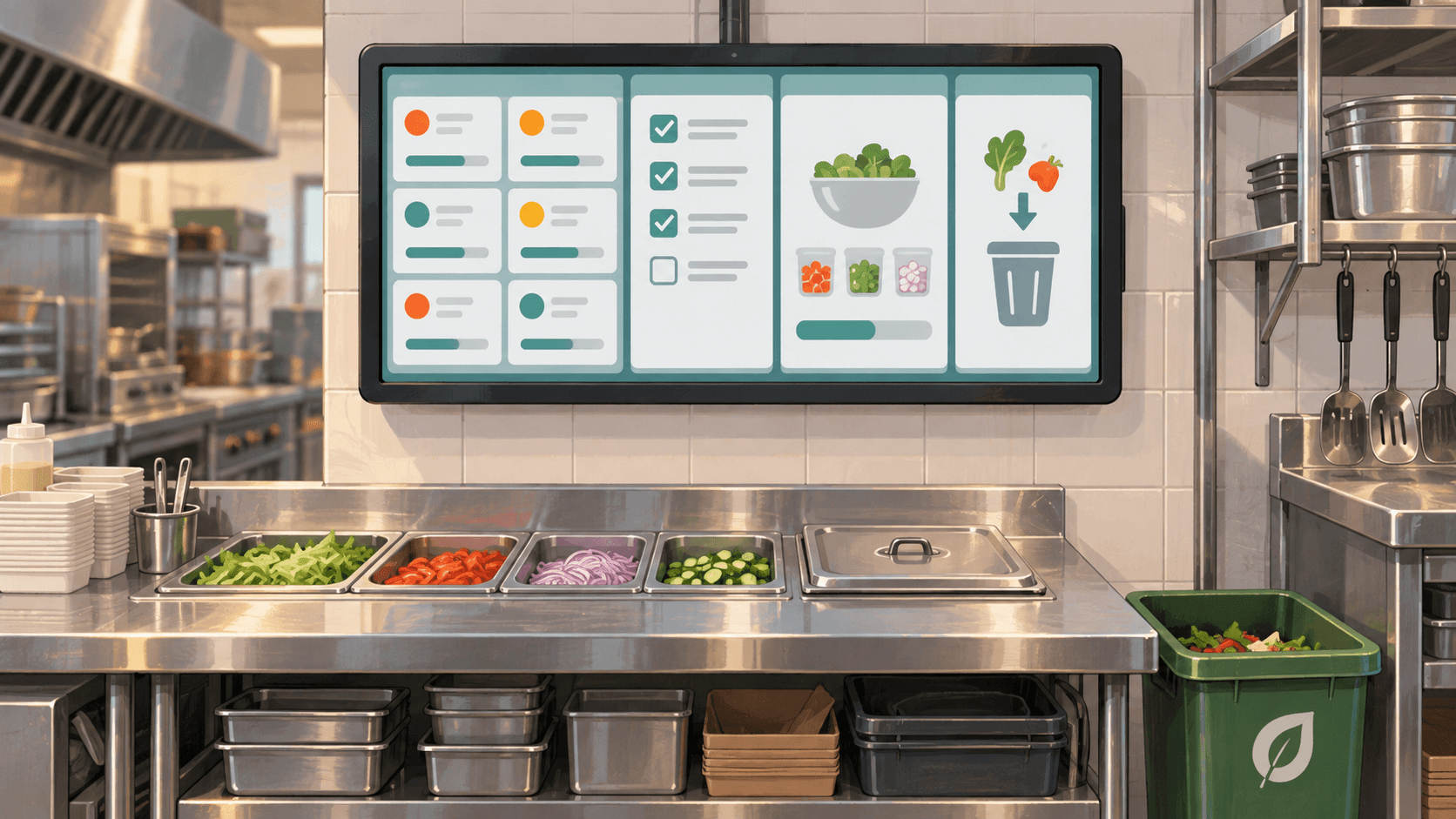
The company is not trying to eliminate labor. It is not deploying kiosks to shorten lines or AI voice ordering to replace hosts. The technology investments are targeted at reducing friction in the back of house: kitchen display systems, inventory management tools, and communication platforms that help a 400-cover dining room run without breakdown during a Saturday night peak.
This is a meaningful distinction. For a chain built on a high-labor, high-touch model, technology that supports the human workforce produces better outcomes than technology that tries to replace it. The managing partner model only delivers its benefits if the restaurant is properly staffed and running well. Tech that helps a GM optimize scheduling or track food costs in real time makes the whole system more efficient, without undermining the hospitality element that drives repeat visits.
The broader takeaway for QSR operators is about matching technology to the actual problem. Many brands have invested heavily in customer-facing automation and seen modest returns. Texas Roadhouse has had more success investing in operational tools that support its people instead of substituting for them.
Bubba's 33 at 50 Locations#
The 50th Bubba's 33 is worth examining as a growth vehicle in its own right. The concept, which launched in 2013, is a sports bar and entertainment brand operating under the Texas Roadhouse umbrella. It shares some supply chain and operational DNA with the parent brand but targets a slightly different occasion: large-screen sports viewing, shareable appetizers, burgers, and a bar-forward experience.
At 50 locations, Bubba's 33 is still a small concept by franchise industry standards. But it is growing, and it is growing in a format that gives Texas Roadhouse a presence in a segment it does not serve with its core brand. Sports bar and entertainment dining has been one of the more resilient categories in casual dining, benefiting from the occasions that even highly traffic-sensitive consumers tend to protect: game nights, birthday gatherings, after-work drinks.
Opening eight company-owned restaurants in a single quarter, with Bubba's 33 contributing to that count, tells investors and operators something about capital allocation discipline. Texas Roadhouse is not growing Bubba's 33 recklessly. The pace is deliberate, the unit economics are tested before expansion accelerates, and each opening serves as a data point for the next round of site selection.
This is the opposite of what killed several casual dining expansion strategies in the 2010s, when chains outran their operational capacity and quality degraded as the unit count scaled.
The Casual Dining Rotation#
The traffic gains Texas Roadhouse is reporting are not happening in a vacuum. Across the industry, several data points now point to a real rotation in consumer behavior: casual dining brands with strong value propositions are pulling traffic from QSR at a rate that would have seemed unlikely three years ago.
Chains like Chili's have reported double-digit sales growth. Darden's Longhorn Steakhouse keeps taking share. The common thread is a price gap that has narrowed enough to make the sit-down experience competitive again on a value-per-dollar basis. When QSR prices have risen 30 to 40 percent since 2020 and casual dining has raised prices more moderately, the calculus changes for a meaningful segment of the dining public.
Texas Roadhouse is benefiting from this rotation, but it is also the chain most structurally prepared to capture it. The managing partner model means customer service quality holds even as volume increases. The from-scratch food philosophy gives regulars a reason to come back at full price, without needing a limited-time offer to drive the visit. The selective tech adoption keeps labor productive without degrading hospitality.
Competitors with higher turnover, weaker food differentiation, and bloated tech stacks are watching traffic rotate away from them. Some are closing locations. Red Lobster emerged from bankruptcy with a reduced footprint. TGI Friday's filed Chapter 11 in late 2024. Applebee's parent Dine Brands is navigating a difficult franchisee environment.
Texas Roadhouse is not immune to cost pressures. Labor costs have risen, beef prices are volatile, and the company operates in a highly competitive labor market for kitchen staff. But its operating model gives it structural advantages that absorb those pressures better than most.
What Operators Should Take From This#
The Texas Roadhouse story is not a template that transfers directly to a QSR franchise or fast casual startup. The economics are different, the price points are different, and the capital requirements for a from-scratch casual dining operation are substantial.
But the principles are transferable. Align incentives so managers think like owners. Invest in food differentiation that is genuinely hard to replicate. Use technology to make your people more effective, not to replace them. Grow secondary concepts deliberately, with unit economics proven before you accelerate.
Those ideas are not proprietary to Texas Roadhouse. They are operational discipline applied consistently over decades. That is, in the end, what separates the brands posting traffic gains in Q1 2026 from the ones counting closures.
QSR Pro Staff
The QSR Pro editorial team covers the quick service restaurant industry with in-depth analysis, data-driven reporting, and operator-first perspective.
More from QSR