Bojangles All-Day Breakfast Goes Nationwide: What Operators Can Learn From the Boldest Daypart Bet of 2026#
On March 12, 2026, Bojangles made a move most QSR chains had quietly abandoned: all-day breakfast, at every standalone location in the country. Guests ordering at 8 p.m. on a Tuesday can now get the same made-from-scratch Bo's Chicken Biscuit they would at 7 a.m. The full lineup covers sausage, crispy bacon, steak, and country ham biscuits, available in-store, through the drive-thru, and on the Bojangles app.
The timing is not accidental. The QSR industry is in one of its most contested traffic environments in years, with chains fighting for every transaction as consumers trade down from casual dining and inflationary fatigue reshapes visit frequency. Against that backdrop, Bojangles is betting that daypart expansion is the most efficient lever it has.
Whether that bet pays off depends on factors operators at every chain should understand, because the all-day breakfast question is one every multi-unit operator will face sooner or later.
Why Breakfast Daypart Economics Are So Attractive#
Breakfast accounts for roughly 25 to 30 percent of QSR industry revenue, a share that has been growing as chains invest in morning traffic. According to the National Restaurant Association's 2026 State of the Industry report, morning visits represent the most resilient segment of restaurant spending, with consumers treating coffee and breakfast runs as near-essential habits even when cutting back elsewhere.
The math is straightforward: breakfast items carry strong margins because food costs are low relative to ticket price, labor intensity is manageable with the right menu design, and throughput during morning peaks can rival lunch. A breakfast biscuit at Bojangles carries a consumer perception of value while generating contribution margins that hold up better than many protein-forward dinner items.
Extending that margin profile across all dayparts is the goal. But the execution is significantly harder than the arithmetic suggests.
The McDonald's Cautionary Tale#
No analysis of all-day breakfast in 2026 is complete without revisiting McDonald's. The chain launched All Day Breakfast in October 2015 to enormous fanfare, and it drove measurable same-store sales gains in the quarters that followed. Then COVID hit, and in March 2020, McDonald's suspended the program to simplify operations and reduce kitchen complexity during an unprecedented labor shortage.
Six years later, McDonald's has not fully restored it. The company has tested limited breakfast availability at select hours beyond the traditional morning cutoff, but a true all-day program has not returned systemwide.
Why? Kitchen complexity. McDonald's discovered that running breakfast alongside its core menu simultaneously required separate equipment zones, staff dedicated to monitoring biscuit or McMuffin production, and supply chain coordination for items that had different holding and freshness windows than burger patties and fry oil. When labor became scarce and expensive, the operational overhead of all-day breakfast became a liability rather than an asset.
That is the core tension every operator considering daypart expansion has to solve.
Bojangles' Structural Advantage#
Bojangles is positioned differently than McDonald's was, and that distinction matters for understanding why this bet has a real chance to work.
The brand's identity has always been anchored in scratch-made biscuits. Unlike McDonald's, which needed to maintain two entirely separate production systems to serve Egg McMuffins alongside Quarter Pounders, Bojangles already bakes biscuits fresh every hour throughout the day at its existing locations. The breakfast items are not an appendix to the core menu; they are the core menu.
That structural reality changes the operational calculus dramatically. Bojangles does not need to introduce a separate kitchen track. It needs to hold demand consistent with an operation that is already baking biscuits around the clock. The labor model does not fundamentally change; the ticket volume and daypart spread do.
The geographic expansion announced alongside the nationwide rollout adds another dimension. New state markets including Colorado, Florida, Louisiana, Michigan, Nevada, New Jersey, New York, Ohio, and Texas represent both a growth opportunity and a test of whether Bojangles' regional brand equity travels. All-day breakfast gives new-market guests a reason to visit outside the morning window, accelerating trial and frequency simultaneously.
The Real Operational Challenges#
That structural advantage does not mean Bojangles avoids the hard problems. There are three genuine operational risks every operator should evaluate.
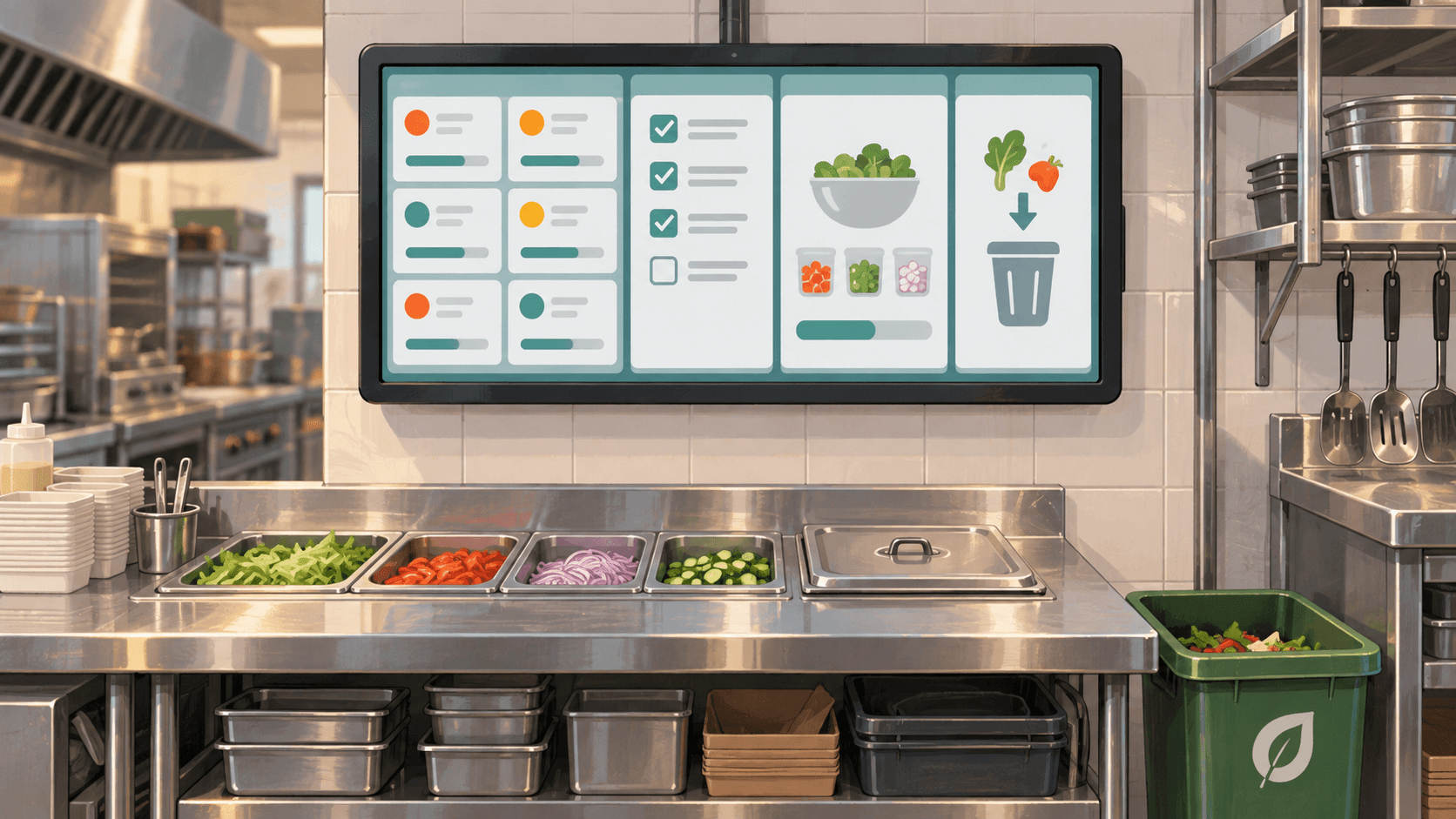
Food waste and inventory management. Biscuits are a perishable, made-from-scratch item. Holding standards matter enormously for quality perception, and baking in batches throughout the day requires operators to accurately forecast demand across all dayparts rather than just the morning rush. Getting that wrong in either direction means either quality failures from old product or unnecessary waste from excess production. Demand forecasting at non-traditional breakfast hours is a new skill set for most units.
Labor scheduling. Extending the effective production window for biscuit operations does not double labor needs, but it does require different scheduling logic. Afternoon and evening shifts now need trained biscuit staff, which complicates the traditional model of concentrating experienced breakfast workers in early morning hours. Bojangles will need to track whether this leads to increased training costs and whether turnover impacts quality consistency in the expanded dayparts.
Menu complexity at the margins. Bojangles' menu is not large, which helps. But all-day breakfast inherently expands the number of simultaneous items on the board during lunch and dinner periods. Operators running tight drive-thru operations will feel this in seconds-per-car metrics if the kitchen is not calibrated correctly for the new demand mix.
What the App Promotion Reveals About the Strategy#
The free biscuit promotion on March 13, offering a complimentary item via app download using code ALLDAY, was not just a marketing play. It was a deliberate loyalty and data move.
By requiring app engagement to claim the promotion, Bojangles is accelerating digital enrollment at the moment of peak consumer interest in the new offering. Every app download from that promotion represents a digitally identified customer whose ordering behavior, visit frequency, and daypart preferences can be tracked over time. That data is critical for validating whether all-day breakfast is actually changing guest behavior or just giving existing morning customers a different channel.
QSR loyalty programs are now a central battleground. McDonald's has reported more than 175 million active loyalty members globally, and chains without competitive digital programs are operating at a structural information disadvantage. Bojangles is threading its daypart expansion directly through its app strategy, which is the right play if it can convert promotion-driven downloads into repeat engagements.
January's Bowl Additions as Supporting Evidence#
The all-day breakfast expansion did not appear in isolation. In January 2026, Bojangles added the new All-Day Breakfast Bowl to its permanent menu and brought back the Chicken Rice Bowl. Both moves signal a deliberate effort to build a menu architecture that works across dayparts rather than being organized around traditional morning, afternoon, and evening silos.
Bowl formats carry operational advantages for all-day service: they are assembly-forward, portion-controlled, and can be served efficiently without the time-sensitive holding requirements of some biscuit applications. Pairing the bowl expansion with the biscuit-everywhere announcement suggests Bojangles is thinking about this in terms of a full daypart strategy, not just a single promotional stunt.
What Other Operators Should Take Away#
The lesson from Bojangles is not "run all-day breakfast." Most chains lack the structural conditions that make it operationally viable for Bojangles specifically. The lesson is about how to use an existing operational core as a platform for daypart expansion.
Identify what you already do all day. Bojangles bakes biscuits every hour regardless of time. That is the foundation. Operators who want to extend into new dayparts should start by asking what production capabilities already exist throughout the day that can support additional menu items, rather than engineering entirely new production tracks.
Marry the expansion to a digital enrollment push. The March 13 app promotion is the model. Any significant operational change is a customer education moment and a loyalty recruitment moment. Use them together.
Build demand forecasting before you need it. The failure mode for all-day breakfast is not that customers do not want it. It is that kitchens cannot serve it consistently because they lack demand signal for non-traditional dayparts. Bojangles will need to invest in forecasting tools and training for managers who have never had to predict biscuit demand at 6 p.m. This is solvable, but it requires lead time.
Watch unit-level economics closely, not system averages. System-wide same-store sales can improve even if a subset of units are struggling. The operators who learn the most from Bojangles' rollout will be the ones who are tracking unit-level metrics across the new geographic markets and the established Southeast core to see where the incremental revenue actually comes from and what the true cost structure looks like.
The Broader Context#
The QSR industry is dealing with a genuine traffic problem in 2026. Consumer visits have declined across multiple major chains, value wars have pressured margins, and the labor cost environment remains elevated across most markets. In that context, daypart expansion is one of the few organic levers operators can pull to grow revenue without cutting price or adding locations.
Bojangles is making a high-conviction call that its brand identity and operational structure can support all-day breakfast in a way that McDonald's, with its far more complex menu, could not. The evidence suggests that confidence is grounded in real structural advantages. Whether those advantages translate into sustained traffic and revenue gains in the new state markets will take time to evaluate.
For operators watching from the outside, the real insight is simpler: the chains that grow through this traffic environment will be the ones that find ways to do more with the kitchens they already have. Bojangles is showing one way to do that.
The results over the next three to four quarters will tell the rest of the story.
QSR Pro Staff
The QSR Pro editorial team covers the quick service restaurant industry with in-depth analysis, data-driven reporting, and operator-first perspective.
More from QSR