El Pollo Loco Beats Q4 Estimates, Outlines 18-20 New Openings and 65-75 Remodels for 2026
El Pollo Loco closed out 2025 with a quarter that beat Wall Street expectations on both the top and bottom lines, then laid out a 2026 growth plan that signals the chain is finally ready to move beyond its California roots.
The Newport Beach-based chain reported adjusted fourth-quarter earnings per share of $0.25, clearing the analyst consensus of $0.21 by four cents. Revenue came in at $123.5 million, up 8.1% from $114.3 million a year earlier and ahead of the $122.18 million estimate. System-wide comparable restaurant sales grew 2.1% for the quarter.
For the full year 2025, El Pollo Loco recorded a profit of $26.5 million, or $0.90 per diluted share, on revenue of $490 million.
The numbers are solid for a 500-plus-unit chain that has spent several years trying to convince investors it can grow outside its home market. What makes this report more interesting than the headline beat is what management outlined for 2026: a capital-light expansion model, a new store prototype that costs under $2 million to build, and a deliberate push into non-traditional venues including airports and university campuses.
A Smaller Store That Costs Less to Build#
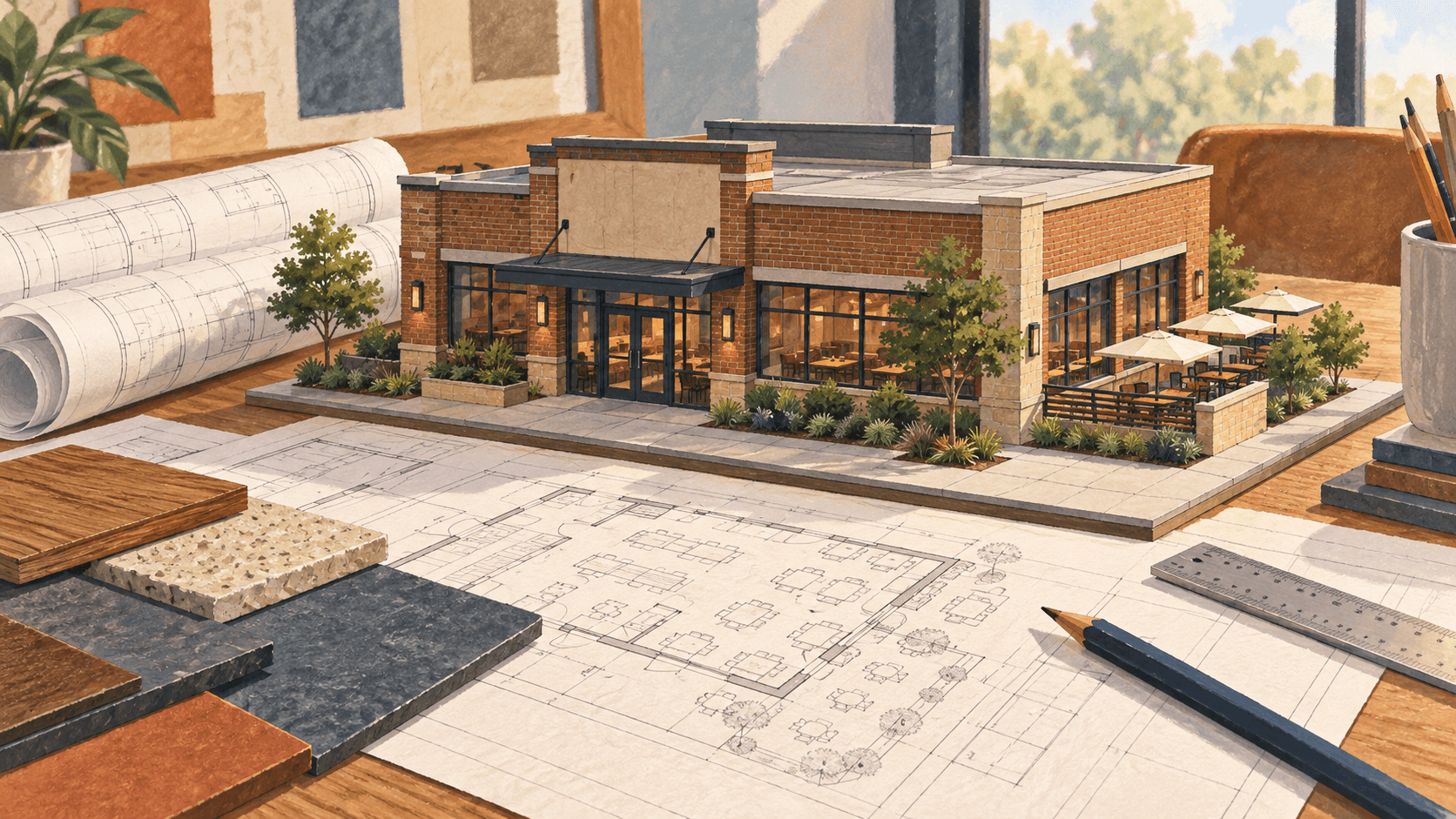
The centerpiece of the 2026 growth strategy is what El Pollo Loco is calling its "iconic" store design. At 2,200 square feet, it is 15% smaller than the chain's prior standard build. Development costs come in under $2 million per unit, which puts El Pollo Loco in a competitive range for franchisees evaluating capital deployment.
That size reduction matters more than the sticker price alone. Smaller footprints lower lease costs, reduce utility overhead, and can cut build-out timelines. For a concept that relies heavily on open-flame grilling and visible food preparation as a brand differentiator, condensing that experience into a tighter box without sacrificing throughput or the "theater" that drives brand perception is a real operational challenge. Management has apparently cleared that hurdle, or at least believes the numbers support it.
The 2026 pipeline calls for 18 to 20 new restaurant openings, with the majority located outside California. That geographic shift is intentional. California represents the bulk of the current footprint, and saturation concerns, combined with the state's aggressive minimum wage trajectory, have pushed the chain to accelerate expansion in markets like Texas, Nevada, and the Mountain West, where unit economics tend to be more favorable.
The Remodel Math#
El Pollo Loco's 2026 capital plan goes well beyond new construction. The company is targeting 25 to 35 company-owned remodels alongside 30 to 40 franchise remodels, for a combined system-wide refresh of 65 to 75 locations.
The justification for that level of investment is clear in the data. Remodeled locations have delivered consistent mid-single-digit sales lifts. For a chain generating roughly $490 million in annual system revenue, a mid-single-digit comp improvement across 65 to 75 remodeled units is meaningful cash flow. Franchisees who have held off on reinvestment now face both a carrot (demonstrated lift) and an implicit stick: as the system refreshes around them, aging locations will look increasingly dated.
That remodel-to-new-build ratio is also a deliberate capital allocation choice. Refreshing existing locations carries lower risk than greenfield development. The sales lift on a remodel is more predictable than a new unit's ramp curve, and the timeline from approval to opening is shorter. For a company navigating a post-pandemic landscape with tight construction labor markets and elevated material costs, leaning into remodels while selectively adding new units is the prudent playbook.
Non-Traditional Venues: A Different Kind of Growth#
The pilot of non-traditional venues is the most speculative element of the 2026 plan, but also potentially the most significant if it works.
Airport and campus locations operate under fundamentally different economics than traditional QSR footprints. Captive audiences, higher average check sizes, and reduced direct competition within a terminal or dining hall can produce strong unit economics from a compact physical footprint. The risk is operational: airport concessions require compliance with host facility rules, union labor agreements in many locations, and supply chain complexity that goes beyond what a suburban freestanding unit demands.
Campus venues carry their own set of variables. Student populations are concentrated but highly seasonal, and campus dining contracts can be competitive and politically fraught. Neither channel is simple. But El Pollo Loco's fire-grilled chicken and fresh preparation model translates well to health-conscious consumers in both environments, and the brand's Tex-Mex-adjacent menu has broader geographic appeal than some California-native concepts.
The pilot will reveal a lot about whether these venues pencil out at scale. Management signaled they are starting this in 2026, which means the real data on unit volumes and margins from non-traditional sites won't appear in earnings reports until at least late 2026 or early 2027.
What the Comp Numbers Say About Brand Health#
The 2.1% system-wide comparable sales increase is positive but not dramatic. Context matters here. The QSR and fast casual industries collectively faced a challenging consumer environment in 2025, with value-focused traffic trending toward chains that leaned heavily into meal deals and promotional pricing. El Pollo Loco, positioned above traditional fast food on price and perceived quality, navigated that period without sacrificing its menu integrity or getting into a margin-destructive discount spiral.
A 2.1% comp on top of prior-year comparisons reflects genuine demand growth rather than recovery-driven rebounds. For operators evaluating the El Pollo Loco franchise opportunity, that consistency matters more than a single quarter's spike.
The chain's menu positioning, centered on citrus-marinated, open-flame-grilled chicken and made-fresh accompaniments, has proven relatively resilient to the "better burger" and "premium pizza" traffic shifts that pressured some fast casual peers. Protein-forward menus have outperformed category averages broadly in 2025 and into 2026, and El Pollo Loco's core product is inherently aligned with that consumer trend.
Franchise Implications#
For the franchise community, the 2026 plan contains both opportunity and obligation.
The new prototype's sub-$2 million development cost makes the unit economics more accessible for multi-unit operators looking to diversify their portfolio. Compared to building a new QSR unit in markets like Texas or Nevada, where construction costs and real estate have remained elevated, that figure represents a competitive development cost structure for the category.
The remodel requirement is more complicated. The 30 to 40 franchise remodels targeted for 2026 represent a capital ask to franchisees who may have varying financial positions. Mid-single-digit sales lifts are compelling, but franchisees carrying debt from prior cycles will weigh that lift against the immediate cash outlay. Management's ability to execute on the remodel program depends on franchisee liquidity and cooperation, not just corporate ambition.
The geographic expansion outside California is also a franchise story. Opening 18 to 20 units with the majority outside the home market requires franchisees with local market knowledge in new territories. El Pollo Loco has historically been a predominantly company-operated system in California; building a franchise base in new states requires brand development investment that may not show up in near-term unit economics.
Putting the Quarter in Context#
El Pollo Loco's $0.04 EPS beat on a consensus of $0.21 is notable, but not large enough by itself to reframe the investment thesis. What matters more is the combination of financial performance and the strategic clarity of the 2026 capital plan.
The chain is betting on three things simultaneously: a cheaper, smaller prototype that opens new development markets; a remodel program backed by actual sales lift data; and non-traditional venue pilots that could diversify revenue streams beyond suburban freestanding boxes.
If the non-traditional venues deliver, if the franchise remodel program executes at the high end of its 30-to-40-unit target, and if the California-external openings post reasonable ramp curves, El Pollo Loco enters 2027 with a meaningfully stronger and more geographically diversified system. That is the scenario the 2026 plan is designed to create.
Full 2025 annual results and detailed unit-level economics are available in El Pollo Loco's filings with the Securities and Exchange Commission. Analysts and investors will be watching the Q1 2026 report for early evidence that the non-traditional pilots are proceeding on schedule and that the expansion pipeline is converting from plan to ground-breaking.
QSR Pro Staff
The QSR Pro editorial team covers the quick service restaurant industry with in-depth analysis, data-driven reporting, and operator-first perspective.
More from QSR