The federal government stopped accepting new H-2B visa petitions for the summer season on March 10, 2026. That's months before July 4th. It's months before beach towns hit capacity. And it's the clearest signal yet that the seasonal labor pipeline that American hospitality businesses depend on is structurally broken.
For quick service restaurant operators in tourist corridors, resort markets, and coastal communities, this isn't a bureaucratic footnote. It's an operational emergency with a countdown clock.
What the Cap Actually Means#
The H-2B program allows U.S. employers to hire foreign nationals for temporary, non-agricultural seasonal work when qualified domestic workers aren't available. The statutory cap sits at 66,000 visas per fiscal year, split into two halves: 33,000 for the first half (October through March) and 33,000 for the second half (April through September).
Congress has authorized supplemental visa tranches in recent years to address chronic oversubscription. For FY2026, the Department of Homeland Security and Department of Labor announced up to 64,716 additional H-2B visas, effectively doubling the program's capacity to roughly 130,716 for the year.
It didn't come close to meeting demand.
USCIS received enough petitions to exhaust the second-half statutory cap before March 10, 2026, the official cutoff date. Any new cap-subject petition requesting an employment start date from April 1 through September 30, 2026, filed after that date, gets rejected outright. No lottery, no waitlist. Just rejection.
The three tranches of supplemental visas tell the same story of demand overwhelming supply: the first tranche of 18,490 slots (for start dates through March 31) was fully subscribed by February 6, triggering a random selection lottery just four business days after the filing window opened. The second tranche covers 27,736 visas for April start dates, with USCIS accepting petitions starting March 25. The third tranche, 18,490 visas for May through September start dates, has no nationality restrictions, but by this point employers who didn't file months in advance are largely locked out.
For context on demand: the Department of Labor received 8,759 applications requesting 162,603 worker positions in the most recent cycle. Even with the supplemental expansion, the gap between requested positions and available visas runs into the tens of thousands.
The Restaurant Industry's Specific Problem#
Hotels occupy the most visible seat at the H-2B table, and the data is stark. The American Hotel and Lodging Association's survey, conducted in late 2024 and released in February 2025, found that 65% of surveyed hotels continued to report staffing shortages, with 9% describing themselves as "severely understaffed." Hotel employment remains nearly 10% below pre-pandemic levels.
Restaurants operate in parallel. The National Restaurant Association's 2026 State of the Industry report projects that total restaurant and foodservice employment will reach 15.8 million jobs this year, with the industry forecast to add more than 100,000 workers during 2026. But the math is brutal: full-service restaurant employment as of January 2026 was still roughly 204,000 jobs below pre-pandemic readings. The domestic labor pool simply isn't growing fast enough to cover both the recovery deficit and new demand.
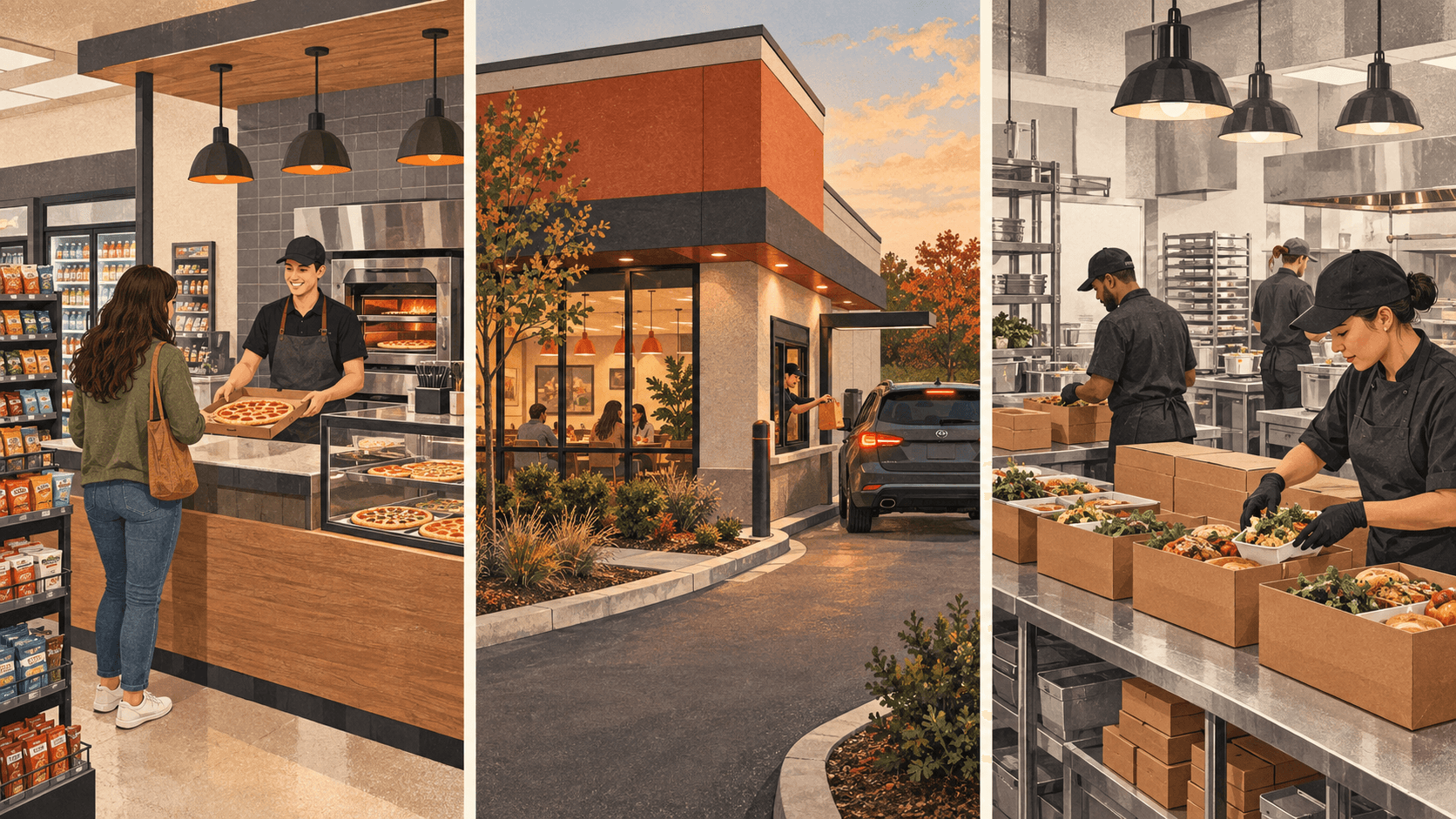
Seasonal markets face a specific crunch that national averages obscure. A fast casual operator in a Florida beach market, a boardwalk QSR on the Jersey Shore, a chain location near a national park: these businesses don't need year-round staff increases. They need a reliable surge of workers available from Memorial Day through Labor Day. The H-2B program was designed precisely for that scenario. When the cap closes in March, those operators have nowhere to turn.
One illustration from the hotel side: a property near the Grand Canyon reported putting 35% of its room inventory out of service during spring break because it couldn't staff them. QSR operators face the equivalent calculation, just expressed differently: reduced operating hours, closed dining rooms, limited drive-thru lanes, or shortened menus. Every one of those decisions erodes revenue during the highest-traffic weeks of the year.
The Wage Debate Running Underneath#
H-2B is not a charity program for employers, and critics argue it operates more like a wage suppression mechanism than a genuine labor shortage solution.
The Economic Policy Institute has documented that in top H-2B occupations, the average hourly wage certified nationwide for H-2B workers is consistently lower than Bureau of Labor Statistics occupational averages, with gaps reaching as high as 24.7% below the national average for the same job category. The 22% figure cited by industry critics sits comfortably within that documented range.
The argument from labor economists is straightforward: if employers can access lower-cost foreign labor through H-2B, they face less pressure to raise wages to attract domestic workers. The program's defenders respond that prevailing wage rules are supposed to prevent undercutting, but EPI's analysis suggests those rules have structural weaknesses that let suppression happen anyway.
For QSR operators, the wage question isn't abstract. Minimum wage increases are compressing margins at the same time that H-2B access is tightening. California's $20 minimum for fast food workers took effect in April 2024. Multiple other states have staged increases coming in 2026. Operators in those markets are already recalibrating labor cost models without access to the H-2B program as a buffer.
What an H-2C Visa Could Change#
Congress is watching. Representative Lloyd Smucker introduced the Essential Workers for Economic Advancement Act, which proposes creating an H-2C nonimmigrant visa category that would go beyond H-2B's seasonal limitations. The proposal targets positions that have remained unfilled for at least three consecutive months in regions with unemployment below 7.9%, with hotels and hospitality businesses listed as intended users. The legislation has drawn bipartisan co-sponsors, including both Republican and Democratic members, suggesting it isn't purely ideological.
A second, separate proposal, H.R. 5494, would create an H-2C category specifically for year-round, non-agricultural, non-degree jobs, with construction as a central use case but language broad enough to capture hospitality roles.
Neither bill has passed. Neither has a clear timeline. Restaurant industry advocates at the National Restaurant Association have consistently pushed for structural reform to temporary worker visa programs, but legislative bandwidth on immigration is perpetually crowded.
For now, operators planning summer 2026 staffing cannot count on any legislative relief materializing in time.
The Automation Acceleration#
The labor shortage isn't just a pain point. For QSR technology vendors, it's a sales pitch that practically writes itself.
The NRA's 2026 survey found that 1 in 4 restaurant operators had already deployed some form of AI or automation technology, with labor efficiency, scheduling, and training cited as the top target areas. A separate survey found 47% of operators view automation as key to addressing staffing gaps.
The H-2B crunch is tightening that calculus. When a drive-thru location in Myrtle Beach can't staff a headset operator for a July Saturday afternoon, the question isn't whether to invest in voice AI ordering. It's how quickly the hardware can ship.
The numbers behind kiosk investment are clarifying operator thinking: research consistently shows customers ordering at self-service kiosks spend roughly 30% more per transaction than they do with human cashiers. Operators who framed automation as a cost-cutting measure are increasingly reframing it as a revenue driver, with the labor shortage providing the urgency to move faster.
Voice AI drive-thru deployments from SoundHound, Presto, and others are accelerating precisely because summer staffing deficits are predictable, quantifiable, and recurring. If an operator can't reliably hire enough humans for peak season, automated ordering isn't an experiment. It's insurance.
State-Level Exposure#
The H-2B crunch doesn't land evenly across the country. States with concentrated seasonal tourism economies carry disproportionate exposure.
Florida is the most obvious case. The state's hospitality sector depends heavily on seasonal labor across hotel, restaurant, and theme park operations. The Orlando metro, Tampa Bay, Miami Beach, and the Panhandle all see dramatic seasonal swings in customer volume. QSR operators running airport locations, resort-adjacent units, and beachside stores in these markets are trying to staff up for summer with a visa pipeline that closed in March.
Coastal and tourist-heavy markets in New England, the mid-Atlantic, the Gulf Coast, and mountain resort areas face the same dynamic. Ocean City, Maryland; Cape Cod, Massachusetts; the Outer Banks of North Carolina; Gatlinburg, Tennessee; Breckenridge and Vail in Colorado: all are markets where summer and winter peaks are the entire financial model, and domestic labor supply is structurally insufficient during those periods.
The Congressional pressure reflects this geography. Senators Mike Rounds (R-SD) and Angus King (I-ME) formally asked the Trump administration to release maximum supplemental H-2B visas for 2026, citing small business constituents who rely on the program for seasonal survival. That bipartisan request points to how broad the coalition of affected operators actually is.
What Operators Should Do Now#
If your business relies on H-2B workers for summer 2026, the cap closure means the statutory pipeline is gone. The supplemental tranches remain open for now, with the second allocation of 27,736 visas accepting petitions beginning March 25. Operators who haven't filed should move immediately, understanding that those slots will also close quickly.
Beyond this year's immediate planning, operators in seasonal markets need a long-term response that doesn't depend on federal immigration policy cooperating:
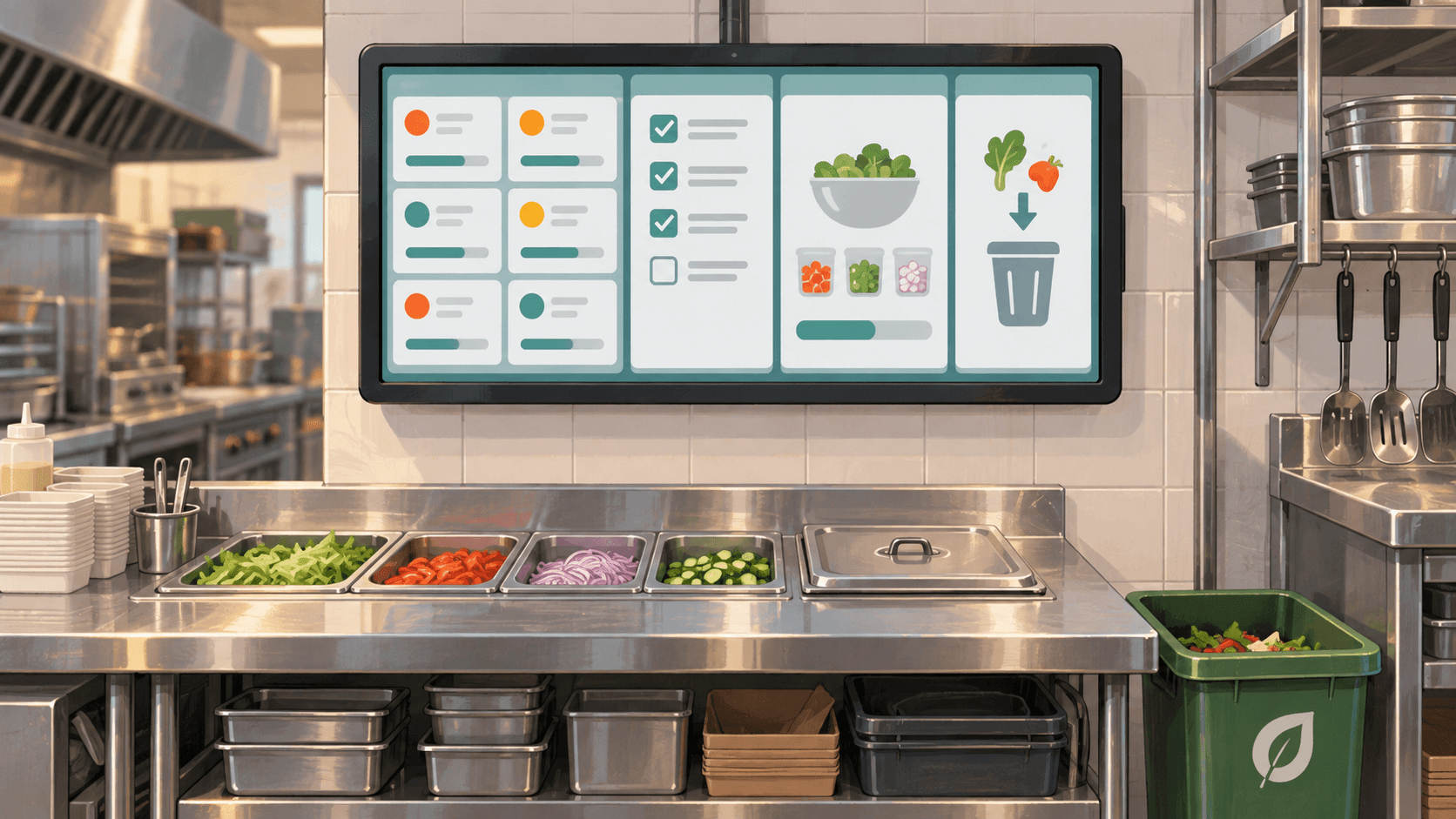
Accelerate automation investment now, not next season. If summer staffing is a recurring gap, it's a capital allocation problem, not a hiring problem. Kiosks, voice AI drive-thru systems, and automated kitchen equipment need lead time for installation and staff training. Decisions made in March can be operational by Memorial Day. Decisions deferred to May cannot.
Restructure the seasonal workforce model. Some operators have had success with domestic recruitment programs that offer housing stipends, transportation assistance, or relocation bonuses targeting college students and seasonal workers from higher-unemployment regions. It's more expensive than H-2B labor on a per-position basis, but it's actually available.
Right-size the menu for reduced labor capacity. A simplified summer menu that a smaller crew can execute at speed preserves throughput better than running a full menu at degraded service quality. McDonald's "Best Burger" quality initiative and Taco Bell's menu restructuring both reflect the reality that complexity kills operations when staffing is thin.
Document the impact for policy advocacy. The H-2B cap is set by statute. Changing it requires Congress. The restaurant industry's most powerful tool is specific, documented evidence of business impact: revenue lost per reduced operating hour, transactions declined, customer wait time increases. That data, aggregated through the NRA and state restaurant associations, is what drives legislative action. Operators who are collecting it and sharing it are investing in a solution that outlasts any single season.
The Bigger Picture#
The H-2B program was designed as a pressure valve for industries that couldn't meet seasonal demand with domestic labor alone. The hospitality and food service industries built genuine operational reliance on it over two decades. Now the cap closes in March. The supplemental tranches help, but demand for 162,000 positions against a total program ceiling near 130,000 leaves a structural gap that policy hasn't closed.
This summer, QSR operators in seasonal markets will make do. They'll cut hours in some locations. They'll close dining rooms. They'll accelerate automation timelines they planned for 2027. They'll pay overtime to retain the workers they have.
The operators who come through summer 2026 in the best position will be the ones who started treating the labor shortage as a capital problem three months ago, and invested accordingly. The visa pipeline wasn't coming to save them. It hasn't in years.
QSR Pro Staff
The QSR Pro editorial team covers the quick service restaurant industry with in-depth analysis, data-driven reporting, and operator-first perspective.
More from QSR