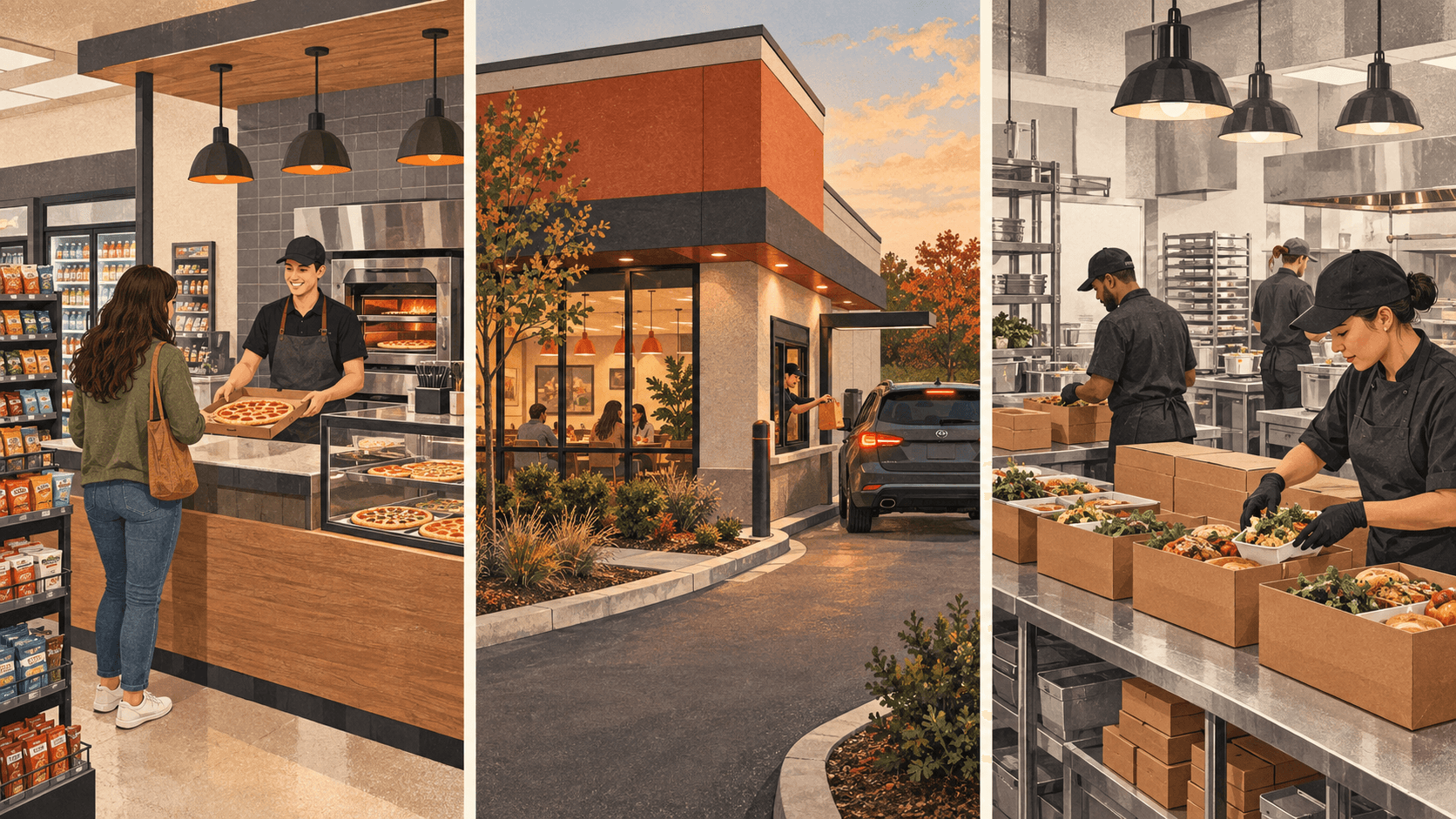
The drive-thru lane hasn't changed much in 50 years. A single queue, a static menu board, a speaker box, a window. For most of that time, the model worked. It doesn't work anymore.
McDonald's is rebuilding the physical and technological infrastructure of more than 27,000 drive-thru locations globally, layering in AI ordering, dynamic digital menu boards, dedicated mobile pickup lanes, and vehicle identification technology. The scope is without precedent in QSR history. With drive-thru representing roughly 70% of McDonald's U.S. sales volume, the company isn't treating this as a technology experiment. It's treating it as an operational necessity.
Why the Old Model Is Breaking Down#
Industry-wide drive-thru times have gotten worse, not better, even as chains have invested heavily in operational improvements. The average drive-thru transaction took approximately 6 minutes and 22 seconds in 2025, up from 5 minutes and 49 seconds in 2019. That's a 33-second regression over six years, driven largely by order complexity, labor constraints, and the surge in mobile ordering that created new congestion at pickup windows.
The problem isn't speed alone. A single-lane design that predates smartphones cannot cleanly accommodate three simultaneous customer types: the driver placing an order at the speaker, the app user who pre-ordered before leaving home, and the third-party delivery courier picking up a DoorDash bag. All three end up in the same queue, waiting behind each other for transactions they're not part of.
McDonald's is attacking this from both the physical design side and the technology side at the same time.
The Multi-Lane Architecture#
The physical redesign centers on lane segregation. Dedicated mobile order pickup lanes are being added at scale to pull app customers out of the main ordering queue entirely. These customers have already decided what they want, already paid, and in many cases have their order being assembled before they arrive. Merging them with customers who are still deciding their order at the speaker box is an operational mismatch that the new layout corrects.
The concept isn't entirely new. Taco Bell's Defy prototype, which opened in 2022, demonstrated what a fully purpose-built multi-lane drive-thru could look like: four lanes with separate channels for app pre-orders, traditional drive-thru customers, and third-party delivery. That proof of concept established the framework that McDonald's and others are now scaling.
McDonald's version doesn't replicate Defy exactly, since retrofit constraints at existing locations create different tradeoffs than a ground-up build, but the underlying principle is the same: match the physical infrastructure to how customers actually arrive and transact, rather than forcing everyone through a single sequential funnel.
AI Ordering: The IBM Detour and the Google Pivot#
McDonald's history with AI voice ordering at the drive-thru is instructive for any operator thinking about this category.
The company's first major push into automated ordering was through a partnership with IBM, which it acquired technology assets from to develop an Automated Order Taking (AOT) system. The pilot ran at hundreds of U.S. locations. By June 2024, McDonald's ended the IBM partnership and pulled back from those deployments. The reported accuracy rate was around 85%, which sounds reasonable in isolation but fails at scale. When 15 out of every 100 orders require human intervention or correction, the labor savings evaporate and customer frustration compounds.
The threshold that matters in practice is somewhere between 90% and 95% accuracy. Below that, the system creates more work than it eliminates.
In December 2024, McDonald's announced a new AI ordering partnership with Google Cloud, using the Gemini large language model. The pivot reflected both Google Cloud's investment in enterprise voice AI and McDonald's need for a technology partner with the infrastructure to support global rollout at this scale.
By Q4 2025, McDonald's had expanded AI voice ordering testing to more than 200 U.S. locations under the Google Cloud partnership, with accuracy rates reported above 90%. That's a significant improvement over the IBM baseline and crosses the operational threshold that makes automation viable. The current phase is still testing, not full deployment, but the directional signal is clear.
Dynamic Menu Boards: Beyond Digital Signage#
Digital menu boards have been standard at drive-thrus for years, but most of them function as expensive static displays. They show the same menu at 7am that they show at 11pm, regardless of what the weather is, what's selling, or what inventory looks like in the kitchen.
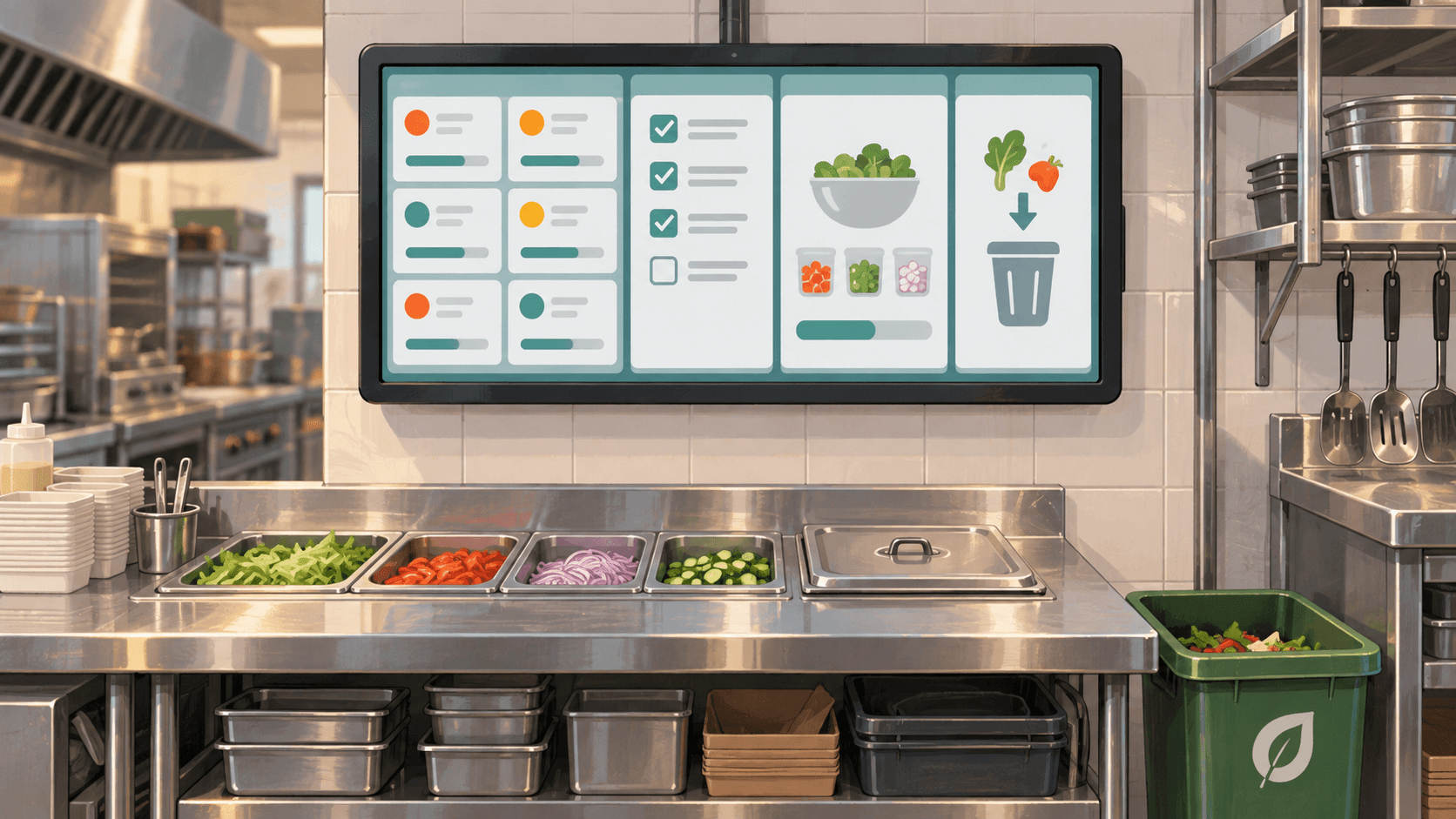
McDonald's is deploying menu boards that adjust in real time based on time of day, weather conditions, and local demand patterns. The practical implications for operators are more interesting than the technology description suggests.
A menu board that surfaces breakfast items during the morning rush, promotes hot beverages when the temperature drops, or de-emphasizes items with constrained supply can meaningfully move average check size and reduce order abandonment. Upsell prompts that surface contextually relevant items perform better than static prompts that show the same suggestions to every customer.
Dynamic boards also reduce the friction of menu complexity. McDonald's menu has expanded significantly over the past decade, and a board that organizes and filters items based on contextual signals makes the ordering decision faster, which in turn reduces line times.
Vehicle Identification and Loyalty Integration#
Among the less-discussed components of the drive-thru overhaul is vision AI that can identify returning vehicles and link them to customer order history and loyalty accounts.
The technology works by reading license plates or recognizing vehicle characteristics as a car approaches the drive-thru. When linked to a loyalty profile, the system can surface personalized order suggestions ("Your usual McDouble combo?"), apply loyalty rewards automatically, and pre-stage orders for faster assembly.
For McDonald's MyMcDonald's Rewards program, which has grown into one of the largest loyalty platforms in QSR, drive-thru vehicle recognition is a significant expansion of where loyalty engagement can happen. Currently, loyalty integration at the drive-thru requires customers to either use the app before arriving or scan at the window. Vehicle identification at lane entry removes that friction point and captures loyalty data from customers who would otherwise transact anonymously.
The privacy dimensions of vehicle identification at QSR locations are real and will draw regulatory scrutiny in some markets, but from an operational standpoint, the capability represents a meaningful loyalty capture improvement.
The Capital Commitment Behind the Strategy#
This overhaul doesn't happen without sustained capital investment. McDonald's has been running restaurant modernization capex at $2 billion to $2.5 billion annually, covering reimaging, technology upgrades, and new restaurant builds across its global system.
The drive-thru overhaul fits within that spending envelope as part of the broader "Accelerating the Arches" growth strategy, which frames modernization investment as the mechanism for recapturing traffic, improving transaction velocity, and supporting franchisee profitability. The strategy has been the operational backbone of McDonald's corporate direction for several years and gives the drive-thru program a strategic home beyond a standalone technology initiative.
For franchisees, who own the majority of McDonald's U.S. locations, the capital picture is more complicated. Significant physical redesigns at existing locations carry real costs, and the relationship between corporate investment in system-wide technology and the local capex burden on individual operators is a standing tension in the McDonald's system. The degree to which corporate subsidizes lane additions and hardware upgrades will shape the pace of rollout.
What the Broader Industry Is Watching#
McDonald's scale means its drive-thru decisions function as an industry forcing function. When McDonald's builds dedicated mobile pickup lanes into 27,000 locations, it sets the expectation benchmark that competitors must respond to. Operators at smaller chains will face pressure to adopt similar configurations not because the technology demands it, but because customer expectations will be set by the largest chain in the category.
Two adjacent trends are also folding into the drive-thru evolution. First, third-party delivery pickup has become a significant enough volume channel that some operators are building or designating lanes specifically for courier pickup, separating delivery traffic from customer traffic the same way mobile lanes separate app customers from traditional drive-thru customers.
Second, a growing number of chains are integrating EV charging into their drive-thru footprint. Bojangles and Starbucks have both piloted "Energy-Thru" configurations that add charging spots to the drive-thru area, turning dwell time into a feature rather than a friction point. As EV adoption increases, the drive-thru property becomes an energy infrastructure asset for some customer segments.
The Practical Takeaway for Operators#
For QSR operators outside the McDonald's system, the lessons from this overhaul are transferable even if the specific technology stack isn't.
The most durable insight is structural: the single-lane, one-size-fits-all drive-thru design is losing its fit with how customers actually order today. App users, traditional drive-thru customers, and delivery couriers have materially different transaction profiles. Physical separation of those flows reduces wait times and operational complexity simultaneously.
On the AI ordering side, the IBM experience is a useful calibration point. Deploying voice AI at accuracy rates below 90% creates more problems than it solves. The technology has improved enough that 90%-plus is now achievable, but operators should pressure test vendors on accuracy claims under real-world conditions, not controlled demos.
Dynamic menu boards are the most straightforward near-term investment for most operators. The ROI case is legible, the technology is mature, and the operational lift is lower than lane reconfiguration or AI ordering systems.
McDonald's is making a bet that the drive-thru lane it builds in 2026 needs to last 20 years. The multi-lane, AI-integrated, loyalty-connected configuration is what it believes that lane looks like. Whether the execution matches the blueprint will depend on franchisee adoption, technology performance at scale, and whether customers find the redesigned experience meaningfully faster. The ambition is clear. The operational proof will come at the window.
QSR Pro Staff
The QSR Pro editorial team covers the quick service restaurant industry with in-depth analysis, data-driven reporting, and operator-first perspective.
More from QSR