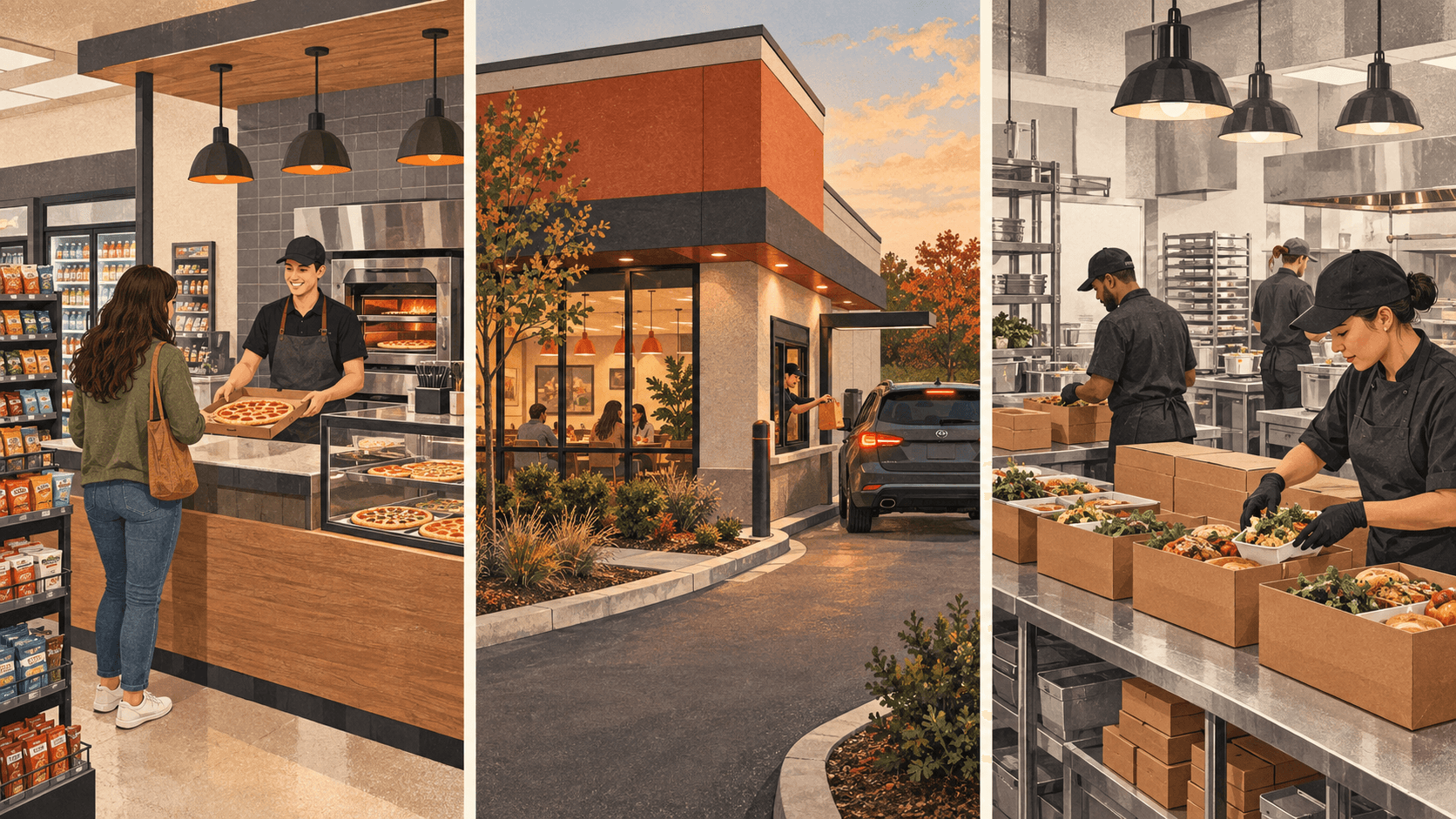
Oil Price Shock Hits Restaurant Supply Chains: $100 Crude Sends Food-Away-From-Home Costs Surging
The U.S.-Iran conflict and the associated closure of the Strait of Hormuz have pushed crude oil past $100 per barrel for the first time since 2022, and restaurant operators are absorbing the hit from multiple directions at once. National average gas prices reached $3.98 per gallon, a 35% spike in a single month. Diesel, the lifeblood of food distribution, climbed to $4.16 per gallon in one week, an 11% jump. For an industry already fighting elevated beef prices and 25% tariffs on Canadian imports, this is another front opening in what has become a war of attrition on margins.
This is not a problem that resolves itself quickly. The Strait of Hormuz historically handled roughly 20% of global crude supply. Even partial disruption at that chokepoint keeps oil prices elevated for months, not weeks. Restaurant operators who wait for prices to normalize before adjusting their strategy will find themselves behind when the bills arrive.
Why Diesel Matters More Than Gasoline to Restaurants#
Most restaurant operators track gas prices the way consumers do: with frustration but not urgency. Diesel is a different calculation. Food distribution in the United States is more than 70% truck-dependent. Every case of produce, protein, and dry goods moving from a distribution center to a restaurant travels on diesel. When diesel spikes 11% in a week, that cost gets passed through the supply chain, and it gets passed through fast.
Food distributors operating on thin margins typically include fuel surcharge provisions in their contracts. Sysco, US Foods, and Performance Food Group all built fuel adjustment clauses into their pricing structures after the 2008 oil shock. Operators should expect those surcharges to activate, or escalate if already active. A restaurant doing $2 million in annual revenue that spends 28% on food could see its distribution surcharges add $10,000 to $20,000 in annualized cost depending on the contract structure.
The geography compounds the problem. California gas hit $5.79 per gallon; Washington state reached $5.27. Operators in these markets face both higher input costs on the shelf and a consumer base with less discretionary income for dining out. The squeeze works from both ends.
Packaging: The Hidden Petroleum Story#
Food packaging is a petroleum-derived cost that rarely appears on the radar until oil prices move sharply. Polypropylene containers, polyethylene bags, foam cups, and PET clamshells are all petroleum-based. When crude rises 40%, the raw material cost for these products follows.
Packaging manufacturers are already signaling 8% to 12% price increases on petroleum-based products for Q2 and Q3. For a fast-casual chain running heavy off-premise volume, where every order goes out in a bag with multiple containers, this matters. A concept doing 50% off-premise with 2,000 orders per day at a packaging cost of $0.60 per order is spending roughly $438,000 annually on packaging. An 8% increase adds $35,000. A 12% increase adds $52,500. Neither number is catastrophic in isolation, but stacked on top of distribution surcharges and energy bills, the accumulation becomes significant.
Energy Costs Inside the Four Walls#
Restaurants spend 5% to 8% of revenue on energy and utilities, which includes natural gas for cooking and electricity for HVAC, refrigeration, and lighting. The oil shock introduces a second-order effect on energy prices. Natural gas prices track crude oil with a lag. Electricity costs in regions where power generation relies on petroleum or natural gas will follow. This does not happen overnight, but operators who are six months into a fixed energy contract should model what their renewal looks like at current commodity prices.
The operators most exposed are those in states where electricity markets are deregulated and indexed to spot commodity prices. Texas, Pennsylvania, Illinois, and Ohio all have substantial deregulated energy markets. A restaurant in Dallas or Houston that locked in a favorable fixed-rate contract before the conflict started is insulated for now. One coming up for renewal is not.
Food Costs: Transportation Layered onto Existing Pressure#
Food-away-from-home CPI was already running at 3.5% year over year before the oil shock hit. That baseline reflects existing wage inflation, tariff costs, and supply chain tightness. The crude spike does not replace that pressure. It layers on top of it.
Produce is the most immediate victim. Fruits and vegetables travel long distances under refrigeration, requiring both diesel for the truck and electricity for the reefer unit. Fresh produce margins in the supply chain are thin, so distributors pass through fuel cost increases quickly rather than absorbing them. Operators running salad-forward or bowl-format concepts should expect produce line items to move first.
Proteins move next. Beef is already under pressure from a 25% tariff on Canadian imports. Chicken supply chains, while more domestic, still depend on diesel for live haul and finished product distribution. Seafood, which relies on refrigerated long-haul transport from coastal processing facilities, is particularly exposed. Operators with a heavy seafood menu, notably casual dining chains that built their identity around it, face the same product they can't substitute and higher costs to get it to the restaurant.
Franchisee Cash Flow: Where the Math Gets Dangerous#
For multi-unit franchisees already carrying debt service from expansion, the oil shock creates a cash flow problem that can accelerate quickly. A franchisee operating 10 quick-service locations at $1 million in average unit volume has roughly $10 million in revenue. Food and paper at 28% is $2.8 million. A 2-point deterioration in food cost, conservative given the stacking pressures, moves that to $3 million, erasing $200,000 in contribution margin. Franchisees carrying leveraged balance sheets from recent acquisitions have limited ability to absorb that.
This is the same population the industry watched in 2023 and 2024 when a different set of cost pressures triggered a wave of franchisee bankruptcies. The Sailormen (Popeyes) filing, the Fat Brands franchisee distress, the pressures on Papa John's and Wendy's operators, all shared a common thread of margin compression meeting debt service obligations. The oil shock is not creating a new vulnerability; it is applying pressure to one that already exists.
What This Means for Operators#
The operators who navigate this period best will be the ones who act before the bills arrive rather than after. There are five concrete moves worth prioritizing now.
Audit distribution contracts immediately. Pull the fuel surcharge language from every distributor agreement. Understand the trigger price (typically tied to the Department of Energy weekly retail diesel index) and the adjustment formula. Knowing what's coming is better than being surprised by an invoice.
Accelerate packaging vendor conversations. If you are on annual pricing for packaging, request a price hold confirmation in writing. If you are on spot pricing, evaluate whether locking in a 6-month or 12-month contract at current prices beats the risk of 10% to 15% increases. Given the trajectory, locking in now likely makes sense.
Review menu engineering with petroleum exposure in mind. Seafood, fresh produce, and items requiring heavy packaging are the most exposed. This does not mean pulling them, but it means pricing them with current and projected input costs, not the costs from the last menu pricing cycle.
Model energy renewal scenarios now. If your electricity or natural gas contract renews within 12 months, get quotes today. Locking in before natural gas prices fully price in the crude spike may save meaningful money. For operators in deregulated markets, brokers can pull multiple competitive quotes in 48 hours.
Tighten cash flow buffers. Multi-unit operators with lines of credit should evaluate whether this environment warrants drawing on credit facilities at current rates to build a cash cushion. The cost of carry on a modest line of credit may be worth the operational flexibility if cost pressures accelerate faster than pricing adjustments can offset them.
The Compounding Problem#
What makes this oil shock different from a standalone event is the context it arrived in. Operators entered 2026 already managing tariff pressures on imported goods, elevated beef costs from a historically tight cattle supply, minimum wage increases in 22 states effective January 1, and a consumer base showing signs of traffic fatigue with fast food value offers. Each of those forces was manageable individually. The oil shock is not a single new problem. It is a multiplier on an already stressed system.
The industry will adjust, as it always has. The operators who come out the other side in the strongest position are those who treat this as an operational stress test requiring active management, not a weather event to wait out.
QSR Pro Staff covers the business of quick-service and fast-casual restaurants for operators, investors, and industry professionals.
QSR Pro Staff
The QSR Pro editorial team covers the quick service restaurant industry with in-depth analysis, data-driven reporting, and operator-first perspective.
More from QSR