Introduction#
A decade ago, a QSR could operate with a cash register, a landline phone, and paper order tickets. Today, competitive operations require an integrated ecosystem of technologies managing everything from customer orders to kitchen production, inventory tracking to labor scheduling, and customer relationships to financial reporting.
This comprehensive guide examines every technology system a modern Quick Service Restaurant needs in 2026. Whether you're opening a new location, upgrading an existing operation, or evaluating your tech stack's competitiveness, this resource will help you understand what's essential, what's optional, and how these systems work together.
The Frankenstack Problem#
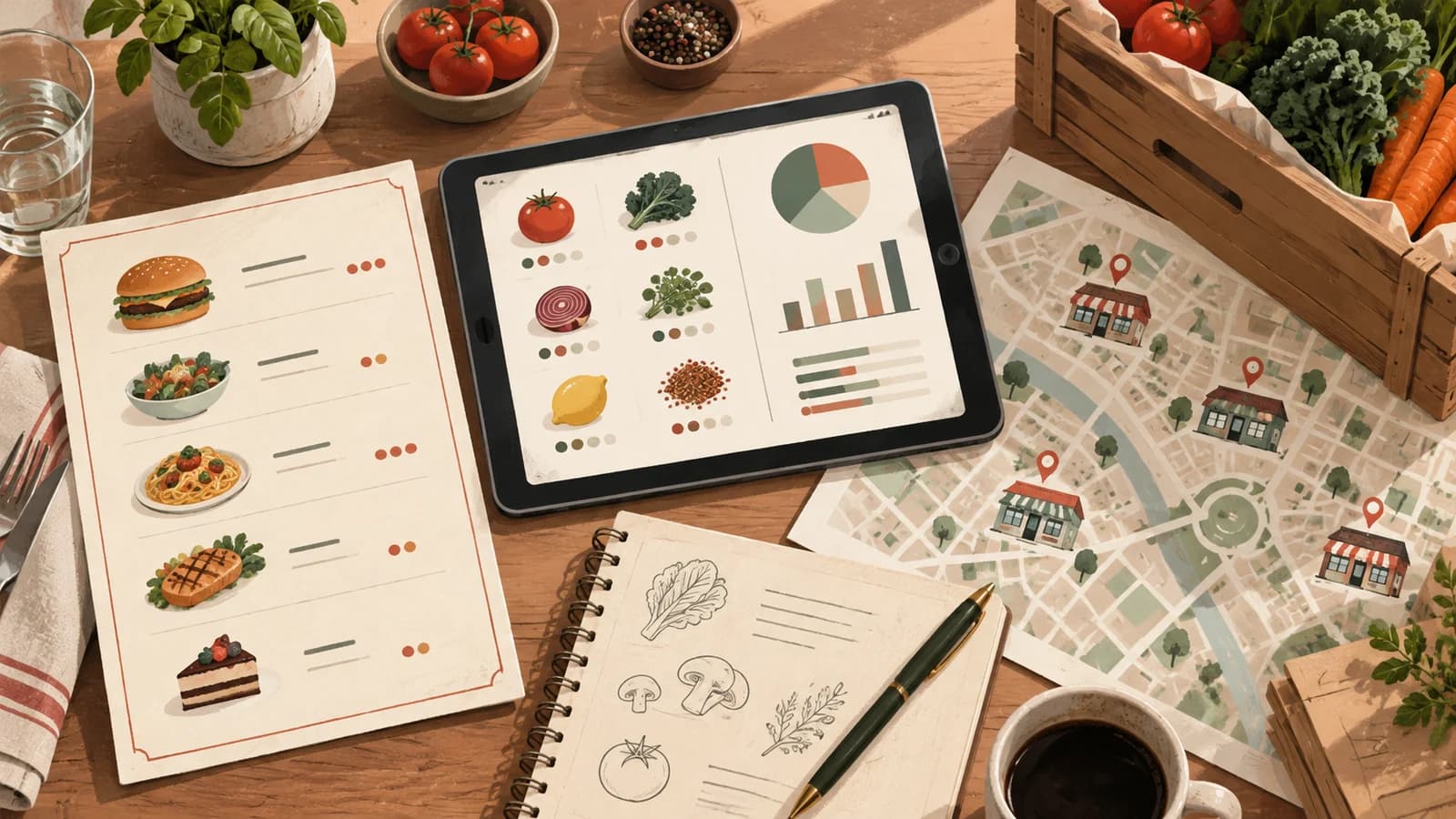
Walk into the back office of any QSR location and you'll see the evidence pinned to bulletin boards, taped to walls, and bookmarked across three different browsers: login credentials for eight, ten, sometimes twelve separate systems. POS for transactions. KDS for kitchen orders. Third-party tablets from DoorDash, Uber Eats, and Grubhub stacked like a digital Jenga tower. Inventory management in one system. Labor scheduling in another. Loyalty program in a third. Online ordering on a platform that may or may not sync with any of the above.
The average restaurant technology stack has evolved like a coral reef -- layer upon layer of point solutions accreted over years, each solving one problem while creating integration headaches everywhere else. Managers spend hours reconciling data across systems that refuse to speak the same language. Menu changes require updates in six different places. Sales data lives in silos that make unified reporting a fantasy.
The industry has a name for this: the Frankenstack. And in 2026, the companies promising to kill it are finally delivering platforms strong enough to make operators believe.
According to Mordor Intelligence, the restaurant management software market hit $6.54 billion in 2025 and is growing at 14.74% annually. The money is flowing to platforms, not point solutions.
Core Infrastructure: The POS Decision#
Why POS Is the Defining Choice#
The POS is your operational hub, connecting orders, payments, kitchen, inventory, and reporting. Once you commit, switching is painful. Migration costs, staff retraining, menu reprogramming, and potential downtime can easily exceed the cost of the system itself. Most operators stay with their first choice for 5-7 years. Choose carefully.
The global restaurant POS terminal market hit $25.29 billion in 2025 and is projected to reach $27.45 billion this year, with QSR accounting for more than 27% of U.S. restaurant POS spending. Self-serve kiosks alone now represent 30% of terminal-type market share, valued at $6.78 billion in 2026 and growing at a 10.2% CAGR. Cloud-based POS deployments are expected to triple from $6 billion to $15 billion over the next decade.
Three platforms are absorbing the lion's share: Toast, Square for Restaurants, and Oracle MICROS Simphony. Each entered the QSR arena from a different direction. Toast built its way up from independent restaurants. Square expanded sideways from retail payments. Oracle pushed down from enterprise hospitality. In 2026, they've converged on the same battleground: the multi-unit QSR operator running anywhere from 20 to 500 locations.
Toast: The Restaurant-First Platform#
Toast built its system specifically for restaurants, and it shows. The interface makes sense to kitchen staff, not retail clerks. Online orders auto-fire to the kitchen. The reporting actually answers restaurant questions: what's your theoretical food cost versus actual? Which menu items have the highest profit per labor hour?
The company added a record 30,000 net locations in 2025, including approximately 8,000 in Q4 alone. By late 2025, Toast was processing transactions across roughly 156,000 restaurant locations. Annualized recurring revenue crossed the $2 billion mark, up 26% year-over-year. Q4 2025 net income hit $101 million, and adjusted EBITDA margins expanded to 34%.
Real-World Pricing (2026):
- Starter plan: $0/month (limited features, higher processing rates)
- Point of Sale plan: $69/month per terminal
- Build plan: $165/month per terminal (includes advanced inventory, multi-location)
- Processing: 2.49% + 15 cents (card present), higher for keyed/online transactions
- Hardware: Terminal $799, Handheld $499, Kitchen Display $799
A typical single-location QSR with 2 terminals and a KDS runs $1,000-$1,500/month all-in once you add processing fees.
The Toast Lock-In. You must use Toast for payment processing. No exceptions. If you find a processor offering 1.8% and Toast wants 2.49%, you're stuck. Their hardware is proprietary -- you can't buy generic tablets. For high-volume locations processing $500K+ annually, negotiate. Toast wants your business and rates are flexible for larger accounts. But for a 100-location chain, the difference between Toast's bundled rate and a negotiated interchange-plus rate can reach $240,000-$480,000 annually.
Toast's multi-location management dashboard lets operators push menu changes, pricing updates, and promotions across all locations from a single interface. Their 2025 acquisition of xtraCHEF added accounts payable automation to the native stack.
Best for: Multi-location QSR chains that need centralized control, restaurants with complex inventory needs, operators who value integration over flexibility.
Square: The Low-Barrier Entry#
Square's pitch is simple: free software, pay only for processing. Download the app, buy a $50 reader, start taking orders.
Real-World Pricing (2026):
- Free plan: $0/month (basic features)
- Plus plan: $60/month per location
- Premium plan: custom pricing
- Processing: 2.6% + 10 cents (card present), 2.9% + 30 cents (online/keyed)
- Hardware: Register $799, Terminal $299, KDS $800
Square's restaurant-specific features improved significantly since 2023. The POS now handles coursing, kitchen routing, and modifier groups properly. Unlike Toast, Square allows operators to use its platform without being locked into its payment processing at the Premium tier.
The Ceiling. Square is a payments company that added restaurant features, not vice versa. The reporting is decent for transactions but weak for restaurant operations. Food cost analysis requires exporting to spreadsheets. The KDS works but lacks sophistication -- no color-coding by ticket age, limited bump bar support. High-volume kitchens running 100+ tickets during rush will struggle.
Best for: Single-location QSR, counter-service cafes, food trucks, operators testing new concepts with limited capital, businesses under $300K annual revenue.
NCR Aloha / Oracle MICROS: The Enterprise Veterans#
Aloha (owned by NCR) and Oracle MICROS Simphony have been in QSR kitchens since before smartphones existed. Major chains run these systems. They're boring, proven, and built for scale.
Oracle MICROS Simphony runs 150,000+ installations across 155 countries. It's the default for hotel restaurants, casino food service, and multi-national chains. Oracle acquired MICROS in 2014 for $5.3 billion and has been migrating the platform to Oracle Cloud Infrastructure.
For multi-unit enterprise operators, Oracle offers native multi-property management across countries and languages, an API ecosystem connecting to 500+ third-party applications, and compliance frameworks for PCI, GDPR, and regional tax requirements. Base per-terminal pricing for Simphony Essentials starts at $55/month, with enterprise deployments running $200-$500+ per terminal monthly with custom modules. Implementation for a 100-location chain can run $500K-$2M including customization, data migration, training, and parallel running periods.
These platforms dominate when you need extreme scalability, regulatory compliance across multiple jurisdictions, or deep integration with existing enterprise systems. But the implementation complexity and cost put them out of reach for most operators under 50 locations.
Emerging Challengers#
Revel Systems: iPad-based system with strong inventory and employee management, growing in QSR. SpotOn: Restaurant-focused with integrated loyalty and marketing at competitive pricing. Clover: Flexible hardware options and good third-party app ecosystem for smaller QSRs. Otter: Started as delivery aggregation middleware, launched its own POS in 2025 -- the pitch being that they already sit between your POS and third-party delivery platforms.
The Full-Stack vs. Best-of-Breed Debate#
The old guard dominated enterprise chains for decades with on-premise systems. Cloud disruptors stepped in to serve independents and SMBs with one-stop-shop solutions. Now those disruptors are moving upmarket, and the legacy players are scrambling to modernize.
The case for full-stack platforms: When kiosks, mobile apps, delivery platforms, and kitchen display systems all communicate through one platform, restaurants gain operational clarity. Chains that consolidate their tech stack report 30-40% reductions in IT overhead and significantly faster onboarding of new locations.
The case for composable architecture: No single vendor can be best at everything. Toast's payroll might be good, but is it better than a company that only does payroll? Companies like Olo, Omnivore, and AnyConnector sell a different vision: keep your best-in-class POS, inventory system, and labor scheduler, but let middleware handle the integration layer.
The tradeoff is real. Composability means every API integration is a potential failure point. Middleware adds latency. Version updates across multiple vendors create compatibility nightmares. When something breaks on a Saturday night, finger-pointing between vendors is the last thing you need.
For most operators under 50 locations, the full-stack approach wins on simplicity and total cost of ownership. For enterprise operators with specialized needs, composable architecture offers flexibility worth the added complexity.
Kitchen Display Systems#
Digital screens replacing paper tickets provide faster order flow, improved accuracy, better timing management, and operational data.
Essential Features:
- Order display with timing and color-coded aging
- Item routing by station
- Priority and rush order management
- Prep time tracking and bump screens
- Integration with all ordering channels (counter, app, delivery, kiosk)
Modern KDS platforms unify orders from kiosks, counters, mobile apps, websites, and delivery aggregators into one workflow. They connect directly with courier platforms like Uber Eats and DoorDash, automatically updating order status and estimated preparation times. Multiple display screens manage parallel workflows -- one station for proteins, another for sides, a third for assembly, and a final screen for dispatch.
Cost: Display hardware $800-$2,000 per screen, software $30-$100/month per screen.
Customer-Facing Technology#
Mobile Ordering and Apps#
Proprietary mobile apps enable direct customer relationships, higher check averages (typically 15-30% higher than in-store orders), and valuable data collection.
Development approaches:
- Custom development: $50K-$200K+ initial, full control
- White-label solutions (Olo, Lunchbox, ChowNow): $10K-$50K setup, faster to market
- POS provider apps: Simplest integration, limited customization
App users visit 20-40% more often than non-app customers. Target 15-25% mobile order penetration.
Self-Service Kiosks#
Lobby kiosks reduce perceived wait times, increase check averages through suggestive selling (10-30% proven lift), and reallocate labor from order-taking to production. Hardware runs $5,000-$15,000 per kiosk with $50-$150/month software licensing.
Digital Menu Boards#
Electronic displays enable dynamic pricing, daypart-specific menus, promotional content, and rapid updates. Menu changes happen in minutes vs. days for printed boards. Displays cost $800-$2,500 per screen with $30-$150/month for content management software.
Drive-Thru Technology#
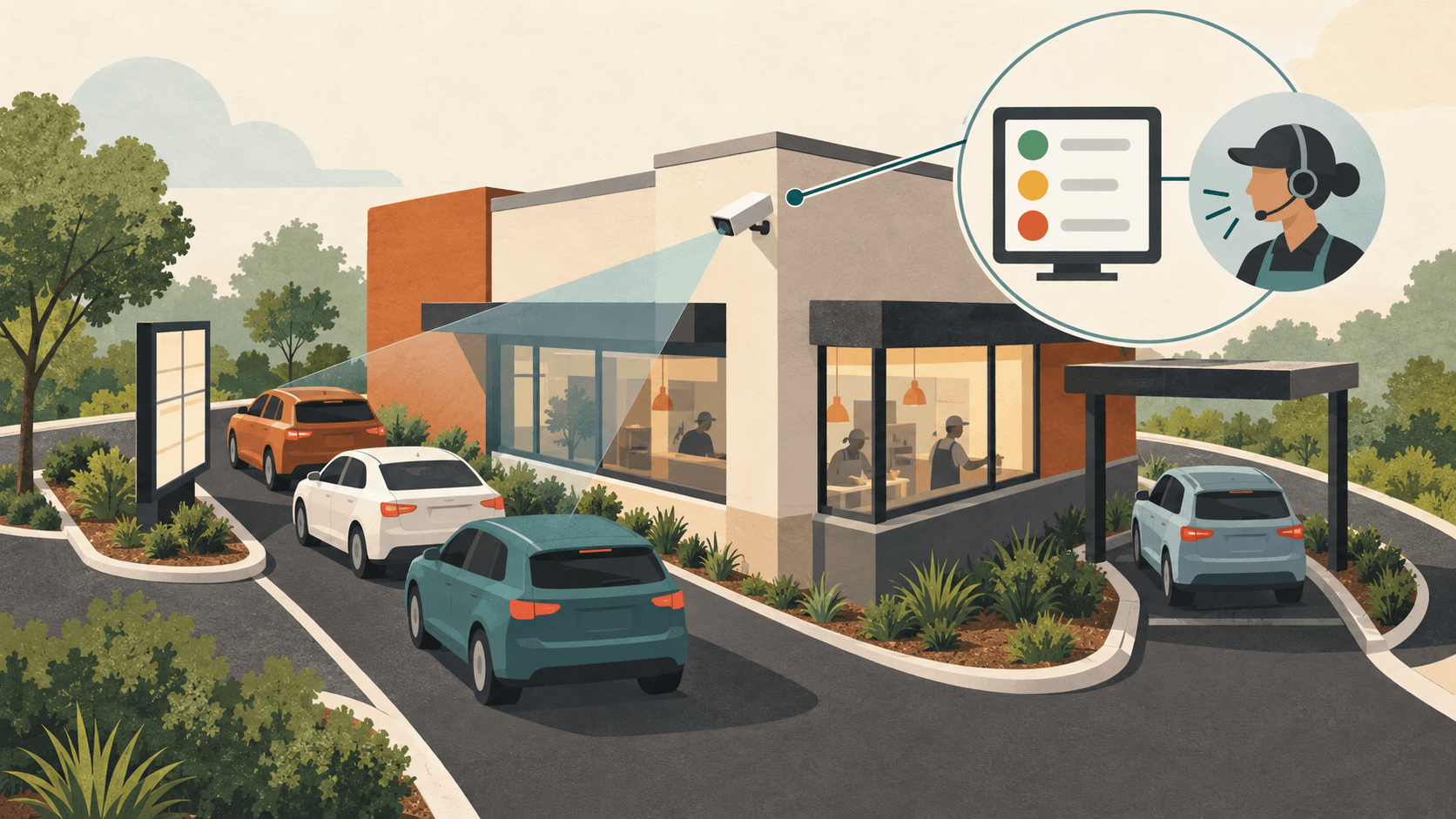
Drive-thru accounts for 40-45% of QSR transactions. Key systems include headset communication ($3,000-$8,000), timer and detection systems ($2,000-$5,000), order confirmation displays ($1,500-$3,000), and AI voice ordering ($1,000-$3,000/month subscription). Voice AI at drive-thrus handles 70-80% of orders without human intervention at early-adopter chains, reducing wait times and freeing staff to focus on accuracy and service.
Loyalty Programs#
Digital loyalty programs drive frequency (20-40% more visits vs. non-members) and increase check averages (10-20% higher spending). The 2026 standard is fully data-driven programs using predictive analytics and geofencing to deliver contextual offers at exactly the right moment. Reactivation campaigns targeting dormant customers with tailored incentives show 40-50% higher response rates than generic discount blasts.
Platforms range from POS-native programs (included with Toast, Square) to specialized platforms (Punchh, Paytronix, Thanx) to custom enterprise solutions.
Kitchen and Production Technology#
Automated Cooking Equipment#
Technology-enabled cooking equipment delivers consistency, reduces labor, and improves food safety.
Key Equipment Categories:
- Auto-fryers ($3,000-$8,000): Programmable cooking times and temperatures with automatic basket lifting. Frymaster and Welbilt lead.
- Clamshell grills ($2,500-$6,000): Both sides cook simultaneously with programmed time and temperature. Eliminates guesswork on burger doneness.
- Conveyor ovens ($5,000-$15,000): Consistent cooking for pizza, sandwiches, and baked goods. Middleby Marshall is the dominant manufacturer.
- Combi ovens ($15,000-$40,000): Multiple cooking methods (steam, convection, combination) in one unit. Rational is the premium leader. These are overkill for most QSR formats but standard in high-volume fast-casual kitchens.
- High-speed ovens ($10,000-$30,000): TurboChef and similar systems using multiple heat sources for rapid cooking.
The real value of automated cooking equipment isn't labor replacement -- it's consistency. A programmable fryer produces the same fry quality whether it's the first order of the day or the 500th. That consistency translates directly to customer satisfaction and reduced waste from overcooked or undercooked product.
Food Safety and Monitoring#
Automated temperature monitoring using wireless sensors ($100-$300 each, 10-15 per location) with cloud platforms ($50-$200/month) ensures food safety compliance and reduces liability. Automated HACCP logging replaces manual processes that consume manager time and are prone to falsification.
Leading solutions include Therma, CMI Orion, Cooper-Atkins, and TempGenius. The systems provide continuous monitoring of coolers, freezers, and hot holding equipment with immediate notification of temperature excursions. Historical records are stored automatically for health inspections -- a significant improvement over the paper logs that many jurisdictions still technically accept but increasingly question.
Kitchen Robotics#
Most kitchen automation remains experimental in 2026. High upfront costs ($30K-$150K+ per system), maintenance complexity, and menu flexibility limitations slow adoption. Companies like Miso Robotics (Flippy burger robot), Blendid (automated smoothies), and Cafe X (robotic baristas) are furthest along.
The reality check: a $100,000 robotic fry station that handles one task doesn't pencil out when you can hire a crew member at $15-$20/hour to handle multiple stations. But as labor costs continue rising and the technology gets cheaper, the break-even point is approaching fast. Expect meaningful adoption in 2027-2030.
Operational and Back-Office Systems#
Inventory Management#
Real-time tracking integrated with POS depletes inventory automatically, detects variances between theoretical and actual usage, and generates automated ordering based on par levels. Specialized platforms like MarginEdge, Restaurant365, and CrunchTime cost $100-$500/month per location but typically pay for themselves through reduced food costs.
Labor Management and Scheduling#
Demand forecasting, shift building, and real-time labor cost tracking tools (7shifts, Deputy, HotSchedules) reduce labor costs 2-5% and save managers 5-10 hours per week. $50-$200/month per location.
Delivery Integration#
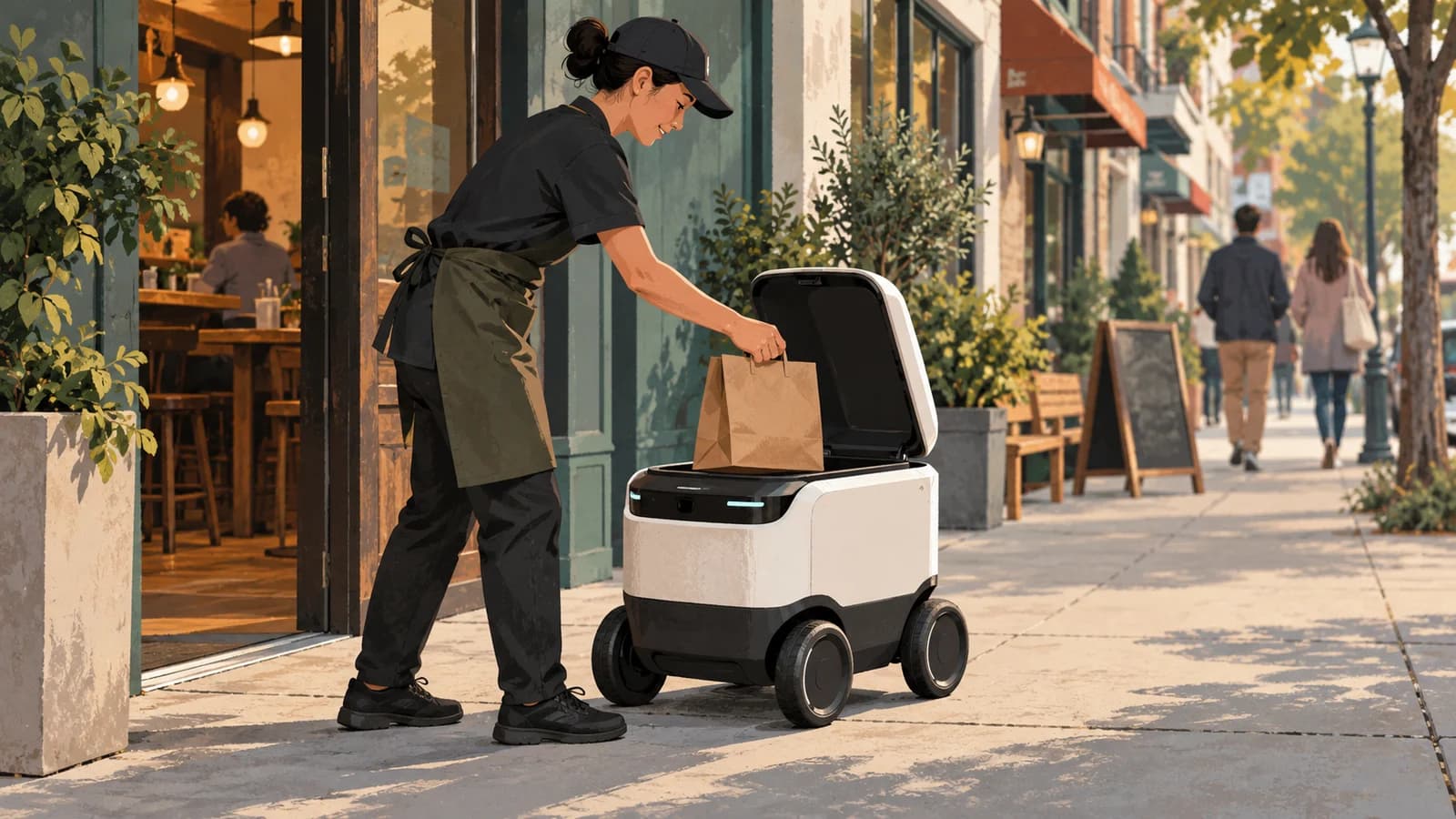
Aggregating orders from DoorDash, Uber Eats, Grubhub, and direct channels into a unified workflow is essential. Solutions range from platform-native integrations to middleware aggregators like Otter, Ordermark, and Cuboh ($100-$500/month per location).
Back-Office and Accounting#
Restaurant-specific accounting platforms (Restaurant365, xtraCHEF/Toast, MarginEdge) integrate with POS, inventory, and labor systems to provide real-time P&L visibility. Without integration, operators are flying blind until month-end when the accountant delivers bad news.
Network Infrastructure#
Reliable, fast internet connectivity is critical infrastructure. Minimum 25 Mbps download / 5 Mbps upload, with 50/10 recommended for busy locations. Business-grade service with uptime guarantees and a backup cellular connection for automatic failover are essential. POS systems with offline mode can process transactions during outages, syncing when connectivity restores.
Cost: Primary internet $100-$400/month, backup connection $50-$150/month, enterprise WiFi access points $200-$500 each.
AI: The Invisible Infrastructure Layer#
The AI revolution in QSR is shifting from flashy robots to back-of-house systems you never see. The defining technology trend of 2026 is "invisible AI" -- systems that quietly manage loyalty rewards, dynamic pricing, and real-time inventory forecasting without customer-facing robotics.
Predictive systems adjust staffing schedules and menu offerings based on weather patterns, local events, and historical demand data. These agentic AI systems work autonomously, requiring minimal human intervention. Brands like McDonald's and Chipotle are testing predictive inventory systems that reduce waste by 15-20% while maintaining product availability.
The result: human staff can focus on emotional connection and hospitality while AI handles the logistics.
Building Your Stack: A Decision Framework#
Under 5 locations: Go full-stack with Toast or Square. Minimize vendors, minimize complexity. You don't have IT staff, so every integration point is a potential headache with no one to fix it.
5-50 locations: Toast is the leading choice. Evaluate whether POS-native modules (loyalty, labor, inventory) meet your needs or whether specialized platforms justify the integration overhead. Start building a relationship with your POS account team -- you're now big enough to negotiate.
50-500 locations: Enterprise evaluation territory. Toast's enterprise tier, Oracle Simphony, and NCR Aloha all compete here. The POS decision drives your entire technology architecture for 5-7 years. Budget $500K-$2M for implementation. Consider composable architecture only if you have dedicated IT resources to manage integrations.
500+ locations / major franchise systems: Custom solutions and enterprise platforms. Your tech stack is a competitive differentiator, not just infrastructure. You likely need a VP of Technology making these decisions.
The Migration Question#
Ripping out an existing POS is traumatic. You're changing the system that touches every transaction, every shift, every report. For multi-unit operators, migration happens location by location over months.
Budget for parallel running periods (2-4 weeks per location running old and new systems simultaneously), staff retraining, data migration, and the inevitable drop in speed-of-service during the transition. The total cost of switching POS systems typically exceeds the cost of the new system itself.
That said, staying on a dying platform is worse. If your current system can't integrate with modern ordering channels, can't provide real-time multi-location reporting, or requires on-premise servers that need manual maintenance, the cost of staying is measured in lost sales and operational inefficiency that compounds every month.
The Rip-and-Replace Question#
The ultimate question for any unified platform isn't feature completeness -- it's whether it's worth the pain of migration.
Budget for parallel running periods (2-4 weeks per location running old and new systems simultaneously), staff retraining (plan for 15-30% slower service during the first week), data migration (historical sales data, loyalty member databases, inventory records), and the inevitable customer-facing friction during the transition.
For multi-unit operators, migration happens location by location over months. A 50-location chain might spend 6-12 months rolling out a new POS system. The total cost of switching POS systems -- including lost productivity, retraining, and parallel running -- typically exceeds the cost of the new system itself.
But staying on a dying platform is worse. If your current system can't integrate with modern ordering channels, can't provide real-time multi-location reporting, or requires on-premise servers that need manual maintenance, the cost of staying is measured in lost sales and operational inefficiency that compounds every month.
Looking Ahead#
The restaurant technology landscape is consolidating rapidly. The Frankenstack era is ending, replaced by full-stack platforms that own the operating system layer for the industry. Cloud infrastructure matured. API ecosystems stabilized. The companies building restaurant operating systems invested billions into platforms that don't just check boxes on feature lists, but actually work in the field under the pressure of Friday night dinner rushes.
The competitive advantage goes to brands that can launch new channels, update menus, and respond to market changes without rebuilding infrastructure. In 2026, your technology stack isn't just a cost center. It's the foundation of your ability to compete.
For the operator staring at those four proposals on the desk, the best advice is simple: stop evaluating features and start evaluating architecture. Features change quarterly. Architecture decisions last five to seven years. Choose the platform whose fundamental approach -- how it connects systems, how it handles data, how it scales -- aligns with where your business is heading, not just where it is today.#
Related Reading#
- Restaurant Technology Trends 2026: What's Actually Being Adopted vs Hype
- QSR Delivery Economics: Why Restaurants Lose Money on Every DoorDash Order
- Food Safety Technology in 2025: What's Real, What's Hype, and What Actually Prevents Shutdowns
- Restaurant Technology ROI: What Actually Pays Off and What Doesn't
QSR Pro Staff
The QSR Pro editorial team covers the quick service restaurant industry with in-depth analysis, data-driven reporting, and operator-first perspective.
More from QSR