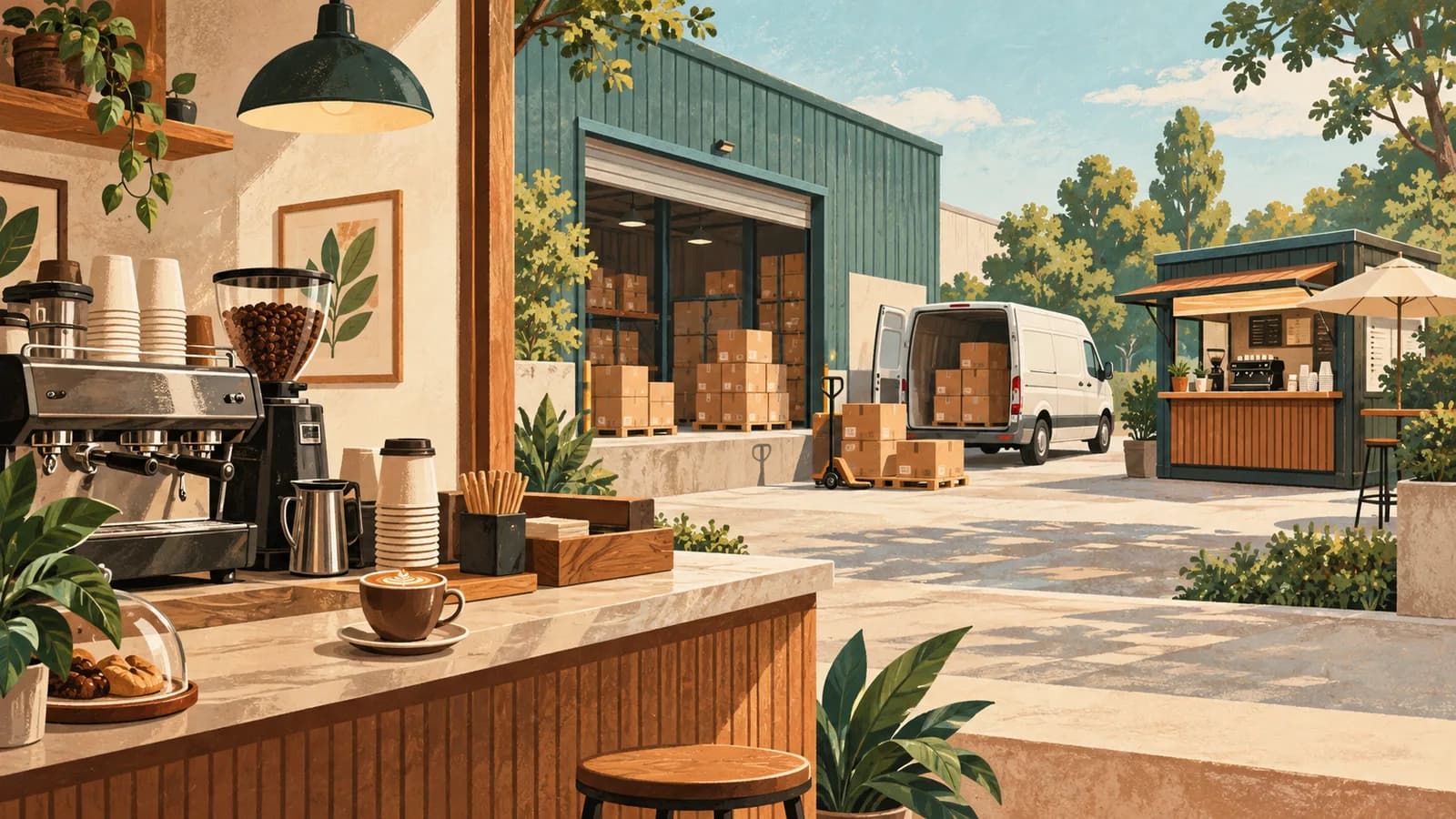
Bad Ass Coffee of Hawaii has moved its headquarters from Denver to Lexington, Kentucky, and opened a distribution center there to serve East Coast and destination locations, the company said in a Sept. 22 update. In the company’s description, the new distribution center is meant to make supply more consistent in a region that has been a focus of recent store development.
Alongside that physical expansion, the company says it is revamping its back-office systems to give franchisees a clearer view of store economics. It reports 48 locations, 10 multi-unit owners and four more owners preparing to open their second store.
The franchise system asks new applicants to plan for multiple stores from the outset. Its current franchise page, observed Sept. 23, sets a three-store minimum development commitment, $1.5 million in net worth and $500,000 in liquid capital. The company says its development resources are focused on the United States, including Hawaii.
Lexington was already part of a major investor’s operating footprint. In an April 28, 2026, announcement, Bad Ass Coffee said AWA Investments operated five of its stores, including Lexington and Nashville, plus Pensacola Beach and Miramar Beach in Florida and Orange Beach, Alabama. The multi-brand franchising group, whose co-owners include Tom Wylie, was the largest investor in the coffee brand’s parent. AWA’s signed 10-unit agreement covered the Gulf Coast of Alabama and the Florida Panhandle, with development stretching from Gulf Shores to Panama City Beach.
By June 3, 2026, Bad Ass Coffee reported six nontraditional franchise locations nationwide. The company described a portfolio ranging from mobile units and drive-thru kiosks to shops inside airports, arenas and other venues. One example was its presence inside a 19,000-square-foot travel plaza off Interstate 94 in Kenosha, Wisconsin, developed with Golden Oil operator Paul Bhardwaj. The company was also pursuing traditional cafés along the East Coast and had seven Florida locations at the time.
In its Aug. 17, 2026, update, President and Chief Operating Officer Tom Wylie described cafés as a way to establish the brand in a market. Nontraditional locations, he said, give multi-unit operators access to traffic patterns a single café cannot reach.
The company’s 2026 opening forecast moved from 25–30 in June to 12 in August. The September update projects 13 openings and 55 locations by year-end.
The brand’s published opening process shows how franchise support is organized around development. After an application, prospective owners receive the franchise disclosure document, interview the executive team and visit a store to meet the support team. Signing a franchise agreement starts the process of opening the first location. The company then works with a strategic real estate partner to help an owner select a site.
Support continues through franchise orientation and meetings during construction and opening. The company describes its operations team as working with owners on both new construction and buildouts of existing spaces, followed by training before the opening. Its process also includes ongoing support after the store opens, extending the relationship from the property search into operating the business.
QSR Pro Staff
The QSR Pro editorial team covers the quick service restaurant industry with in-depth analysis, data-driven reporting, and operator-first perspective.
More from QSR