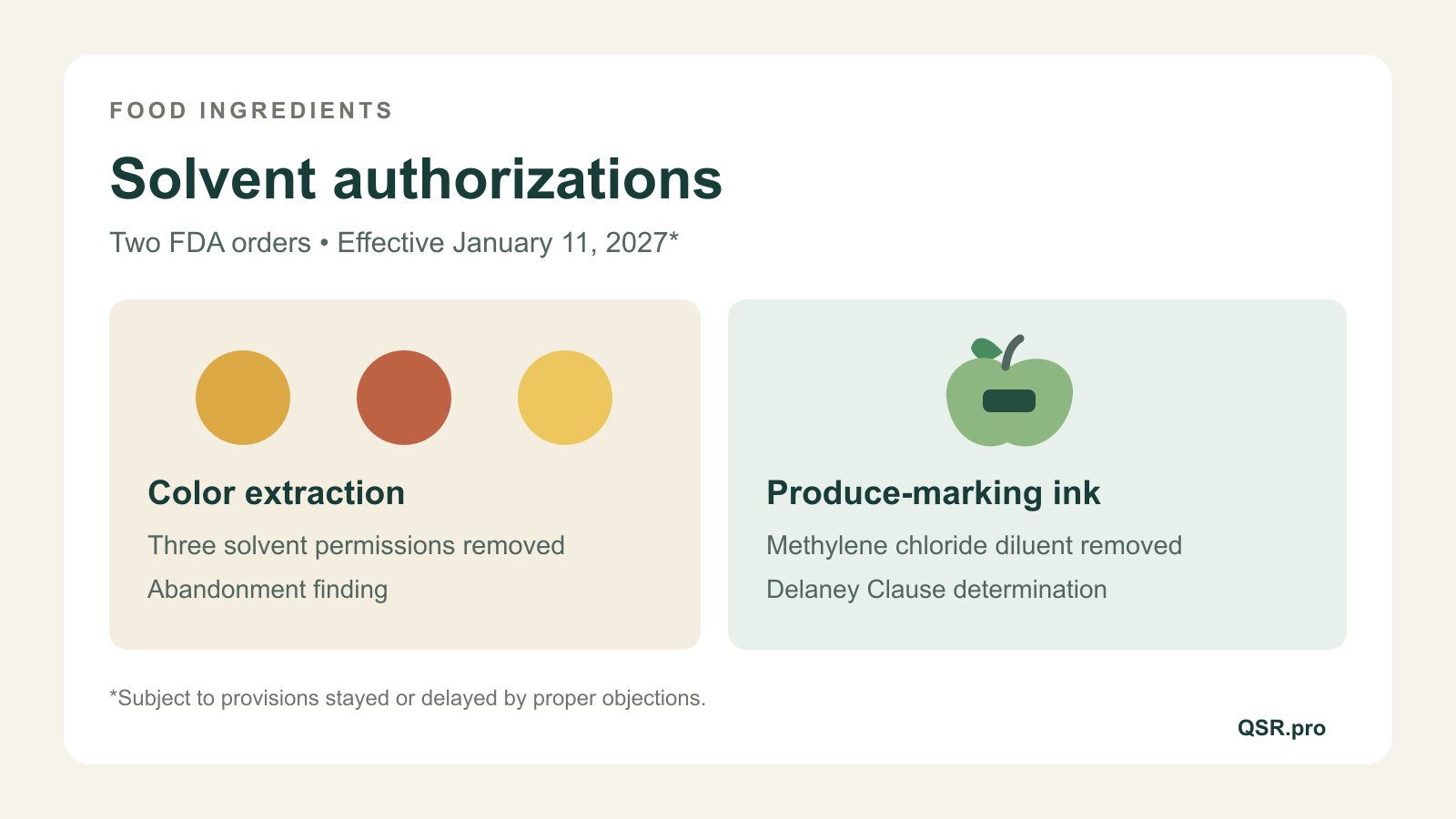
FDA has issued two final orders ending certain solvent uses in food-color production and produce-marking inks, effective January 11, 2027. Published November 10, the orders remove specific manufacturing permissions while leaving the listings for annatto extract, paprika oleoresin and turmeric oleoresin in place. For restaurant ingredient buyers, the distinction is between a color ingredient and the process used to make it. FDA extraction order, FDA ink order.
The agency reached that outcome through two different routes. It concluded that industry had abandoned the three extraction-solvent uses. For methylene chloride in produce-marking ink, it applied a statutory prohibition triggered by animal-cancer findings. Reading the orders together explains both what loses authorization and why the action does not amount to removing the three colors from food. FDA orders, legal reasoning.
The change starts with the manufacturing process#
The extraction order removes ethylene dichloride, methylene chloride and trichloroethylene from the permitted solvents for making annatto extract, paprika oleoresin and turmeric oleoresin. The amendments strike those solvent entries from three color-additive regulations. They do not delete the color listings. Operative amendments, page 72413.
That scope matters when a buyer sees one of those colors in an ingredient specification: the color's name alone does not establish that a supplier used a solvent covered by the orders. The issue addressed here is the manufacturing authorization, rather than a requirement in these orders to remove every food containing that color. Neither order announces a finished-food recall or directs restaurants to reformulate their menus. Extraction order, ink order.
FDA based the extraction decision on a petition from the International Association of Color Manufacturers. As described in the order, IACM reported a survey of 44 companies and three trade associations collectively representing an additional 375 companies. The survey asked about current manufacture, purchase, use and imports, future intentions, and remaining inventory of colors made with the solvents for U.S. food use. FDA's account of the petition, pages 72411–72412.
FDA says participating companies confirmed abandonment. The agency also received no comments demonstrating current use of the extraction solvents. It found the evidence sufficient to remove the permissions on abandonment grounds. The inventory evidence is an industry submission described by FDA; it is not a lot-by-lot inspection of restaurant or distributor stock. The orders provide no supplier-specific exposure figures or restaurant reformulation-cost estimate. FDA findings, page 72412.
Why the ink decision uses a different legal route#
The second order removes methylene chloride as a diluent in color-additive mixtures used in inks that mark fruit and vegetables. FDA issued it in response to a petition from Environmental Defense Fund and other petitioners. A diluent does not itself impart color. FDA nevertheless regulates its intentional use in a color mixture as a color-additive use. FDA analysis and amendment, pages 72417–72419.
That classification brings the use under the color-additive Delaney Clause. FDA concluded that methylene chloride induced cancer in laboratory animals and that the law therefore requires revoking the ink permission. It expressly said this action was not based on a finding that the intended use was no longer safe under the law's general safety standard. The animal finding supplies the statutory basis; the order does not quantify a consumer's cancer risk from eating marked produce. FDA conclusion, page 72418.
FDA treated residues of extraction solvents differently: as impurities in a color additive, rather than substances intentionally serving a color-additive function. It denied the petition's request to apply the color-additive Delaney Clause to those extraction uses. But that denial does not preserve the permissions after the orders take effect. The companion IACM order removes the same extraction uses because they were abandoned. FDA's two determinations, companion removal.
Two dates govern the next step#
Both orders set December 10, 2026, as the deadline for objections and requests for a hearing. Their stated effective date is January 11, 2027, subject to provisions stayed or delayed by proper objections. FDA says it will publish notice of any such stay or delay. Extraction order, dates and objections, ink order, dates and objections.
Neither order specifies a separate old-stock sell-through period or an inventory-transition exemption. FDA extraction order, FDA ink order.
QSR Pro Staff
The QSR Pro editorial team covers the quick service restaurant industry with in-depth analysis, data-driven reporting, and operator-first perspective.
More from QSR