Shake Shack (SHAK) is doing something that rarely happens in fast casual: expanding faster than ever while spending less to do it. The chain is guiding for 55-60 new company-operated Shacks in 2026, the largest development pipeline in its history, and doing so with average net build costs that fell below $2.0 million in 2025, roughly 20% lower than the prior year.
That combination of scale and cost discipline is the core of what management calls its profitability pivot. Revenue is guided to reach $1.6 billion to $1.7 billion for 2026. Restaurant-level margins are projected to expand to 23% to 23.5%. And the long-term model published through fiscal 2027 calls for low-teens revenue and unit growth, 50 basis points or more of annual margin expansion, and low-to-high-teens adjusted EBITDA growth each year.
Whether Shake Shack can deliver on those numbers depends on a set of interlocking bets: on real estate, on supply chain, on digital, and on a new loyalty program that management expects to launch later this year. Understanding how those pieces fit together matters for anyone evaluating SHAK, franchising alternatives in fast casual, or the competitive dynamics facing a restaurant sector still grinding through a profitability crisis.
The Build Cost Breakthrough#
For most of Shake Shack's history, the chain was a premium real estate play. Its early locations concentrated in New York, in airports, in tourist corridors, in food halls. Those locations came with elevated build costs and equally elevated average unit volumes, but they also limited the addressable market.
The decision to expand beyond that Northeast and tourist-city footprint into broader suburban and secondary markets required a fundamentally different approach to construction. A suburban strip mall end-cap is not a Manhattan food hall, and the economics need to reflect that.
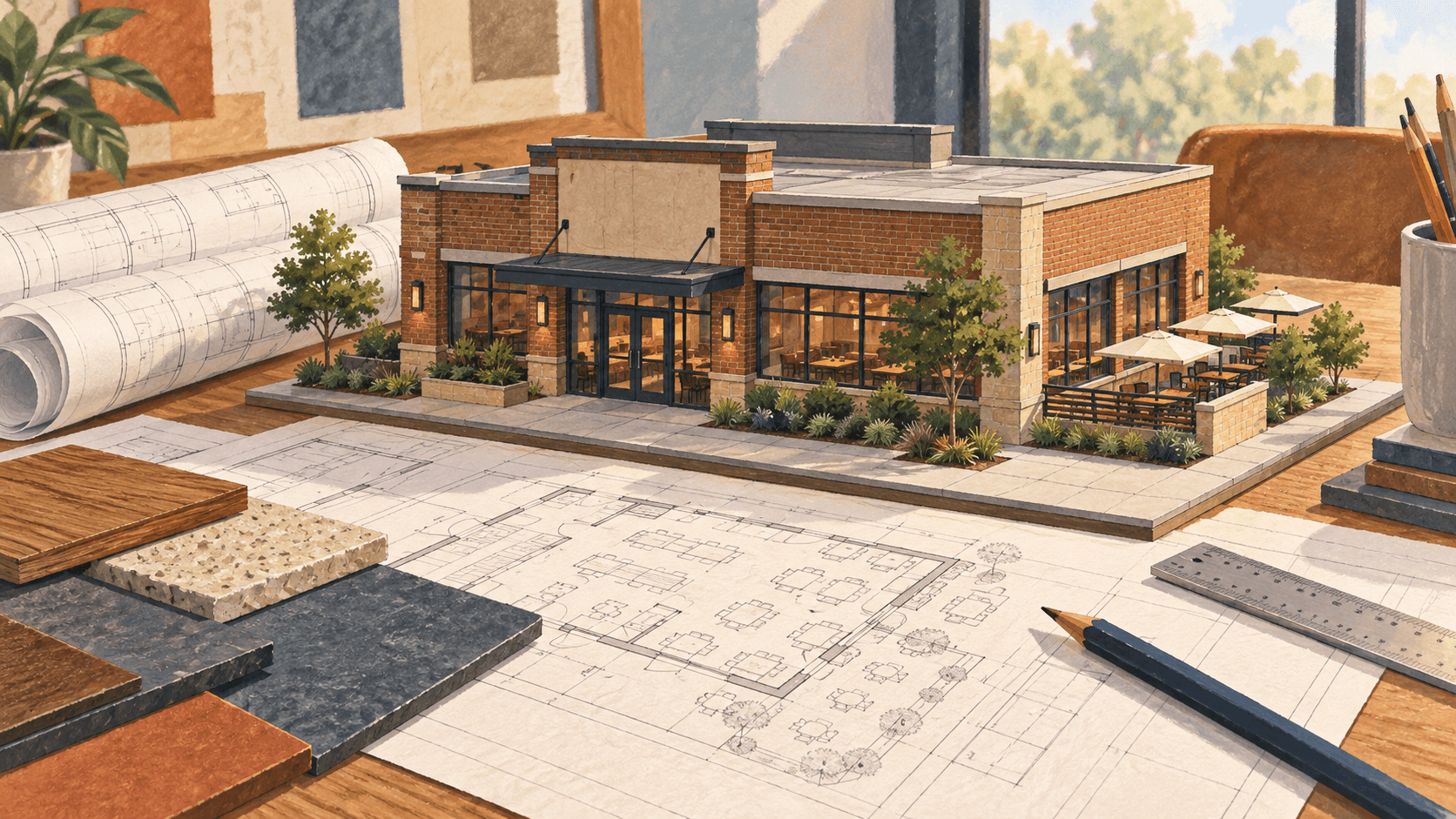
What Shake Shack did was systematic. The company simplified its design, standardizing kitchen layouts and equipment packages, and improved its procurement processes to take advantage of scale. The result was average net build costs below $2.0 million in 2025, down from roughly $2.5 million the year before. That 20% reduction compresses the payback period on every new Shack and makes the company's return-on-investment math considerably more attractive to the board and to investors.
For context, a 20% reduction in build costs at a chain guiding 55-60 openings per year represents tens of millions of dollars in capital efficiency over the development cycle. That capital either stays on the balance sheet or gets redeployed into the next class of openings.
The new markets present real risk. Shake Shack's brand recognition is materially lower in suburban Texas or the Mountain West than it is in a New York transit hub or a Chicago food court. Average unit volumes in new markets will likely run below the chain's established locations, at least initially. Management appears to be pricing that in through the conservative same-Shack sales guidance of positive low-single-digit growth.
Six Priorities, One Goal#
Management has organized the operational agenda around six stated priorities: culture, operations, supply chain optimization, comparable Shack sales growth through culinary and marketing and digital innovation, licensed business acceleration, and long-term strategic capability building.
The framing matters because it maps to where the margin expansion is expected to come from.
Supply chain is the clearest near-term lever. Shake Shack's menu is beef-heavy, and beef has been one of the most volatile food cost inputs in the restaurant industry. The chain is actively diversifying its supply relationships and investing in logistics capabilities designed to reduce exposure to input price spikes. This is not a solved problem. Beef markets in 2026 remain uncertain, and any meaningful commodity spike will pressure the 23% to 23.5% margin guidance. But supply chain investment signals the company is taking the risk seriously rather than hoping commodity prices cooperate.
Operations, the second priority, feeds margin in a different way. Labor is typically 28% to 32% of sales at a fast-casual concept at Shake Shack's price point. Incremental improvements in throughput, scheduling efficiency, and training quality compound over hundreds of locations. The best operators in the industry treat this as an engineering problem. Shake Shack's emphasis on culture alongside operations suggests the company is trying to reduce turnover as a way to lower training costs and improve unit-level consistency.
The Digital and Loyalty Bet#
The most watched variable for investors is the digital channel. Shake Shack launched its 1-3-5 in-app promotion and saw app downloads increase approximately 50%. That is a meaningful spike and signals that price-based digital promotions can drive acquisition at scale.
The risk is that promotional acquisition does not automatically convert to loyal repeat customers. What the chain needs is not just download volume but engagement depth. That is where the loyalty platform, expected to launch later in 2026, becomes strategically critical.
A well-designed loyalty program does several things for a fast-casual operator. It produces first-party data on purchase frequency, order composition, and daypart mix that no amount of point-of-sale aggregate data can replicate. It creates a direct communication channel that does not depend on paid social or third-party delivery platforms. And it allows for targeted offers that protect margin: instead of discounting across all customers, the chain can direct value to its most price-sensitive or most lapsed segments while letting high-frequency customers pay full price.
Shake Shack is entering the loyalty space later than some competitors. McDonald's loyalty program had enrolled more than 150 million active users as of its 2025 fiscal year-end disclosure. Chipotle's Rewards program routinely features in its earnings commentary as a traffic driver. The fast-casual and QSR loyalty landscape is competitive. But Shake Shack's entry point is different: its average check is higher, its customer skews more affluent, and its brand carries premium associations that allow for a loyalty design that is about recognition and experience rather than purely transactional points accumulation.
How quickly the loyalty platform converts app download growth into measurable same-Shack sales lift will be one of the defining metrics for SHAK in the back half of 2026 and into fiscal 2027.
Licensed Business and the Margin Mix#
Revenue guidance of $1.6 billion to $1.7 billion includes $59 million to $61 million in licensing revenues. That line deserves attention because it is structurally different from company-operated restaurant revenue: no labor costs, no food costs, no occupancy. Licensing revenues flow at very high margins.
Shake Shack's licensed Shacks include international locations, airports, stadiums, and other licensed domestic venues. Accelerating the licensed business is explicitly listed as one of the six operational priorities. If management can grow licensing faster than the total revenue base, it creates a favorable mix shift that benefits reported margins without requiring incremental capital.
The gap between the $59 million to $61 million licensing guidance and the $1.6 billion to $1.7 billion total suggests that licensing is still a relatively small percentage of the mix today. But the directional priority signals that management sees it as a meaningful contributor to the long-term margin story, particularly in international markets where company-operated development is capital-intensive and licensing removes the balance sheet risk entirely.
Reading the 23% Margin Target#
Restaurant-level margin is the metric that separates operational quality from accounting flexibility at a publicly traded restaurant chain. It strips out corporate overhead, depreciation, and below-the-line items, and focuses on what each individual Shack generates in contribution after food, labor, paper, and occupancy costs.
A 23% to 23.5% target represents meaningful progress for Shake Shack. The company has been working to close the gap between its current margins and those of better-capitalized fast-casual peers. Chipotle, the benchmark for fast-casual unit economics, consistently runs restaurant-level margins above 25% and has been approaching 27% in recent quarters. Cava, the Mediterranean fast-casual chain, has been reporting restaurant-level margins above 20% with a younger unit base.
Shake Shack's path to 23% to 23.5% runs through a combination of same-Shack sales leverage, supply chain cost reduction, and labor efficiency. Each percentage point of same-Shack sales growth flows through at a high incremental margin rate because occupancy and a significant portion of labor are relatively fixed within a range. Getting the top line moving in even the low-single-digit range, which is all the guidance calls for, creates the operating leverage to hit the margin target.
The bigger question is what happens in 2027 and beyond. The long-term model calls for 50 basis points or more of annual margin expansion through fiscal 2027. Achieving that requires compounding improvements across all cost lines simultaneously, while adding 55 to 60 new Shacks per year, many of which will be in markets with lower initial volumes. New unit drag is real. The company's ability to manage the margin profile of its development class while also improving its comparable Shack base is the central execution challenge of the next 24 months.
What It Means for Operators#
Shake Shack is not a franchise opportunity in the traditional sense. Its company-operated model means the development and margin story is primarily relevant for investors and for operators in adjacent segments watching the competitive landscape.
But the playbook has broader lessons.
Build cost discipline is a competitive advantage. Shake Shack's 20% reduction in average net build costs came from design simplification and smarter procurement, neither of which requires special technology or proprietary methods. Any multi-unit operator expanding into new markets should be systematically auditing construction costs against a standardized prototype and renegotiating supply relationships at scale.
App acquisition is not loyalty. A 50% spike in app downloads from a promotion is a marketing metric, not a business metric. The conversion from download to enrolled loyalty member, and from enrolled member to genuinely frequent visitor, is where the real operational work happens. Operators investing in digital should measure retention cohorts, not download totals.
Market expansion requires patience on AUVs. Shake Shack's same-Shack sales guidance of positive low-single-digit growth reflects the reality that new markets build more slowly. Operators expanding beyond their core geography consistently underperform their own unit-economic models in years one and two and need capital structures that can absorb that ramp.
Licensing where possible. The 23% to 23.5% margin guide applies to company-operated Shacks. Licensing revenues at near-100% flow-through are a different business entirely. For any operator with a brand that can be licensed into captive venues, airports, stadiums, or institutional foodservice, the return on capital from licensing is dramatically better than from direct operations.
Shake Shack's 2026 guidance is not a victory lap. It is a plan that requires consistent execution across six stated priorities, in dozens of new markets, against a competitive backdrop where value messaging and promotional spending remain intense. The company has built a credible framework. The question is whether the operations can deliver it.
What is clear is that the company has identified the right levers. Lower build costs mean more capital available for future development. Loyalty infrastructure means less dependence on expensive paid acquisition. Supply chain investment means more predictable food costs even in a volatile commodity environment. And a licensing push means higher-quality revenue mix as the business scales.
For SHAK investors, the next two quarters of same-Shack sales data, combined with the first public metrics from the loyalty platform launch, will be the most important indicators of whether this pivot is on track.
QSR Pro Staff
The QSR Pro editorial team covers the quick service restaurant industry with in-depth analysis, data-driven reporting, and operator-first perspective.
More from QSR