Deliveroo plans to begin UK robot deliveries with Coco Robotics in London’s Canary Wharf this October. The exclusive partnership, announced Oct. 5, calls for Milton Keynes, Leeds, Stockton-on-Tees and Nottingham to follow in the coming weeks and months.
The initial London merchants include Patty&Bun, bakery Signorelli and cafe and restaurant Beam. Deliveroo says most orders will continue to go through its rider network, with Coco’s walking-pace electric robots suited to short urban trips.
The planned launch would mark Coco’s entry into the UK and Deliveroo’s first use of autonomous delivery vehicles there. The companies describe a phased expansion supported by local operations, maintenance and logistics jobs, depots and charging facilities.
From the app to the robot#
For a restaurant, that delivery leg connects two kinds of work: transmitting an order and physically handing over the food. Coco’s existing U.S. restaurant relationships help explain how the pieces fit together.
Consider Little Caesars. In its Aug. 19 announcement, Coco said it was serving participating locations in Los Angeles, Chicago and Miami, with San Jose to follow. Customers placing orders from those participating restaurants through DoorDash or Uber Eats could have them delivered by a Coco robot.
Coco described a direct connection to the marketplaces’ existing ordering systems, so store teams did not have to re-enter the order. Little Caesars innovation vice president Trish Heusel said the chain wanted to get orders out more quickly during busy periods and reduce congestion inside restaurants.
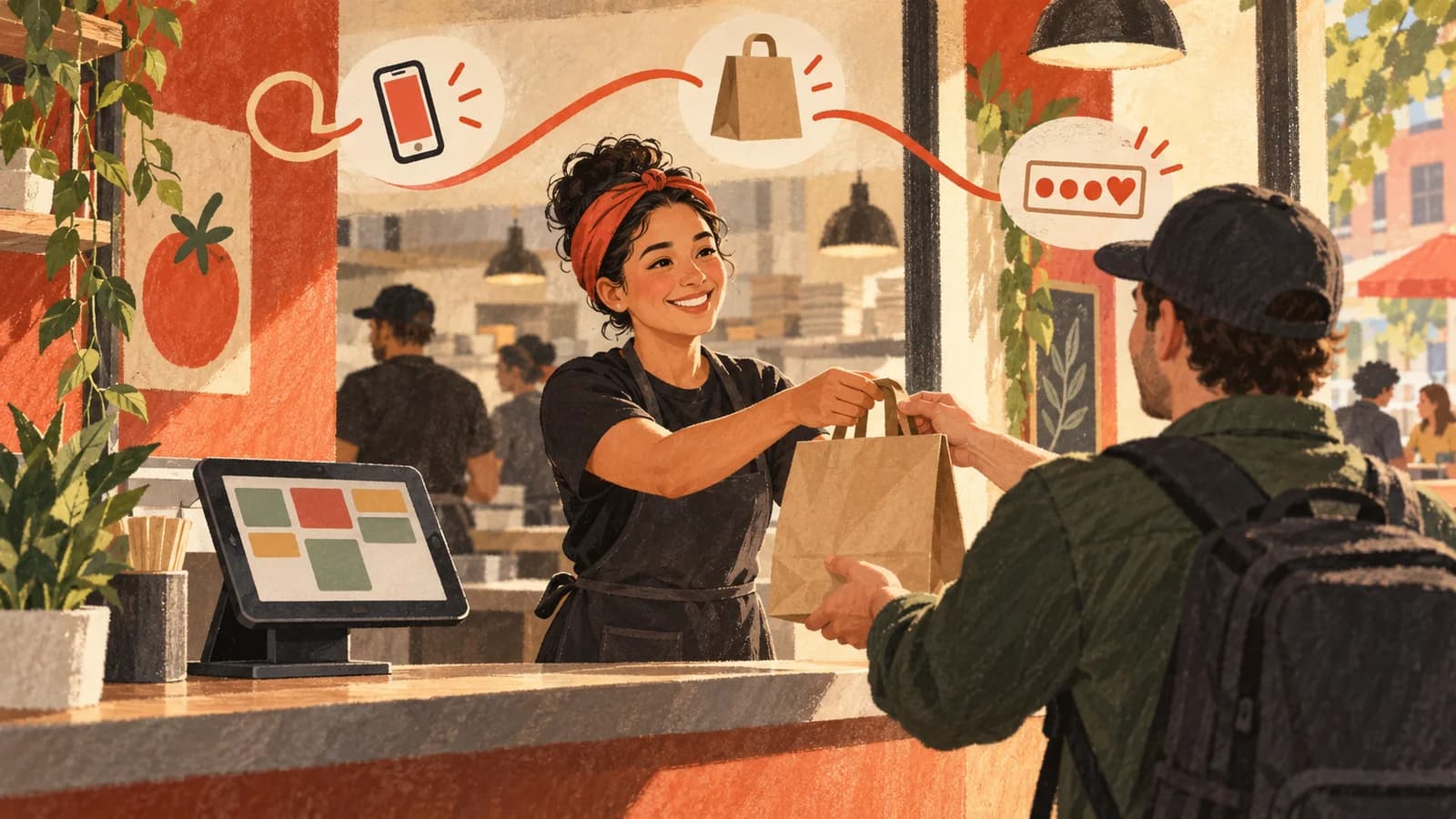
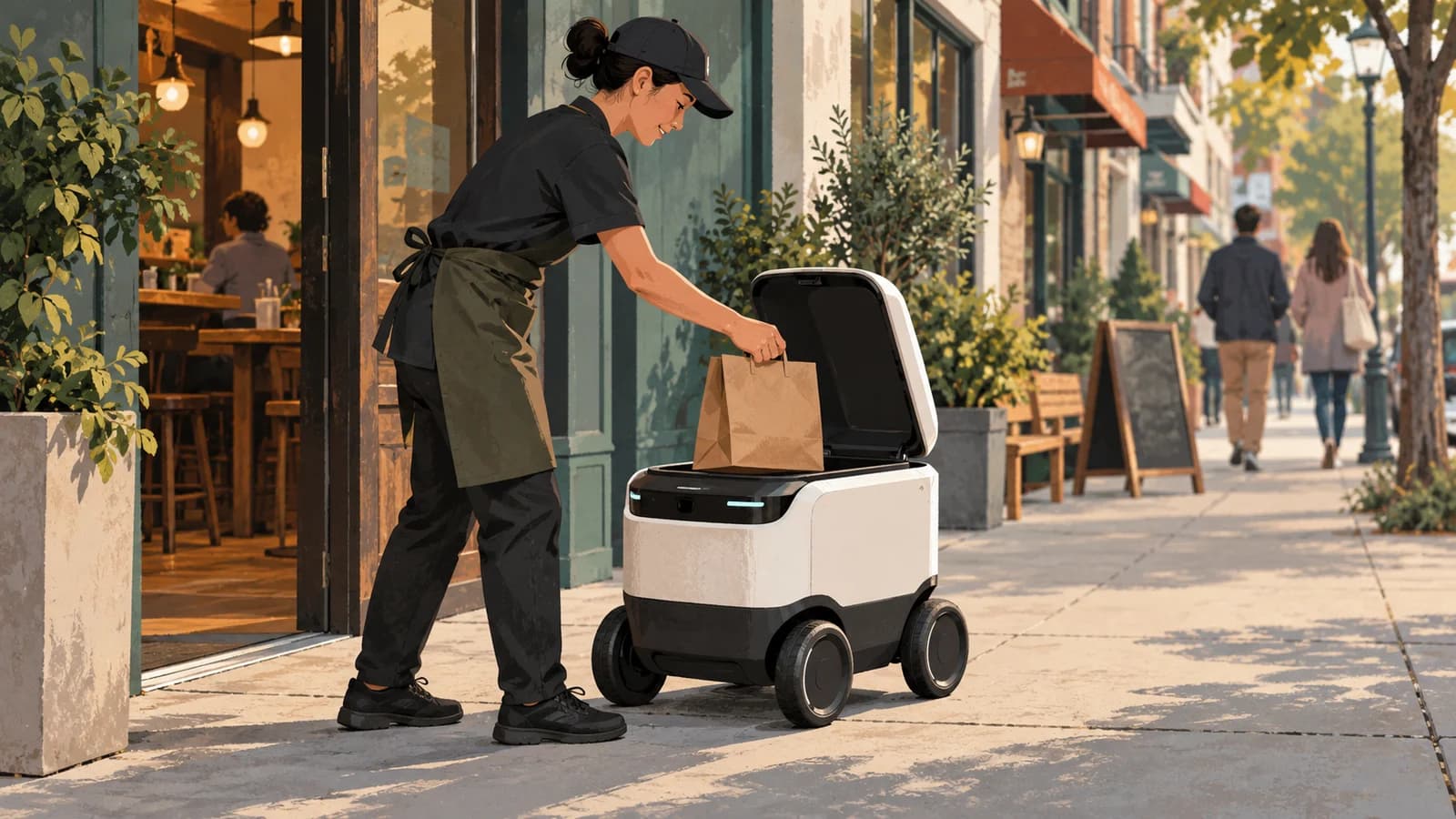
The physical handoff is spelled out in Coco’s general delivery workflow: restaurant employees receive and prepare orders, open the robot’s lid, put the food inside and close it. Coco depicts the subsequent stages as delivery, unlocking and the robot’s return. Its description still assigns food preparation and loading to the crew, even when software has handled the order information.
Coco lists integrations with DoorDash, Uber Eats and Wolt, as well as Olo Dispatch and other platforms for restaurants’ own ordering channels. That gives the same delivery service more than one route into a restaurant’s operations: an order can originate on a marketplace or through a restaurant’s own digital channel. Coco offers training and continuing support for that work. These are Coco’s general service arrangements, described separately from its UK launch plans.
Having a robot ready for pickup#
The handoff can also involve where robots wait. Main Chick Hot Chicken in Los Angeles described one arrangement in DoorDash’s April 2025 U.S. launch announcement. Owner Eric Dela Cruz said the restaurant worked with Coco to line up robots for dispatch, with the aim of getting food out faster during its busiest hours. His account puts a concrete restaurant task behind the platform integration: coordinating the available vehicles with outgoing food.
That announcement described Coco deliveries as live in Los Angeles and Chicago, covering nearly 600 participating merchants at the time. Eligible customers could see robot availability in the DoorDash app and might have one assigned to their order. The U.S. rollout followed a Wolt pilot in Helsinki earlier in 2025.
Choosing the vehicle is a separate job from loading the food. DoorDash explained its approach in the United States when it introduced Dot and its Autonomous Delivery Platform in September 2025. DoorDash Labs developed Dot, its own ground delivery robot. Coco is a separate DoorDash delivery partner.
DoorDash described the platform as an AI dispatcher that weighs speed, cost, location and the customer experience to choose among human couriers, Dot, drones and sidewalk robots. Under that design, the vehicle is selected within the delivery network, alongside the order and route information already being handled by the platform. A restaurant’s participation makes a delivery method available for consideration; the dispatch decision determines which method serves an order.
The company also identified a role for its SmartScale merchant tool in checking order accuracy and whether an order meets weight requirements for methods such as drones. The restaurant’s handoff therefore supplies both the meal and information needed for the next part of the journey.
A package can fit without being assigned a flight#
DoorDash’s Sept. 30 DoorDash Air announcement makes that selection process more tangible. It plans pilot deliveries in Northern California, with Chipotle, Popeyes and Momo N Curry among the initial restaurant partners.
For the planned pilot, the customer app will show preparation and flight timing, then track the order through its flight and arrival at the designated delivery spot.
The company said it started the system’s design with loading equipment, kitchen-to-aircraft handoffs, packaging and order data. Historical orders helped determine what the aircraft should carry. DoorDash estimated that about 80% of typical restaurant orders were small and light enough, based on U.S. deliveries limited by distance, size and measurement period.
That is a measure of physical eligibility. Its dispatch platform then considers weather, flight range and ground traffic to narrow the orders that make sense to send by air. DoorDash says it also coordinates kitchen preparation, delivery timing and routing, taking account of distance, weight and the order’s contents. A meal that fits the aircraft still has to fit the trip.
QSR Pro Staff
The QSR Pro editorial team covers the quick service restaurant industry with in-depth analysis, data-driven reporting, and operator-first perspective.
More from QSR