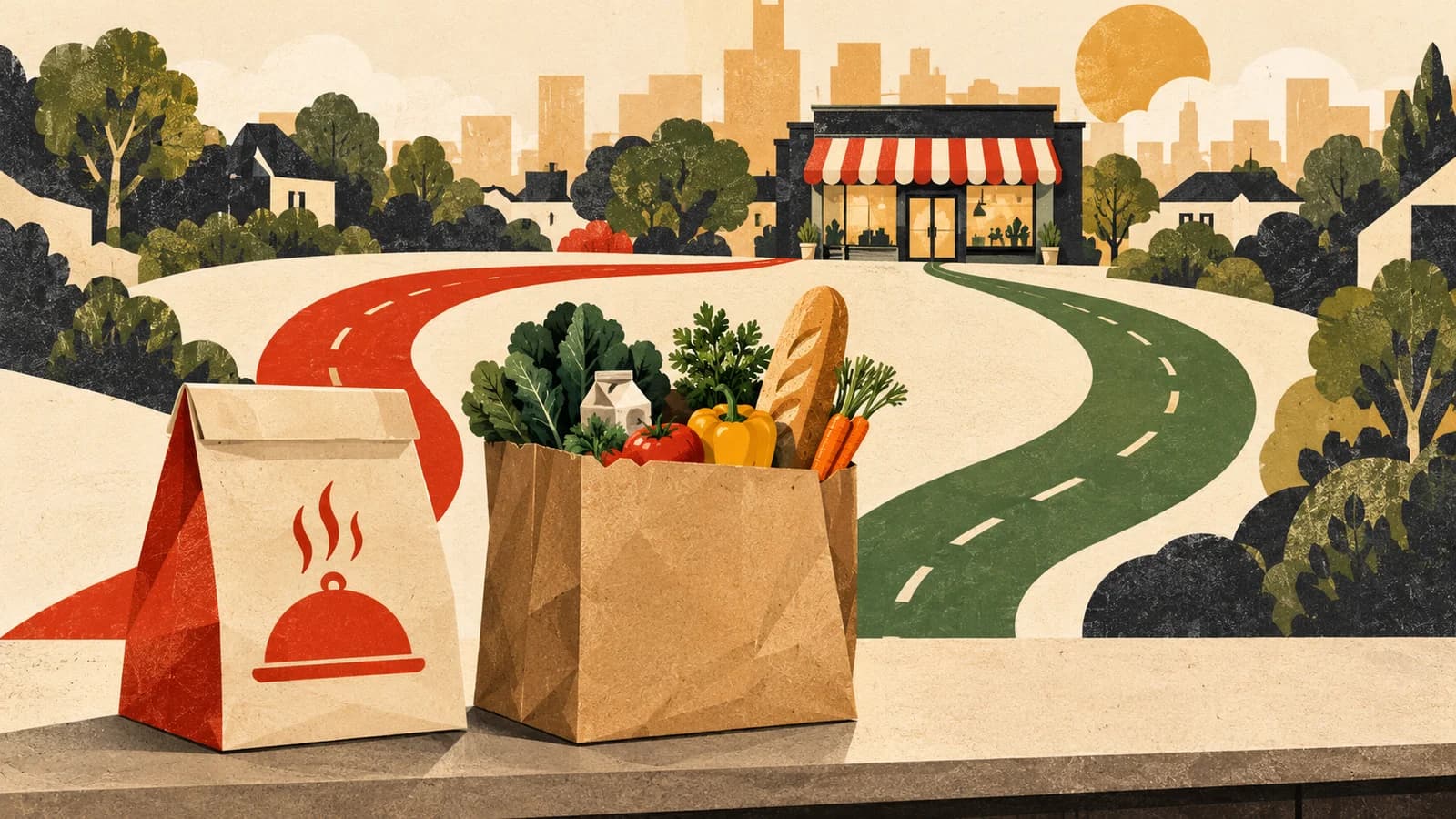
DoorDash plans to connect its restaurant-delivery membership with Instacart’s grocery membership through a proposed acquisition announced October 29. The approximately $17 billion equity deal would let DashPass and Instacart+ members pay one fee for both services, while bringing the companies’ merchant technology under one owner. Joint announcement
For restaurants, the combination would reach beyond delivery. DoorDash’s Commerce Platform largely serves restaurants, while Instacart’s enterprise platform largely serves grocery retailers, Instacart explains in its transaction materials. The two businesses connect merchants with customers through their own apps and through tools merchants use to operate their businesses. Instacart’s transaction FAQ
DoorDash expects the acquisition to close at the end of 2027 or in the first half of 2028. Until then, the companies will operate separately. DoorDash expects to retain Instacart’s app, brand and enterprise products after closing. Announced timetable and benefits
The restaurant connection already inside Instacart#
Instacart customers can already order restaurant meals through a service powered by Uber Eats. Instacart’s current help documentation assigns fulfillment, payment processing and customer support for those orders to Uber Eats. The restaurant experience sits within the customer’s Instacart account and operates separately from any Uber Eats account that person may have. How restaurant orders work
That separation extends to customer benefits. Uber One benefits and offers stored in a customer’s Uber Eats account do not carry over to the Instacart restaurant experience, according to the same documentation. Restaurant orders placed there also do not appear in the customer’s Uber Eats order history. Account and benefit rules
In its transaction FAQ, Instacart says it intends to honor its existing commitments to Uber. The announcement does not set out a replacement for that restaurant service. Transaction FAQ, question 7
Restaurant software and grocery advertising#
DoorDash has already expanded its restaurant business beyond ordering. It completed its acquisition of SevenRooms in June 2025, bringing a platform with reservations, waitlist and table management, guest information, and email and text marketing. Those tools give DoorDash a role in the dining room as well as in delivery. SevenRooms acquisition
On September 30, DoorDash introduced DashOS to connect its Marketplace, direct ordering, reservations, loyalty, guest management and marketing products. The company describes a system that links a customer’s interactions with the same restaurant across those channels, helping the operator recognize the relationship whether the guest orders delivery or visits in person. DashOS announcement
Further connections are planned beginning in 2027. DoorDash says expanded integrations with point-of-sale and middleware providers, including Clover, Qu and Deliverect, are intended to give more than 80,000 restaurants additional ways to use guest profiles, ordering and loyalty tools. QSR.pro’s DashOS guide explains the existing services and that rollout. Integration plans
Instacart brings a different advertising business. Its Carrot Ads technology lets retailers carry ads on their own ecommerce sites. The product connects those retailers with consumer packaged goods advertisers; Instacart lists demand from more than 9,000 such brands, a figure dated February 2026. Carrot Ads
Together, these existing products show what sits behind the delivery apps: tools for restaurants to manage guest relationships and for grocers to sell advertising to consumer brands. Restaurant tools and retailer advertising
A plan that still needs approval#
The agreement was signed October 28. Closing depends on Instacart stockholder approval, the applicable U.S. antitrust waiting period, regulatory requirements in Canada and Israel, and other conditions. The proposed ownership change still has to clear those steps before the companies can operate as one. DoorDash’s securities filing
QSR Pro Staff
The QSR Pro editorial team covers the quick service restaurant industry with in-depth analysis, data-driven reporting, and operator-first perspective.
More from QSR