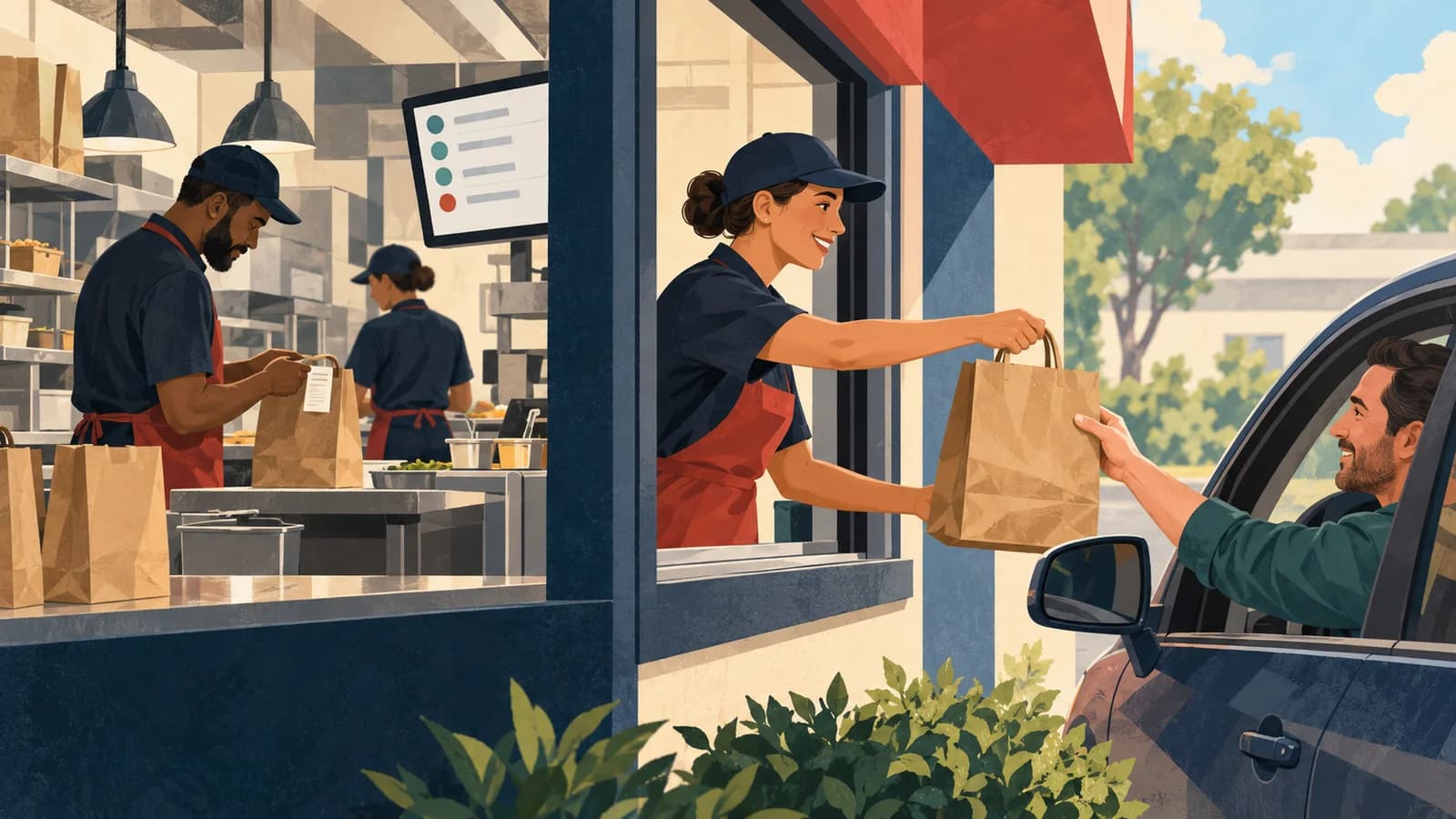
Faster pickup-window handoffs accounted for most of the improvement in service time in Intouch Insight’s 2026 drive-thru study. The average visit lasted 5 minutes, 24 seconds, down 11.1 seconds from 2025, according to the findings released October 1.
Service time, measured from placing an order to leaving with it, fell 10.3 seconds to 4:04. Time at the pickup window declined 7.5 seconds to 1:40. The improvement was concentrated in getting an ordered meal into the customer’s hands.
Intouch conducted the research with QSR Magazine, using 2,145 mystery-shopper visits across 13 U.S. brands during June and July, with 165 visits per brand. The observations measure visits without isolating the effect of particular tools or layouts.
Connecting the kitchen and the lane#
In QSR Magazine’s original interviews accompanying the report, Inspire Brands senior vice president of operations innovation Vans Nelson described work on order verification using smart scales and AI vision, kitchen display systems and staff deployment. His emphasis was on connecting the point of sale, kitchen, ordering and queue management.
Inside Inspire’s Innovation Center, time-and-motion modeling lets the company simulate work in different kitchen layouts. The simulations help it identify layouts that make employees’ tasks harder and test ways to simplify them.
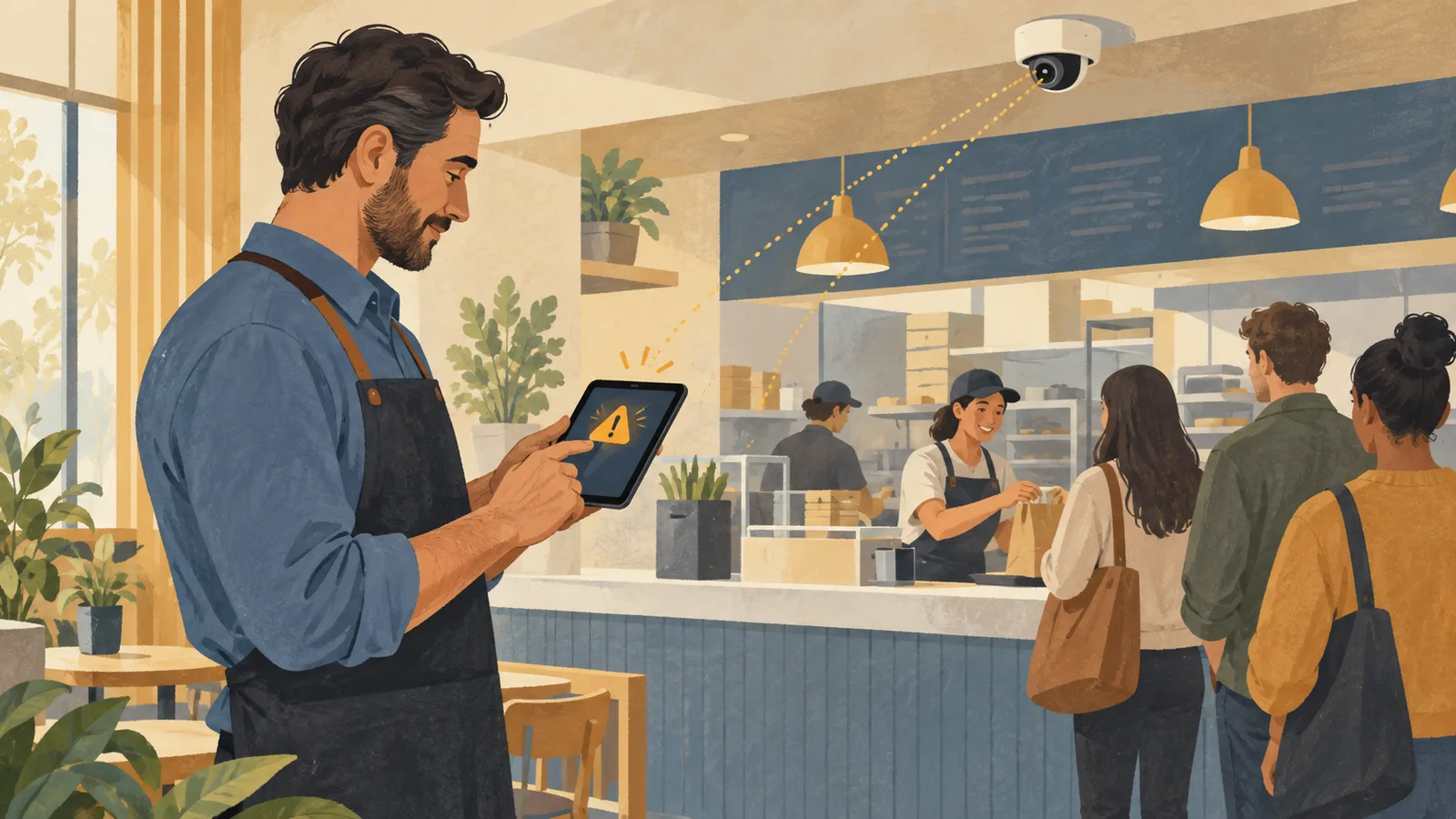
Chick-fil-A’s senior director of hospitality and service experience, Monique Birkeli, described tools to help local operators understand traffic patterns and adjust during the day. A few operators use live drone footage to examine drive-thru flow and staffing, she told QSR Magazine. She also described an employee acting as a host outside, helping traffic move or checking on guests during longer waits.
A separate path for an order placed ahead#
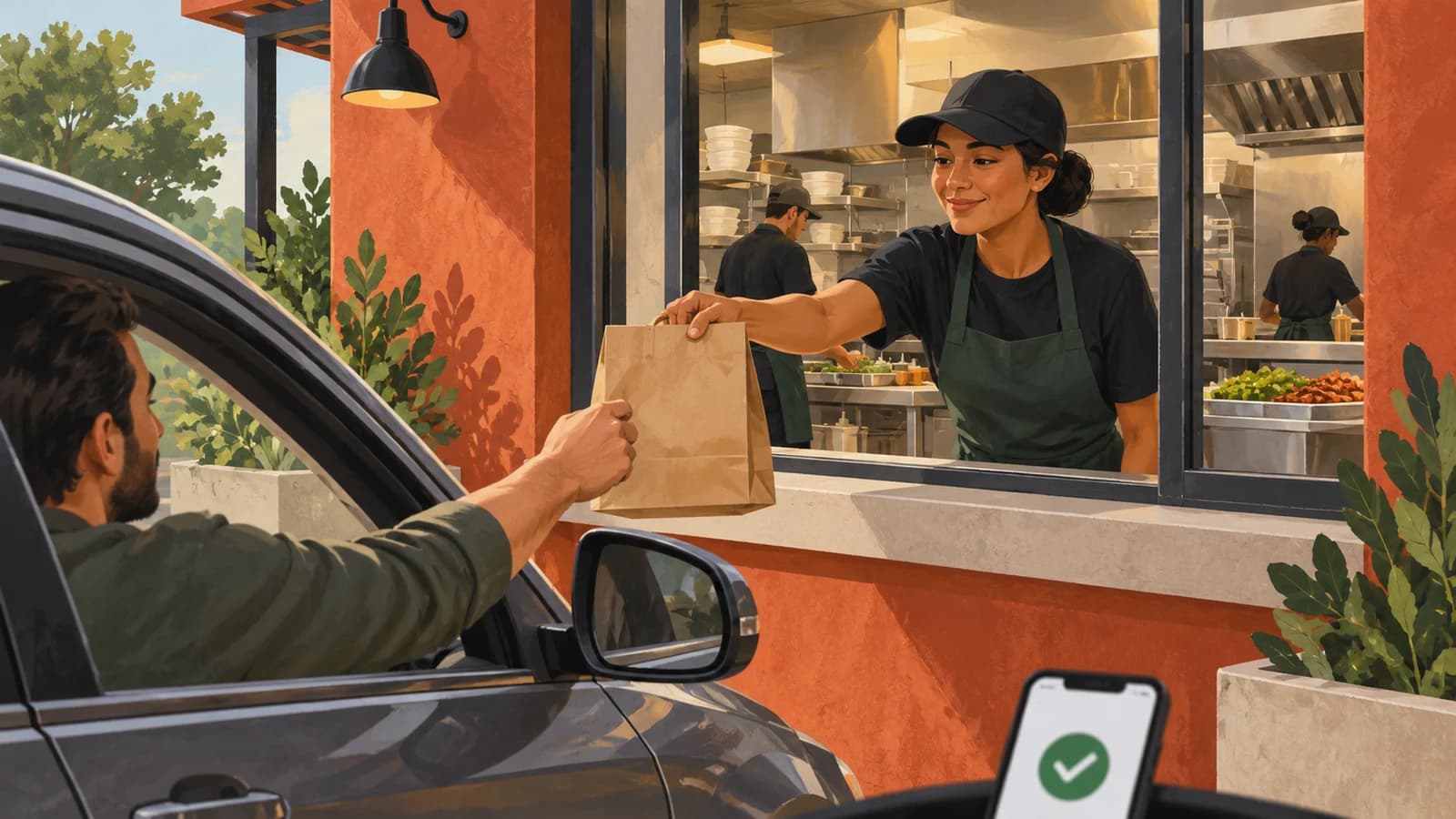
Chick-fil-A’s September 2023 Mobile Thru announcement illustrates the steps that remain after someone orders through an app. At a participating restaurant, the customer selects Mobile Thru as the pickup destination, places the order, then follows signs into the dedicated lane on arrival. The customer scans a QR code using the app and pulls around to collect the meal from an employee.
The lane is reserved for mobile pickup, moving ordering and payment ahead of arrival while keeping an employee at the final handoff.
The chain introduced the wider rollout after a two-year test. It said it was adding the option where a dedicated lane would improve the customer experience and restaurant processes. Customers who wanted to order from an employee could still use the traditional drive-thru.
Dunkin’ has also designed space for those two kinds of visits. In a May 2024 description of its development formats, parent company Inspire Brands outlined a drive-thru-only Dunkin’ concept of less than 1,000 square feet. It could accommodate a pickup lane for advance app orders alongside a traditional ordering lane, with the option of a walk-up window.
Dunkin’s small format was part of a wider effort to adapt restaurants to available real estate. Inspire also described a separate prefabricated design intended for drive-thru-only restaurants. Its shape and size were standardized for use across the company’s brands, while the kitchen layout and equipment inside were customized to each brand.
QSR Pro Staff
The QSR Pro editorial team covers the quick service restaurant industry with in-depth analysis, data-driven reporting, and operator-first perspective.
More from QSR