QSR.pro Weekly: Chick-fil-A’s $10,000 fee, Domino’s earnings
Originally sent (Pacific)
Inside the operator model, plus a $92.9 billion restaurant month and Krispy Kreme’s 33-shop plan.
This is an archived newsletter. Information reflects the date it was sent.
Updated guide: What Chick-fil-A’s $10,000 fee buys
finance ·
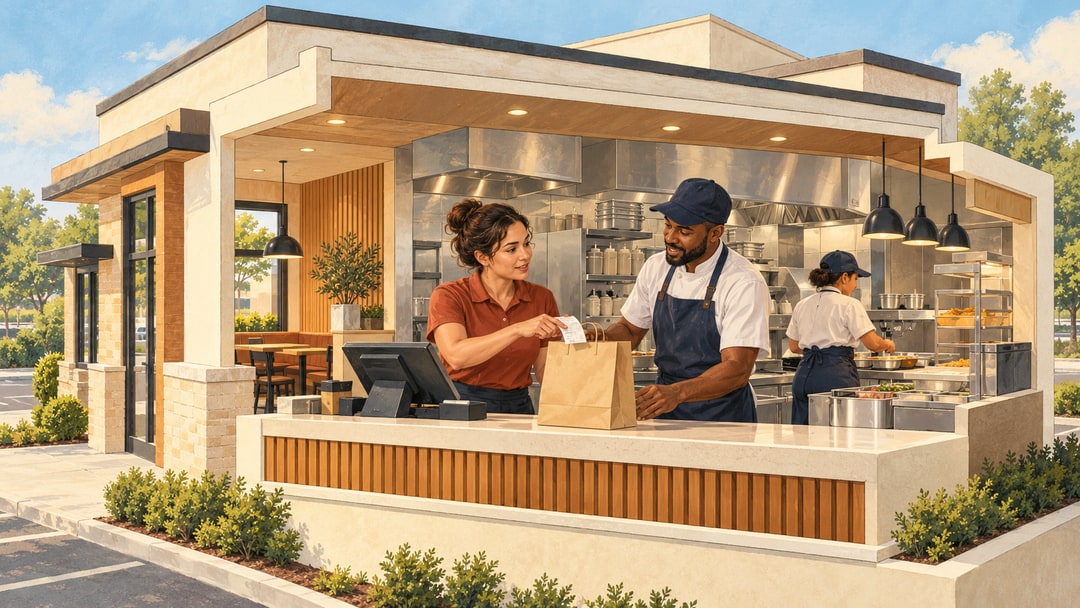
Chick-fil-A asks a new Operator for a $10,000 initial fee and a full-time commitment to the restaurant. Its current requirements call for hands-on ownership and divestiture of other non-passive business interests. For someone already running another brand, the commitment would mean stepping away from that active business.
The company secures the premises and acquires most equipment, according to its 2025 franchise disclosure. Operators at traditional restaurants lease the space, rent equipment and pay fees tied to sales and defined net profit. The same disclosure limits their ability to transfer the franchise. Our refreshed guide explains those terms, along with how one New Jersey operator built career development into the working day.
The supply business lifting Domino’s earnings
finance ·
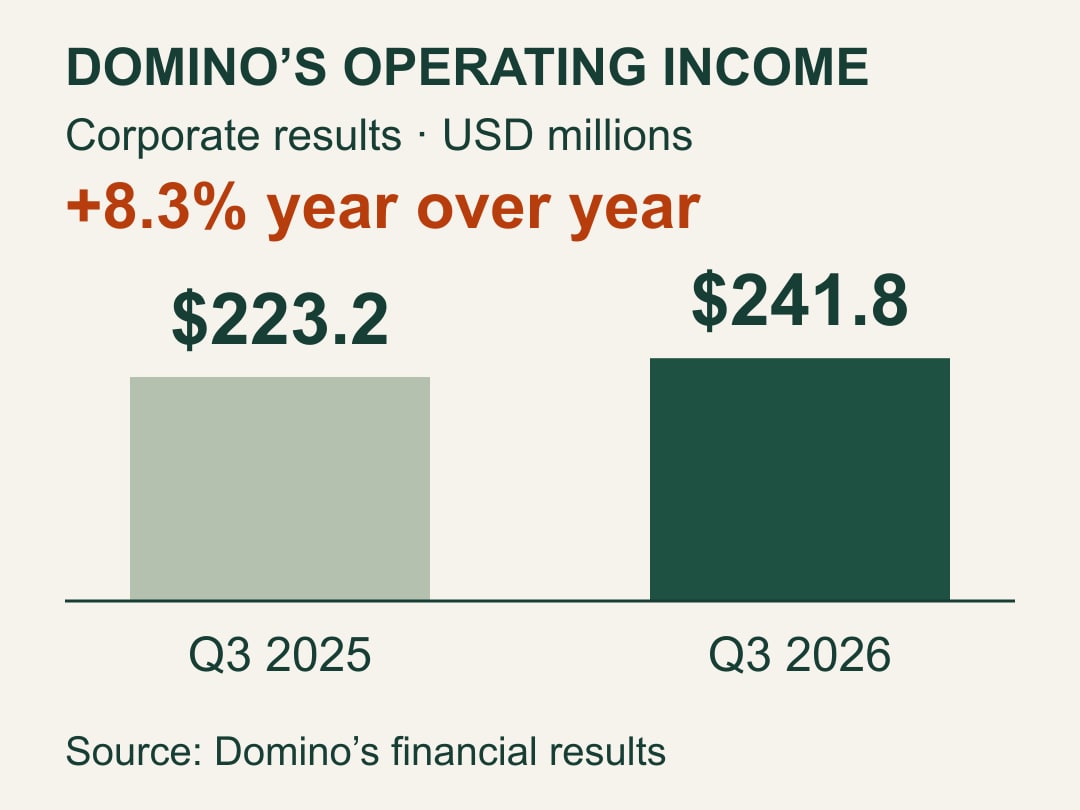
Domino’s U.S. same-store sales rose 0.3% in the third quarter, ended September 6. Corporate operating income grew 8.3%, to $241.8 million. Its supply business and expanding franchise network helped account for the gain.
Independent franchisees run about 99% of Domino’s stores worldwide. Alongside royalties, the company earns money supplying food and other products, mainly in the U.S. and Canada. Supply-chain gross profit increased $12 million, helped by purchasing and labor improvements, Domino’s said.
More franchise restaurants contributed royalties, too. Domino’s said net openings over the previous four quarters increased the average number of U.S. and international stores generating those fees. The average U.S. supply basket of food and cardboard was priced 2.2% higher than a year earlier.
A $92.9 billion September for restaurants
finance ·
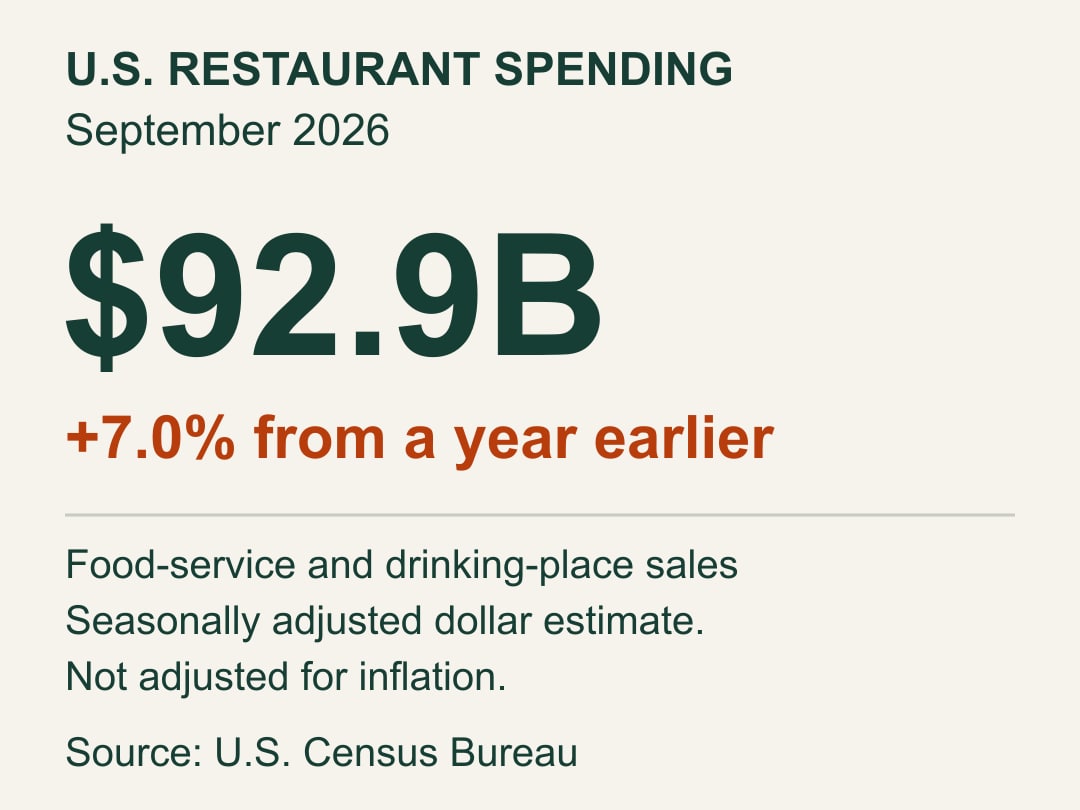
September brought an estimated $92.9 billion in U.S. food-service and drinking-place sales, up 7% from a year earlier, according to Census. Across the full July–September quarter, spending was 2.6% higher than in April–June and 6% above the same quarter last year.
Those figures account for seasonal patterns but include price changes. A larger sales total can reflect bigger checks as well as more orders. McDonald’s supplied a concrete example in its second-quarter results: U.S. comparable sales rose 0.8% as higher average checks, helped by what customers bought, more than offset fewer transactions.
Sbarro lines up a shared checkout and payments platform
technology ·
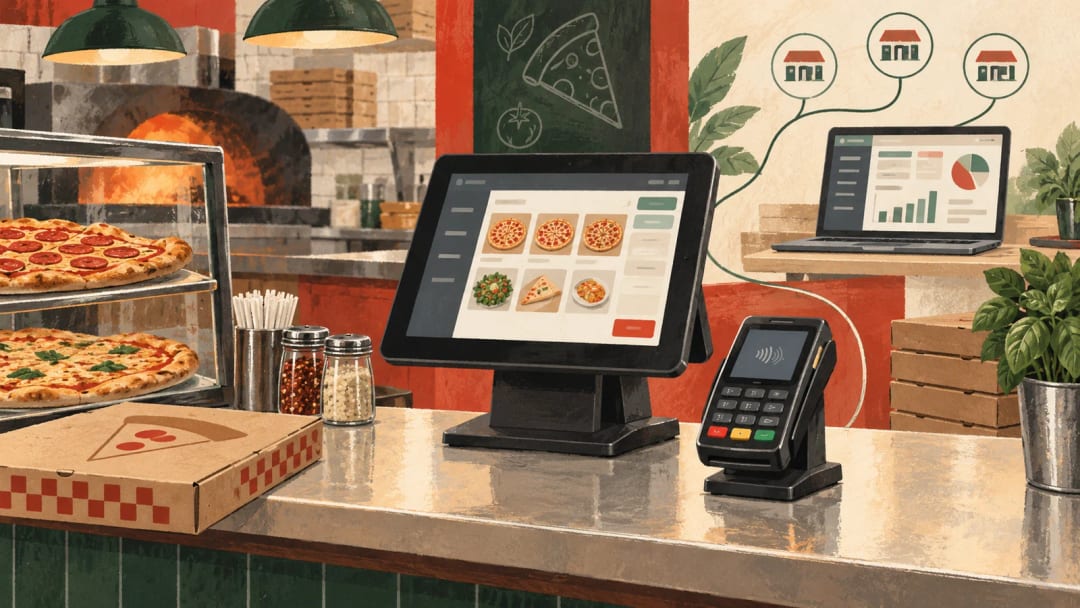
Sbarro plans to bring Aloha Next point of sale and Voyix Pay to nearly 300 U.S. company-owned and franchise restaurants under a multiyear agreement with NCR Voyix. The aim is to bring store data together for the restaurants and the teams overseeing them. CEO David Karam says Sbarro wants a simpler technology setup and a clearer view of operations as the network grows.
That network increasingly reaches beyond the mall food court. Karam told PMQ in September that most new Sbarro openings were elsewhere. At convenience stores and travel centers, franchisees generally also own and run the host operation, with pizza complementing fuel and retail sales.
From a Jersey City shop to a 33-store commitment
industry ·
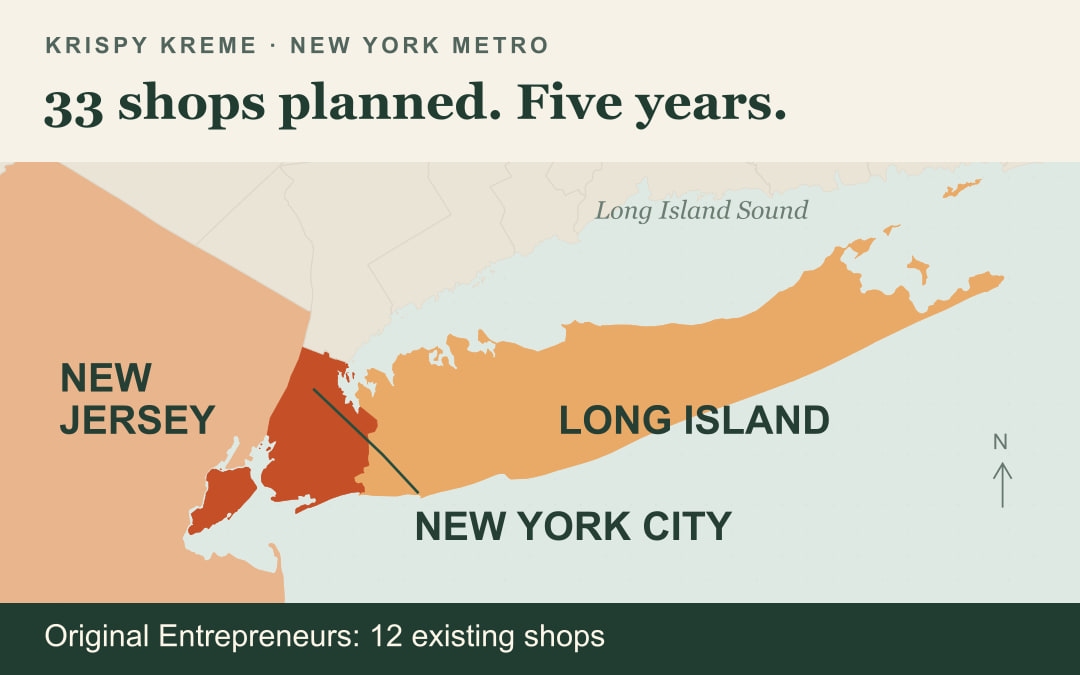
Original Entrepreneurs opened its first Krispy Kreme shop in Jersey City in 2017. The group now operates 12 and has agreed to add 33 over five years across New York City, Long Island and New Jersey.
The deal extends an existing partnership as Krispy Kreme shifts more of its business to franchise ownership. In August, the company said franchisees generated about 42% of systemwide sales, compared with 25% in fiscal 2025. Its goal is about 50% beginning fiscal 2027.
Franchisees provide the money and daily management for their shops; Krispy Kreme collects royalties and sells doughnut mix and equipment. The company’s broader network supports different formats. Hot Light Theater Shops make doughnuts on site and serve as production hubs; smaller Fresh Shops receive doughnuts from hubs instead of making them. The New York announcement does not specify the planned mix.
Dunkin’s Spider Donut gets a merchandise line of its own
marketing ·
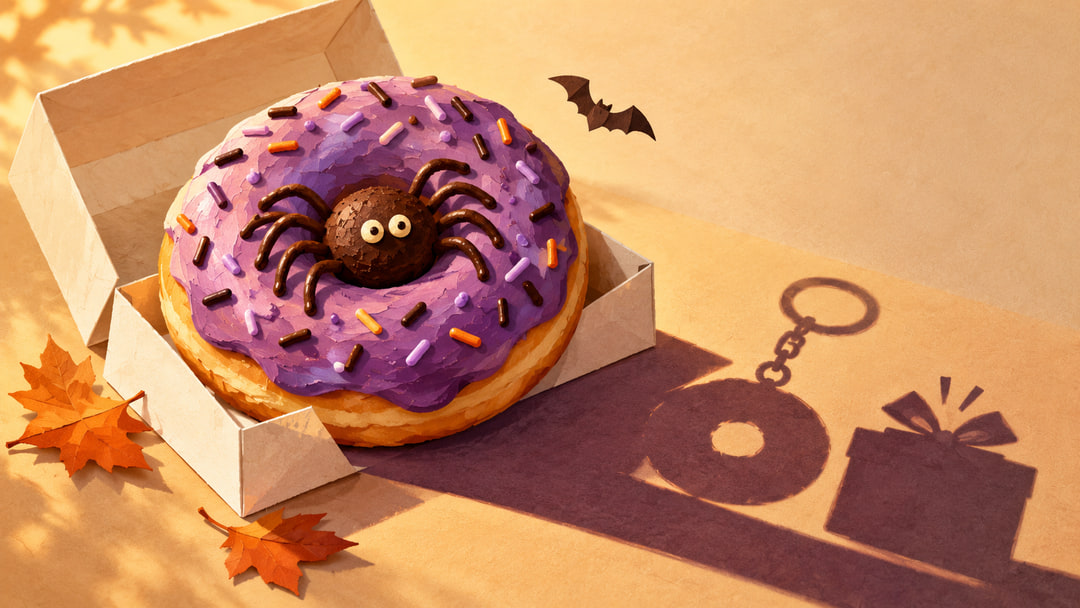
Dunkin’s returning Spider Donut has company beyond the bakery case. The Halloween lineup, launched October 14, puts a $9.99 Spider Donut Keychain and an $8.99 Mystery Boo Box in participating restaurants. Each box holds one surprise collectible: a squishy toy, pin set, acrylic keychain or bandana.
The doughnut is purple-frosted, with a Chocolate Glazed MUNCHKIN forming the spider’s body. For a larger order, a new glow-in-the-dark bucket holds a random assortment of 50 MUNCHKINS. Dunkin’ says $2 from each Halloween bucket sold goes to its Joy in Childhood Foundation.
Also this week
Restaurant prices rise faster than groceries
Limited-service meal prices rose 3.2% over the year ended September, compared with 1.8% for groceries.
Taco Bell gets ready for Poland
AmRest is recruiting a Warsaw team for Taco Bell’s planned fourth-quarter Poland launch, with training at its existing Warsaw center.
Fast-casual and full-service sales diverge
MarginEdge reported fast-casual sales up 2.65% and full-service sales down 2.23% in its U.S. and Canadian customer sample, using trailing 28-day year-over-year readings through September.