Wingstop says it has retrained its restaurant system and introduced new operating standards, adding a more structured process for tracking service and coaching teams around its Smart Kitchen technology.
The company’s latest results show the sales challenge. Domestic same-store sales fell 5.4% in the third quarter ended September 26. Wingstop attributed the decline to lower transaction volumes amid pressure on consumer spending. Its October 28 results put the full-year domestic same-store sales decline forecast at 6.5% to 7%.
On the earnings call, CEO Michael Skipworth described a scorecard and operating toolkit combining guest feedback with restaurant data on food quality, order accuracy and service speed. An AI assistant is intended to help field teams identify performance outliers, coach restaurants and measure improvement, he said.
Skipworth said the retraining took place over the preceding three months. Asked where further work was needed, Skipworth identified order accuracy as a priority for the scorecard.
The sales measure tracks a different part of the business from new openings. Wingstop defines its comparable restaurant base as locations open for at least 52 full weeks, excluding the effect of new restaurants and permanent closures. Both transactions and average order size can change that measure. Company definition.
In the second quarter, which ended June 27, domestic comparable sales had fallen 7.5%. Wingstop was then forecasting a 4% to 6% annual decline. Its corporate-store cost picture was improving: cost of sales fell year over year to 73.3% of restaurant sales, chiefly because bone-in wings cost less, Wingstop said. Its company-owned sales base included three stores added since the year-earlier period. July results.
The latest results show a narrower year-over-year sales decline alongside a weaker annual forecast. These rates compare each quarter with its year-earlier period; they do not measure sales growth between the second and third quarters. Q2; Q3.
The corporate-store comparison#
Wingstop is primarily a franchisor: about 98% of its restaurants are independently owned and operated. Its own restaurant portfolio expanded during the quarter, moving from 57 locations to 71 through 13 acquisitions and one opening. Quarterly filing.
The acquired restaurants came from two franchisees. The filing reports about $32 million in consideration, with a preliminary purchase-price allocation. Those transactions moved existing restaurants into the corporate portfolio, adding no new system openings. Acquisition note.
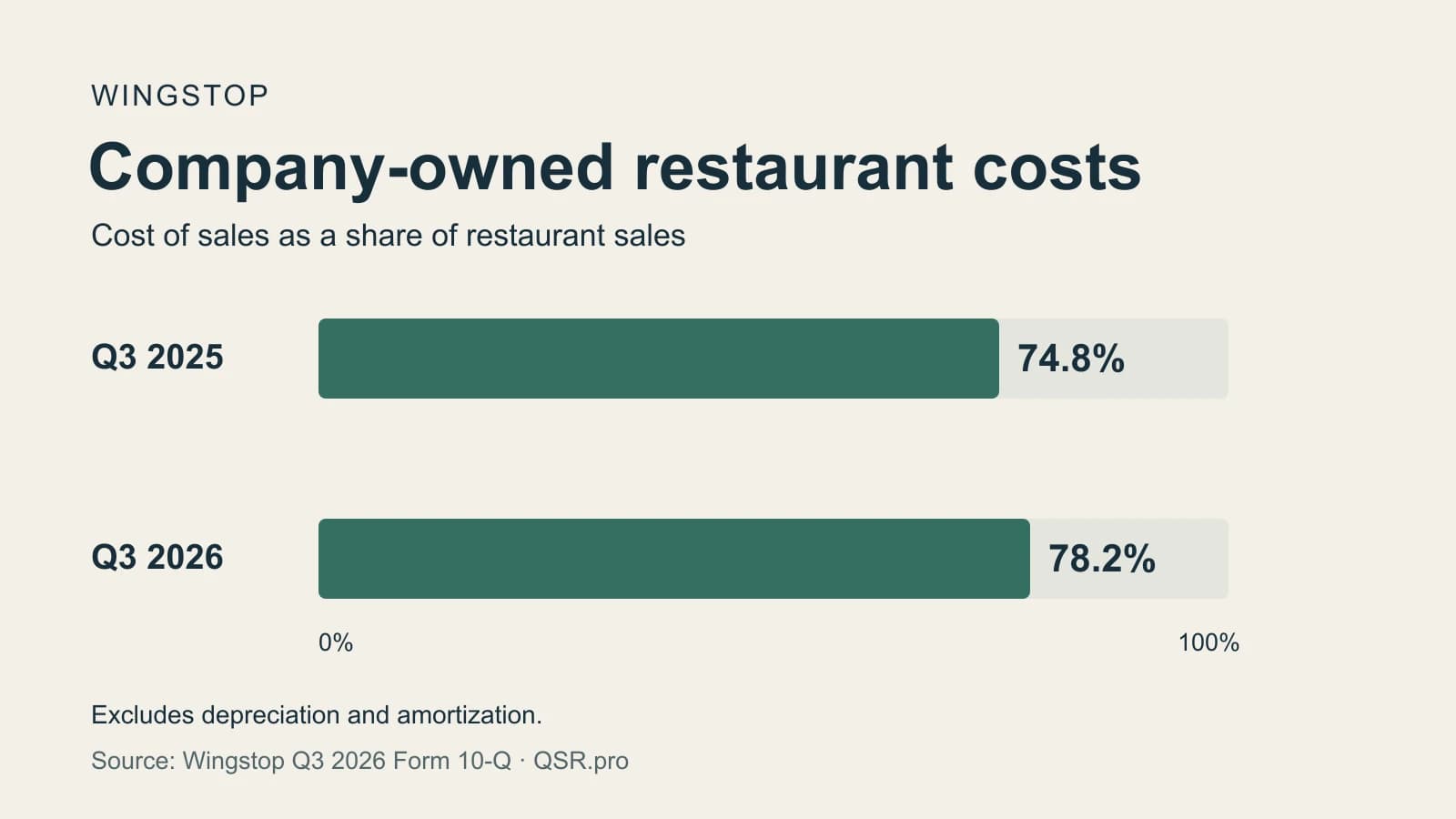
Company-owned restaurant cost of sales reached 78.2% of sales, up from 74.8% in the year-earlier quarter. That expense measure includes restaurant advertising and excludes depreciation and amortization. It describes a changing corporate portfolio, not franchisee profit margins. Cost table and definition.
The current release identifies several pressures within that total: higher fries and packaging costs; increased rent, repairs and maintenance; and higher labor costs associated with acquired restaurants. Company-owned comparable sales fell 2.7%. Falling comparable sales left less revenue to cover fixed labor and operating expenses at existing restaurants. Wingstop’s cost explanation.
CFO Alex Kaleida said integration involved extra labor, training and deferred maintenance, with some incremental expenses expected to continue into the fourth quarter. He said those acquisition expenses were specific to the corporate portfolio.
QSR Pro Staff
The QSR Pro editorial team covers the quick service restaurant industry with in-depth analysis, data-driven reporting, and operator-first perspective.
More from QSR