Restaurant Technology ROI: What Actually Pays Off and What Doesn't
Kiosks pay back in 3-6 months. Loyalty apps take years. AI drive-thrus mostly don't work. Here's the real ROI data on QSR tech investments.
The QSR Pro editorial team covers the quick service restaurant industry with in-depth analysis, data-driven reporting, and operator-first perspective.
Primary Coverage
Showing 601–620 of 861 articles
Kiosks pay back in 3-6 months. Loyalty apps take years. AI drive-thrus mostly don't work. Here's the real ROI data on QSR tech investments.
Fast food used to mean cheap. Now a McDonald's meal costs $12 to $14 and customers are noticing. Here's how we got here and what chains are doing about it.
Franchise resales happen in the shadows with pricing rarely disclosed. Here's what multiples look like in 2026, who's buying, and which brands trade at premiums vs. distressed valuations.
The ghost kitchen revolution promised to reshape restaurants. Three years later, most are dead. Here's what survived and why the economics work for some but not others.
McDonald's pledged 100% renewable packaging by 2025. Sounds ambitious. But 'renewable' can mean almost anything. This is the sustainability challenge in QSR: big commitments, vague metrics, and real progress buried under layers of marketing.
When Tyson Foods announced a 50% drop in pork production in May 2020, it exposed vulnerabilities that had been invisible during normal operations. Four years later, some changes stuck and some reverted. Here's what actually changed and what vulnerabilities remain.
Flynn Restaurant Group operates 2,600+ restaurants generating $4.8 billion annually. Sun Holdings runs 1,500+ locations with $1.9 billion in sales. These mega-franchisees aren't just bigger - they're fundamentally different businesses with institutional capital, centralized operations, and acquisition expertise that's reshaping the franchise industry.
McDonald's $5 Meal Deal drove immediate foot traffic spikes. Starbucks saw similar lifts. The pattern is clear: LTOs work. But are they driving profitable traffic, or has the industry created an addiction it can't escape?

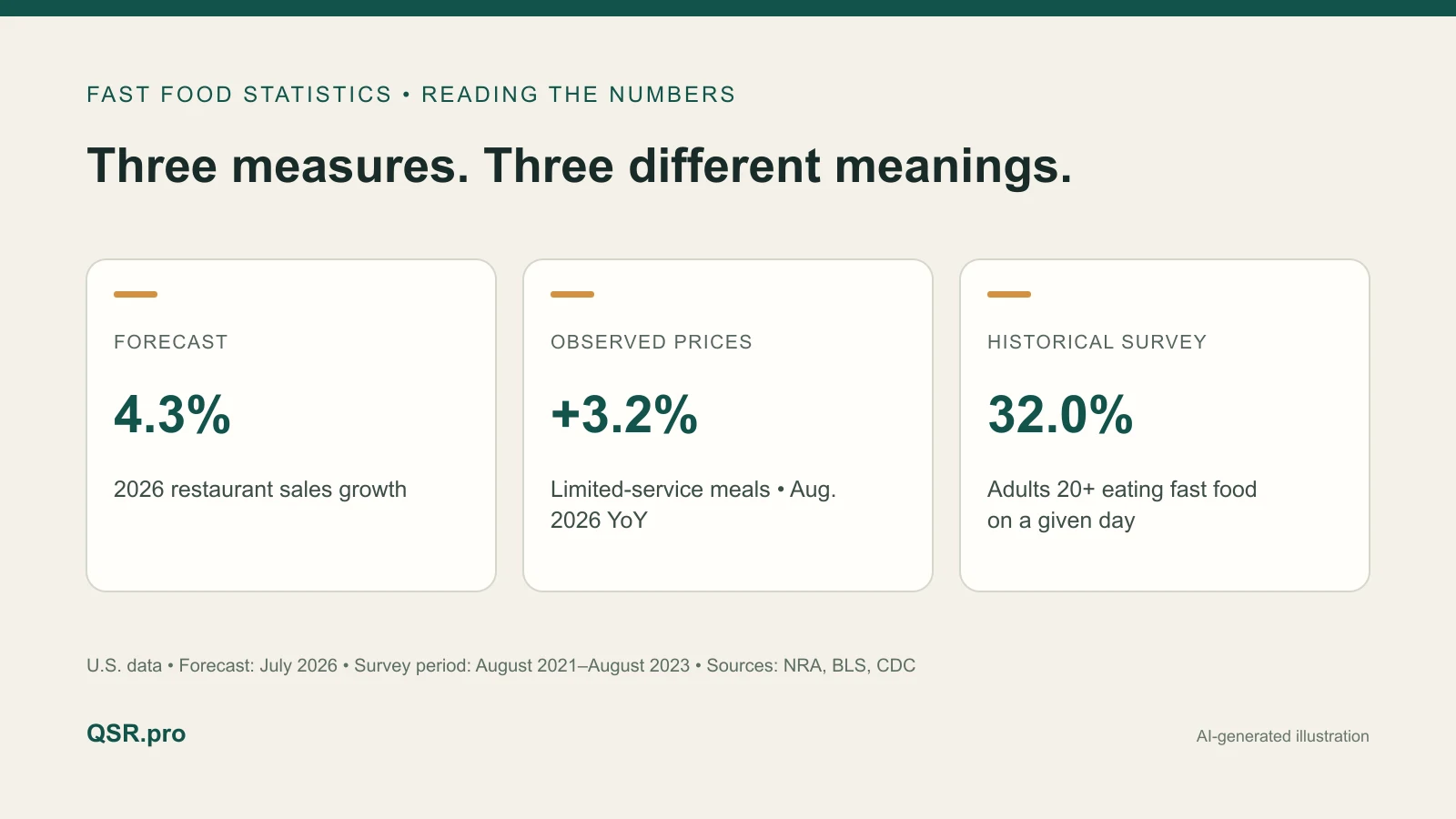
A sourced U.S. reference separating 2026 restaurant forecasts, current prices and employment, historical fast-food consumption and chain sales definitions.
Complete step-by-step guide to opening a fast food restaurant, from concept to grand opening. Includes timelines, costs, permits, hiring, and common mistakes to avoid.
Ranked comparison of the best fast food franchises in 2026 with real investment costs, AUV data, ROI analysis, and franchise-specific pros and cons.
State-by-state and chain-by-chain breakdown of fast food wages in 2026, including base pay, benefits, advancement paths, and what it means for operators.
Commuter breakfast collapsed post-pandemic. McDonald's breakfast dominance eroded while Taco Bell gained incremental revenue. Breakfast traffic jumped 4% in early 2020, then patterns shifted permanently. Mobile ordering penetration runs highest at breakfast. The chains that crack the new breakfast code generate meaningful incremental revenue.
High-traffic corners still matter, but delivery and mobile ordering broke the link between foot traffic and revenue. Chains allocate 30% of expansion to ghost kitchens in military bases, universities, and hospitals. Drive-thru-only formats cut square footage from 2,500 to 600. Second-generation sites open 6-12 months faster than new builds.
Popeyes' 2019 launch went viral. Chick-fil-A captured 41% market share. Raising Cane's became the dark horse, knocking off KFC. Seven years later, the wars matured into permanent category competition. Execution beats hype. Unit economics beats social media engagement.
McDonald's announced AI voice ordering at scale for 2026. Hi Auto operates in 1,000 locations with 93% completion rates. Dual lanes, pickup lockers, and digital boards reshape the drive-thru - but ROI timelines vary. The tech that actually improves unit economics wins.
Restaurant employment hit pre-pandemic levels in 2026, but 28% of locations cut weekend service due to staffing issues. Labor costs jumped from 30% to 35% of expenses while discouraged workers in food service rose 80%. Operators respond with automation - AI ordering, self-service tech, and ghost kitchens that eliminate front-of-house roles entirely.
Restaurant employment hit pre-pandemic levels in 2026, but 28% of locations cut weekend service due to staffing issues. Labor costs jumped from 30% to 35% of expenses while discouraged workers in food service rose 80%. Operators respond with automation - AI ordering, self-service tech, and ghost kitchens.
Western QSR giants are betting billions on emerging markets where rising middle classes and urbanization create massive growth runways.
Beyond Meat's stock is down 97% from its peak. The McPlant flopped. But the plant-based QSR story isn't over — it just changed.