McDonald’s puts U.S. operations and technology under one COO
Skye Anderson’s new U.S. role joins restaurant operations, development and company stores with technology and supply oversight, alongside two global leadership changes.
Archive
627 articles published in March 2026
Skye Anderson’s new U.S. role joins restaurant operations, development and company stores with technology and supply oversight, alongside two global leadership changes.
A two-sandwich offer can drive app orders and account sign-ups. Its value depends on displaced purchases, order contribution and later visits.
The proposed acquisition connects delivered distribution with warehouse shopping. Its value to an operator depends on prices, replenishment and independent alternatives.
Taco Bell projected 300-plus Cantinas by 2022. About 50 exist in 2026. The gap between ambition and reality reveals why alcohol's 80% gross margins don't translate to QSR profits at scale, and why the real beverage opportunity is non-alcoholic.
Sweetgreen's robotic Infinite Kitchen delivers 700 basis points of labor savings and 10 points of extra margin. But with $450K per install and same-store sales falling 9.5%, the real question is whether automation can outrun fast casual's deeper structural challenges.
With quit rates surging past 4.8%, wages under political pressure, and unions organizing at record pace, QSR operators are turning to AI drive-thrus, robotic fryers, and self-order kiosks to survive. Here is where every major chain stands.
Wingstop's digital sales mix hit 73.2% in Q4 2025, one of the highest penetration rates in QSR. The six-year arc from 39% to 73% has fundamentally altered the brand's labor model, throughput capacity, and expansion calculus. Here's what it means for the industry.
Six major QSR brands are simultaneously executing aggressive expansion plans in 2026, colliding over the same premium drive-thru sites and driving acquisition costs to new highs. Here's what operators need to know.
Brian Niccol's Back to Starbucks plan is driving traffic for the first time in two years. But North America operating margins contracted 420 basis points in Q1 FY2026, RBC Capital and Wolfe Research both downgraded the stock in one week, and the CFO admits two-thirds of the damage is labor spending with no clear end date. For restaurant operators everywhere, Starbucks is now the industry's most expensive case study in what turnarounds actually cost.
New data from AlixPartners' Proprietary Pricing Platform reveals that menu prices outpaced inflation across 90,000 locations, but transaction values fell behind. With gas at $3.94 a gallon and Oxford Economics projecting the slowest consumption growth since 2013, the restaurant pricing playbook is being rewritten in real time.
Technomic projects the 2026 FIFA World Cup will add $1.9 billion to U.S. food-service revenue. With 78 matches across 16 cities, 742,000 incremental international visitors, and hotel revenue surging 25% in host markets, QSR operators have a narrow window to capture outsized traffic. Here is where the money lands and how to get in front of it.
Nearly nine in ten restaurant operators say they are optimistic about 2026. Meanwhile, 68% of consumers are cutting back on dining out and spending $25 less per week than they did last summer. The gap between what operators believe and what customers are doing has never been wider.
A new benchmark study of 168 restaurant brands and 94,000 locations reveals a stark gap between AI enthusiasm and measurable results. Nearly three-quarters of operators are investing in AI, but fewer than one in ten report meaningful impact on operations or guest experience.
Starbucks is building its largest corporate outpost outside Seattle in Nashville, hunting for 250,000 square feet to house supply chain operations and up to 2,000 workers. The move follows a $1 billion restructuring, 500 store closures, and 1,100 corporate layoffs. For QSR operators watching the corporate migration south, the playbook is becoming impossible to ignore.
Beyond Meat received a Nasdaq delisting warning in March 2026 after its stock traded below $1 for 30 consecutive days. The company's collapse from a $14 billion peak now threatens the supply chain for restaurant chains that built menus around its products.
McDonald's Shamrock Shake and Big Arch Burger generated short-lived, single-digit traffic bumps in early 2026. Placer.ai and AlixPartners data reveal a broader pattern: the industry's go-to traffic weapon is losing its edge as consumers grow more selective.
Food service unemployment hit 7.1% in February, nearly double the national average. Yet 54% of operators say a shrinking labor pool is their top concern. Both things are true at the same time, and the explanation reveals a structural shift that no wage increase alone will fix.
The drive-thru salad chain went from 146 locations to 71 in less than a year. New CEO Mike Tattersfield says the brand was growing just for growth's sake. Here is what operators can learn from one of the sharpest contractions in recent QSR history.
The Chipotle founder and a Peloton cofounder are building a sandwich chain on proprietary technology. Four Manhattan locations in, Counter Service is a test case for whether data-driven infrastructure can scale real food the way Chipotle once did.
Over 40% of restaurant phone calls go unanswered during peak hours, costing the industry an estimated $20 billion annually. A new wave of AI phone ordering platforms is turning that dead air into revenue, and the economics are hard to argue with.
Bloomin' Brands is pouring $50 million into Outback Steakhouse in 2026, splitting it across steak upgrades, a new service model, managing partner investment, and a digital-first marketing shift. Here is where every dollar is going and whether it can close the gap with LongHorn and Texas Roadhouse.
OpenTable is requiring restaurants to designate it as their 'system of record' starting April 16, 2026. With Resy, Tock, and DoorDash all making competing moves on guest data, operators face a platform dependency crisis that extends well beyond the reservation screen.
Crude oil past $100/barrel is hammering restaurant supply chains through diesel surcharges, petroleum-based packaging costs, and rising energy bills. The Iran conflict oil disruption adds a new cost layer on top of existing tariff and beef price pressures.
Little Caesars debuted $7.99 Four-N-One Stix nationwide, a 16-piece shareable breadstick product in four flavors. The launch signals a broader pizza QSR arms race for group snacking occasions against Domino's and Papa Johns.
Restaurant Brands International named Burger King veteran Chris Padoan as Popeyes COO and expanded the chain's field operations team by 75%, the latest moves in a turnaround effort after four consecutive quarters of same-store sales declines.
DoorDash activated an emergency fuel relief program on March 23 as gas prices hit $3.98/gallon nationally, up 35% in one month. The oil price shock from the Iran conflict is sending delivery costs surging across the restaurant supply chain.
Chipotle's one-hour tattoo BOGO on March 13 drove the highest single-day sales in the chain's history across 4,000+ locations. Here is the flash-window marketing formula that generated 12 million impressions.
Travis Kalanick's Atoms platform just brought its Lab37 Bowl Builder out of stealth, promising 300 bowls per hour and 30-50% labor cost reductions. Meanwhile, a robot wok in Philadelphia's Chinatown is cooking 5,000-plus dishes without a human chef. A clear-eyed look at which kitchen automation technologies have crossed into commercial viability and which are still proving themselves.
McDonald's reports Q1 2026 earnings on April 23. After a strong Q4 with U.S. comps up 6.8%, management already warned investors to expect a sequential slowdown. Here's what operators and investors should watch.
In late February 2026, Wall Street repriced fast-casual growth stocks aggressively, sending Wingstop, Shake Shack, and CAVA lower while McDonald's and Starbucks surged on execution. The divergence signals a fundamental shift in how investors value restaurant growth.
Black Box Intelligence data flags 15% of U.S. restaurants as closure risks in 2026, up from earlier estimates of 9% for full-service operators alone. With 42% of operators reporting unprofitable operations in 2025 and food costs still 35% above pre-pandemic levels, the shake-out has begun.
At Starbucks' January 2026 Investor Day, CEO Brian Niccol revealed that 650 pilot stores running the Green Apron service model outperformed the broader fleet by 200 basis points in comparable store sales. Here is what changed at the store level, why it worked, and what QSR operators can take from the playbook.
Drive-thru, delivery, and takeaway now account for more than 70% of revenue at leading QSR brands. The implications go far beyond convenience. This shift is fundamentally rewriting how restaurants are designed, where they are built, how they are staffed, and what the economics of a single unit actually look like.
Digital ordering has crossed a critical threshold. More than 40% of chain restaurant transactions globally now originate through apps and websites, according to Mordor Intelligence data. Combined with off-premise formats accounting for 70% of leading brands' revenue, the shift is rewriting how restaurants are designed, staffed, and operated.
Industry consultant John Gordon's March 2026 assessment is blunt: there are no visible catalysts to shift the current conditions facing restaurant operators. With $1.55 trillion in projected sales masking flat traffic, 1,000+ chain closures, and margin compression on every front, the first half of 2026 is shaping up as a grind.
Domino's and Pizza Hut are running nearly identical sub-$10 any-pizza deals at the same time. With Pizza Hut closing 250 locations and Papa John's shuttering 300, the pizza value war is no longer a marketing tactic. It is a restructuring event.
Chipotle shares have lost a third of their value in 12 months. Bill Ackman has exited. Same-store sales are declining for the first time since 2006. What the CMG selloff signals for fast-casual valuations and the post-Niccol era.
The $700 million sale of Freddy's Frozen Custard from Thompson Street Capital to Rhône Group is the latest in a string of PE-to-PE restaurant deals. Here's what these transactions reveal about how private equity values QSR brands in 2026.
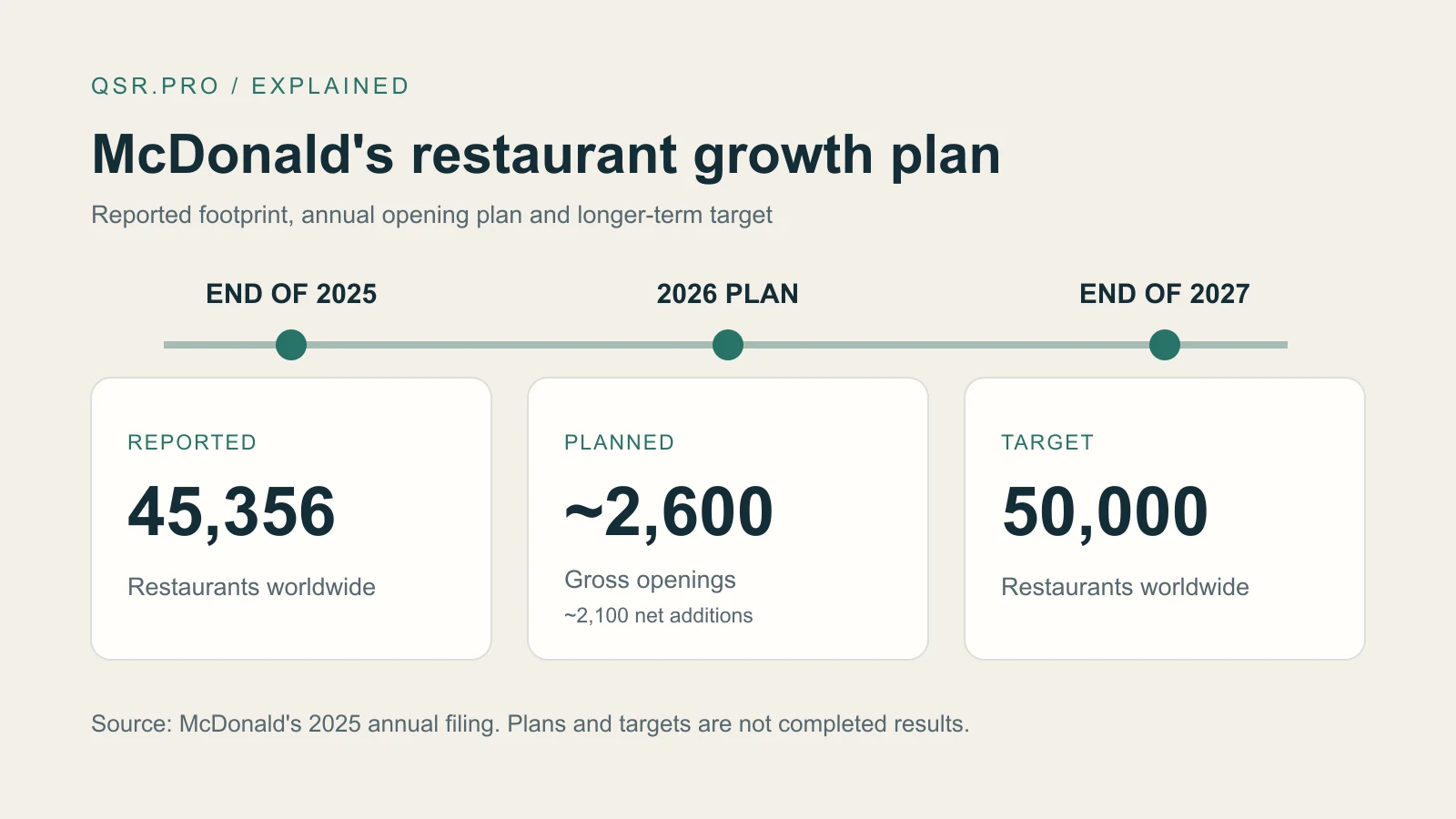
McDonald's plans to open more than 8,000 new restaurants by the end of 2027, reaching 50,000 locations worldwide. The ambition is historic, and the risks are just as large as the opportunity.
The H-2B visa cap for the second half of fiscal year 2026 closed on March 10, well before summer peak season arrives. For QSR operators already fighting a structural labor gap, that cutoff date carries real operational weight.
Jack in the Box bought Del Taco for $575 million in 2022 and sold it for $115 million in late 2025. The 80% value destruction in under four years is a case study in what happens when a struggling brand tries to grow by acquisition.
Jimmy John's launched a gyro LTO on March 5, 2026, becoming the latest legacy chain to chase the Mediterranean wave CAVA turned into a billion-dollar category. For operators, the trend raises real questions about who wins when everyone borrows the same playbook.
Franchisee bankruptcies are accelerating in 2026, with Sailormen Inc. filing Chapter 11 on 119 Popeyes locations and Fat Brands' collapse rippling through 2,200-plus restaurants. For operators, the real threat isn't franchisor instability alone. It's the structural economics trapping franchisees between rising costs and degrading support.
DoorDash's Dot robot made its first delivery in Fremont, California on March 5, 2026, joining Serve Robotics, Grubhub, and Zipline in a live deployment race across U.S. cities. Here is which platforms are operating where, what the unit economics look like, and what QSR operators need to do now.
Starbucks cut earning rates for base-tier members by at least 25% on March 10, 2026, and the backlash was immediate. With 34 million U.S. members watching, every QSR chain running a loyalty program just got a live case study in what not to do.
Burger King's brand president gave out his personal work phone, fielded 30,000 customer messages, and aired a 90-second Oscars spot to nearly 20 million viewers. The result: restaurant visits up 7.4% year-over-year. Here's how the campaign worked and what other operators can learn from it.
New York PE firm 4X4 Capital acquired Bob Evans Restaurants from Golden Gate Capital in a deal announced February 5, 2026, closing the book on an unusually long 8-year hold for a private equity owner.
CAVA, Chipotle, and Sweetgreen built their dominance on full ownership of every location. Now Shake Shack is testing whether you can have it both ways.
White Castle will open its first-ever Texas location at Grandscape in The Colony this summer, marking only the chain's seventh outpost outside the Midwest and a calculated bet on the nation's most competitive QSR battleground.
A humanoid robot's \"crazy dance\" at a Haidilao hot pot location in Cupertino sent dishware flying and required three employees to restrain it. The incident is a useful reality check for operators who have been told automation is ready for the dining room.
The International Pizza Expo returns to Las Vegas this week with 10,000 professionals, 500 exhibitors, and a competitive landscape that mirrors the industry itself: winners pulling away while weak operators struggle to survive.
Beef hit $9.64 per pound in February, the highest price ever recorded. Eggs are projected to fall 27.4% this year. The widest protein cost gap in decades is forcing operators to rethink menu engineering, daypart strategy, and pricing architecture.
The nearly 30-year-old Italian casual dining chain is debuting a 6,000 square foot bar-forward prototype in Laredo, Texas. With 20 draft beers, craft cocktails, and fire pits, it's a bet that beverage-driven traffic can reverse casual dining's structural decline.
For the first time in its history, Applebee's is spending more on digital and social marketing than television. TikTok reach is up 760%. The casual dining chain is rewriting the restaurant marketing playbook.
Black Box Intelligence data shows 9% of full-service restaurants are at risk of closure in 2026, with 3% already past the point of no return. The format divergence between fast casual and traditional sit-down dining is accelerating.
New EY-Parthenon data shows one in four consumers feeling worse off financially. Circana forecasts sub-1% traffic growth for 2026. The gap between winning and losing chains is accelerating.
Americans aged 65 and older will account for 18% of all restaurant spending by 2030, nearly double their share from 2025. With 73 million seniors controlling $78 trillion in assets, operators who ignore this demographic shift risk leaving billions on the table.
Starbucks posted Q1 fiscal 2026 revenue of $9.9 billion, up 6%, with global comp sales rising 4%. CEO Brian Niccol says the 'Back to Starbucks' strategy is ahead of schedule, but a union standoff and growing competition from drive-thru coffee chains add complexity to the recovery.
Chipotle's Q4 2025 results tell a split story: revenue grew 4.9% to $2.98 billion on the strength of new unit openings, but same-store sales fell 2.5% and traffic declined for a fourth consecutive quarter. The chain now projects flat comps for 2026.
CAVA crossed $1 billion in annual revenue for the first time in 2025, growing 22.5% year-over-year while opening 72 new restaurants. With 76 more planned for 2026 and a 1,000-store target by 2032, the Mediterranean chain is rewriting the fast-casual growth playbook.
Wendy's posted its worst quarterly same-store sales performance in years, with U.S. comps down 11.3% in Q4 2025. Interim CEO Ken Cook is betting on Project Fresh, a new value menu, and hundreds of closures to reset the brand.
Roy Rogers Restaurants has selected Qu as its technology partner to unify ordering, kitchen execution, and menu management across all 38 locations. The move is a case study in why legacy regional brands can't afford to keep running fragmented tech stacks.
A New York-based private equity consortium is betting nearly $300 million that California Pizza Kitchen's brand equity can survive a long decline from 250-plus units to 120. The deal puts multi-brand operator Convive in charge of turning the iconic casual-dining chain around.
Guillermo Perales built Sun Holdings into a 1,800-unit franchise empire. Now he's buying distressed restaurant brands outright, betting that franchise operational discipline can rescue chains that corporate ownership couldn't.
Nearly half of all quick-service restaurant visits are now solo occasions, up from 31% four years ago. The chains adapting their menus, store formats, and loyalty tech to single-guest economics are pulling ahead.
From Shake Shack's GLP-1 friendly 'Good Fit' menu to Smoothie King's dedicated drug-user section, chains are engineering menus around a growing cohort of Americans on weight loss medications. Operators who ignore this shift do so at their own risk.
A bankruptcy court approved $184 million in debtor-in-possession financing for Fat Brands while simultaneously pushing out CEO Andy Wiederhorn and his three sons. With qualified bids due April 24 and an auction set for April 28, more than 2,200 franchise locations across 18 brands now face a compressed ownership transition timeline.
A UC Santa Cruz economist spent months interviewing franchise owners across California and found what aggregate BLS data can't show: hours cut 11.5% at one McDonald's group, menu prices up 8-12%, and a capital spending shift toward kiosks and mobile ordering. The findings carry serious implications for operators in states weighing their own $20 wage floors.
Audivi AI and Quail Digital have announced a global partnership that ships voice AI ordering software pre-loaded onto Quail's drive-thru hardware platform. The move targets the integration complexity that has kept mid-market and independent operators on the sidelines of voice AI adoption, and signals a broader shift in how the technology reaches the market.
HHS Secretary RFK Jr. announced a plan to eliminate eight synthetic food dyes by the end of 2026, but only two face formal bans. The remaining six are subject to 'voluntary cooperation' from manufacturers, creating a compliance gray zone that will ripple through QSR supply chains in Q3 and Q4 2026.
Washington D.C. is heading toward a ballot initiative that would raise the minimum wage to $25 an hour by 2029 and eliminate the tip credit entirely by 2031. For restaurant operators, both inside and outside the District, this is the labor cost scenario they've been dreading.
Yum Brands published its first Food Trends Report, pulling data from Taco Bell, KFC, Pizza Hut, and Habit Burger Grill across 59,000 locations. The report spotlights craveable drinks and sauce customization as the next traffic drivers, offering operators a data-backed lens on where consumer demand is heading.
CES 2026 put zero-staff retail, robotic food prep, and AI-driven operations on full display. For QSR operators, the question isn't whether these technologies are coming -- it's how fast the unit economics will justify deployment.
FAT Brands is pushing Fatburger into France with 30 units targeted by 2028, starting with a new location near Paris. The expansion raises a pointed question for the industry: can a financially distressed franchisor build a winning international presence while fighting through Chapter 11 at home?
President Trump signed an executive order removing tariffs on select food and beverage imports, including beef, coffee, tropical fruit, and fertilizers. Operators running beef-forward menus or premium coffee programs get real relief. Chicken, pork, and dairy operators are still on their own.
KFC, the chain that invented fast-food fried chicken in America, has fallen to fifth place among US chicken chains. Consumer spending dropped 4% to $4.34 billion as Raising Cane's and Wingstop surged past the Yum Brands stalwart, exposing structural problems no LTO can fix.
OneRyan Global, the family investment office of tax consulting titan Brint Ryan, has acquired a controlling interest in Mr. Gatti's Pizza, capping a transition to a fully franchised system and positioning the 57-year-old pizza buffet brand for an unconventional expansion into Walmart stores and convenience locations.
A College Station chicken finger brand that once operated a single restaurant near Texas A&M is now chasing statewide saturation. A 44-unit deal with C5 Restaurants signals Layne's may be on a trajectory similar to Raising Cane's early expansion years. Whether the crowded chicken QSR segment leaves room for another ascent is the central question operators and investors should be asking.
SSCP Management's quiet acquisition of Logan's Roadhouse from SPB Hospitality is the latest chapter in the struggling steakhouse chain's ownership saga. With this being SSCP's third distressed-brand buy in five years, the question for investors and franchisees is whether the collect-and-rehabilitate strategy produces real turnarounds or just delays inevitable decline.
Zaxby's quietly surpassed 1,000 restaurants in January 2026, operating across 22 states with 60+ new openings planned for the year. The brand's Modern Farmhouse prototype and Goldman Sachs-backed expansion push raise a core question for the industry: can a deeply regional chain scale to national relevance without losing what made it work?
Portillo's raised $466 million in its 2021 IPO on promises of 920 locations. Four years later, the stock has lost 90% of its value, a CEO is gone, and an activist investor forced a full strategic pivot. The story of what went wrong is a lesson every regional chain operator needs to read.
Public restaurant equities have split into two distinct tiers. Growth names like CAVA and Wingstop command premium valuations on the strength of traffic gains and unit expansion; legacy QSR and casual dining stocks are trading at distressed multiples or heading private. Here is what separates the winners from the losers, and whether current prices are justified.
Texas Roadhouse posted 3.5% comp growth in Q1 2026 while peers bleed traffic, opened its 50th Bubba's 33, and keeps proving that from-scratch food and equity-driven management are the most durable competitive advantages in casual dining. Here's what operators at every price point can learn from their model.
Chick-fil-A launched seven new menu items on March 9, 2026, capping a period in which the chain quietly rolled out six additional sandwiches earlier in the year. The headline move is a Jalapeño Ranch Club sandwich lineup that signals something more than a seasonal refresh.
The Cheesecake Factory is launching its first-ever dedicated mobile app in Q2 2026, making it one of the last major full-service chains to close the digital gap. Combined with plans to open up to 26 new restaurants across its multi-brand portfolio, the company is betting that a diversified growth model can outpace rivals anchored to a single concept.
Roark Capital paid roughly $1 billion for a 245-unit Nashville hot chicken chain in June 2025. The math only makes sense if you understand the Wingstop playbook Roark has already run once before, and why Dave's Hot Chicken might be the one brand positioned to repeat it.
A California super-premium chicken chain just signed its biggest development deal ever, with a Texas auto dealership empire as the franchisee.
Gong cha's acquisition of master franchise rights covering 170 U.S. locations signals a structural shift in how the global bubble tea leader plans to control its American growth.
Bojangles has deployed Hi Auto's voice AI system across nearly 500 locations, maintaining 96% order accuracy at scale and cutting drive-thru employee workload by a third.
With a court-ordered sale process now live, more than 120 potential buyers are evaluating Fat Brands' 18 chains and 2,300-plus locations. CEO Andy Wiederhorn is out, the April 3 deadline is set, and franchisees are running out of runway to protect themselves.
With $2.1 million in projected net income across 550 locations and results that Bloomberg calls 'little improved from before its bankruptcy,' Red Lobster's celebrated comeback may be more press release than reality.
Chicken Salad Chick named Jill Thomas CMO as the brand reports a record 2025 with nearly 100 new franchise deals and a pipeline surpassing 300 units, driven by younger entrepreneurs seeking structured ownership.
Raising Cane's milestone 1,000th location on Hollywood Boulevard is more than a vanity number. It signals a brand with serious scale ambitions, a World Cup strategy, and a founder finally coming home.
Five Restaurant Brands International executives sold 435,191 shares worth $31.83 million in a three-month window that coincided with QSR stock reaching its highest point in a year. The coordinated selling raises questions investors need to weigh against management's confident 2028 growth targets.
El Pollo Loco posted adjusted Q4 EPS of $0.25, beating consensus by $0.04, and unveiled an aggressive 2026 growth plan anchored by a smaller, cheaper store prototype and a push into non-traditional venues.
MCL, once a 30-location Midwest cafeteria institution, is closing five more units this month and citing years of declining sales. What the chain's collapse reveals about America's dying cafeteria format.
Chris Turner stepped into the Yum Brands CEO seat in October 2025 after three decades of operational DNA built by David Gibbs. A financial architect taking the wheel of the world's largest fast food company by unit count raises real questions about execution versus analysis, especially as Yum's AI bet scales toward 60,000 locations and Pizza Hut bleeds stores.
The One Big Beautiful Bill Act introduces a $25,000 federal income tax exemption on tips, triggering a cascade of state copycat bills and mandatory payroll system changes. Here is what QSR operators need to understand about compliance, worker pay, and the long game.
Marc Lore's Wonder has raised $600 million at a $7 billion valuation and acquired Grubhub for $650 million, building a food hall concept that promises to solve what ghost kitchens never could. The model is ambitious, the expansion pace is aggressive, and the implications for QSR operators are significant.
Starbucks Workers United filed a comprehensive contract proposal on March 13, 2026, reigniting stalled negotiations that have dragged on for four years without a first contract. For QSR operators watching from the sidelines, the Starbucks labor standoff is the most consequential union story in the industry's modern history.
McDonald's shuttered its CosMc's spinoff in May 2025 after 18 months, but the beverages that concept tested are now heading to 500-plus McDonald's locations and a planned national McCafe rollout. The story of how a failed brand became a beverage growth engine.
Chipotle Mexican Grill is entering Mexico for the first time in 2026, selling American-interpreted Mexican food to the nation that invented the original. The irony is obvious. The business logic, though, is worth examining carefully.
When McDonald's CEO Chris Kempczinski earned $19.2 million in 2024, the crew members at the counter made around $14 an hour. That gap is wider than most industries, and it's becoming a real operational problem for chains struggling to hire and retain staff.
White Castle's deployment of SoundHound's voice AI across its drive-thru lanes produced a 20% reduction in order errors and an average service time of 90 seconds per vehicle. The numbers give the industry the concrete proof point it has been waiting for.
Long John Silver's ended 2024 with just 485 locations, down from roughly 1,500 at its early-2000s peak. The chain's 57-year slide offers a case study in structural disadvantage, franchise economics gone wrong, and the limits of turnaround playbooks.
Papa Johns has become the first restaurant brand to deploy Google Cloud's Gemini-powered agentic ordering platform, capable of handling complex multi-person orders across voice, mobile, web, kiosks, and in-car systems. The move positions the chain at the forefront of AI adoption even as it simultaneously closes hundreds of locations in a broader turnaround effort.
The Supreme Court struck down IEEPA-based tariffs in February, then the White House pivoted to Section 122 authority within four days. For QSR procurement teams, the legal ground has never shifted faster.
The 2026 FABI Award winners signal a decisive turn in foodservice product innovation: protein is king, global flavors are moving mainstream, and plant-based has lost its grip on the industry's attention.
CEO Kevin Hochman is studying a profit-sharing ownership model for GMs modeled on Texas Roadhouse's managing partner structure. If it works, it could redefine unit-level leadership across company-operated chains.
After scaling back its troubled McDonald's partnership, Krispy Kreme is showing genuine progress on a capital-light refranchising strategy. Q4 2025 numbers suggest the model is beginning to work.
Olo CEO Noah Glass unveiled a consumer-facing ordering app that charges restaurants zero commission, threatening the commission model that DoorDash and Uber Eats have built their businesses on.
When McDonald's starts cutting prices aggressively, it is not a marketing move. It is a distress signal from the bottom half of the American economy. McValue 2.0 tells operators more about consumer health than any Fed report.
The FTC just secured a $17 million settlement against Xponential Fitness, the largest monetary recovery in a franchise case in FTC history. The violations have nothing to do with fitness and everything to do with how franchisors sell franchises. QSR brands should read the complaint carefully.
Chicago-based Chowbus closed an $81 million funding round to build an AI-powered operating platform for independent and culturally rooted restaurants. The company has grown annual recurring revenue 9x in four years to more than $120 million, processing $4 billion in annualized transaction volume across all 50 states and Canada. The raise signals a broader bet that the 60% of the restaurant industry still running on mismatched, enterprise-focused tools is ready for something purpose-built.
Qu's seventh annual Restaurant Technology Benchmark Report reveals a striking gap between C-suite confidence and operational reality: 53% of CEOs report no major system instability affecting their brand, while only 17% of their own operational leaders agree. The report is a warning shot for any chain betting on AI to solve problems their foundational systems cannot yet handle.
Darden Restaurants posted Q3 fiscal 2026 sales of $3.35 billion, up 5.9% year over year, as LongHorn Steakhouse delivered 7.2% same-restaurant sales growth. The results signal a broader shift: the price gap between fast food and casual dining has narrowed enough that consumers are reconsidering where they spend their restaurant dollars.
Wingstop opened a record 493 net new restaurants in FY2025 while posting its first domestic same-store sales decline in 22 years. Is this a cyclical correction, or is the brand growing faster than its own unit economics can absorb?
Canadian beef now carries a 25% import duty, some seafood products have tripled in price, and the full cost wave hasn't hit yet. Here's what QSR operators need to know before the dam breaks.
Brinker International lifted its fiscal 2026 revenue forecast to $5.76-$5.83 billion after Chili's posted its sixth consecutive quarter of double-digit same-store sales growth, outpacing the casual dining industry by hundreds of basis points while its fast-food rivals scrambled to respond.
Brian Niccol has cut more than 2,000 corporate jobs, shuttered all 90 pickup-only stores, and is closing five Seattle coffeehouses in April. The early data says the pain is working.
The most-hyped QSR co-branding deal in years lasted 15 months before collapsing under logistics costs and demand that never materialized. Here's the anatomy of a failure, and what every operator and investor should take from it.
McDonald's is doubling down on breakfast with $1 McMuffin promotions and a $4 McValue 2.0 meal launching in April, while Wendy's quietly pulled back on breakfast hours in weaker markets. Understanding who's winning the morning daypart, and why it matters to your bottom line.
With ground beef hitting $6.69 per pound and the U.S. cattle herd at a 75-year low, QSR chains are racing toward chicken with an urgency that goes beyond trend-chasing. From McDonald's Chicken Big Mac to Taco Bell's poultry pivot to Raising Cane's 1,000th location, the competitive dynamics of 2026 are reshaping how every operator thinks about protein.
Taco Bell unveiled more than 20 new menu items at its Live Más LIVE event in March 2026, a deliberate acceleration of its LTO engine. Behind the spectacle is a disciplined growth strategy targeting $3 million AUV per location and a $5 billion beverage business by 2030.
A wave of private equity dry powder, maturing PE hold periods, and a bankruptcy auction putting 18 restaurant brands on the block has the franchise M&A market tracking toward its most active stretch in recent memory. Here is what operators and investors need to know.
While closing up to 600 U.S. restaurants, Wendy's is signing franchise agreements for 60+ new locations in Mexico. The strategic logic behind the pivot, and what it means for the chain's long-term trajectory.
The first wave of plant-based QSR items over-promised and under-delivered. A quieter, more pragmatic second wave is emerging, built on hybrid proteins, vegetable-forward formats, and the economics operators actually need.
Yum Brands has deployed its Byte AI Restaurant Coach across more than 28,000 locations, giving operators a new kind of digital GM that analyzes operational data and drives decisions on staffing, scheduling, and performance. Here's what that actually means on the floor.
Starbucks is overhauling at least 1,000 North American locations by year-end while phasing out the mobile-order pickup stores it championed just two years ago. The reversal offers a case study in unit economics, brand identity, and when the digital-first playbook breaks down.
Uber Eats raised its Lite tier commission from 15% to 20% in early March 2026, adding a 5% surcharge on Uber One orders. For QSR operators already running 3-9% net margins, the math on delivery profitability just got harder.
Bojangles expanded made-from-scratch all-day breakfast to every standalone location on March 12, 2026. Here is what the move means for unit economics, kitchen operations, and the broader daypart war.
From Blackstone's $8 billion Jersey Mike's deal to a private equity consortium taking Denny's private for $620 million, 2025 was a banner year for restaurant M&A. Here's what the dealmaking tells us about where franchise ownership is headed.
McDonald's 175 million active loyalty members and $30 billion in program sales have turned loyalty from a perk into a primary growth lever, forcing every chain in the industry to reckon with the technology gap.
Scott Boatwright inherited one of fast casual's best-run machines, then immediately faced slowing traffic and a skeptical market. His operational DNA and protein-forward strategy offer a clear picture of where Chipotle is headed.
Gen Z now visits restaurants more often than any other generation, and their spending power is projected to reach $12 trillion by 2030. Here's what the data means for QSR operators.
Digital tipping prompts have become a flashpoint for consumer frustration, with 65% of customers reporting weariness from constant tip requests. Here's what QSR operators need to know about tipflation and what to do about it.
A new Research and Markets report pegs the global fast food market at $658.85 billion in 2025, with a projected rise to $868.19 billion by 2030 at a 5.7% CAGR. The growth is real, but the story behind the numbers is more complicated than any single headline figure suggests.
CKE Restaurants tested Presto Automation, OpenCity's Tori, and Valyant AI simultaneously across its Carl's Jr. and Hardee's drive-thrus. The results offer a rare, side-by-side look at what actually works in AI order-taking, and why the multi-vendor approach may be the smartest move in a market with no clear winner.
From Pizza Hut's Space Jam box to Shake Shack's free sandwich code, QSR brands deployed precision promotional campaigns during the 2026 NCAA Tournament. Here's what operators can learn from the most competitive marketing window of the year.
Presto Automation closed a $10 million funding round as the drive-thru AI sector moves from pilot theater to deployment accountability. With McDonald's IBM experiment now a cautionary tale, operators are demanding hard numbers on accuracy, labor savings, and rollout speed.
Darden Restaurants is permanently closing 14 Bahama Breeze locations and converting the remaining 14 to other concepts. The decision, announced February 3, 2026, is a case study in how large casual dining operators make brand lifecycle decisions when traffic trends and market positioning no longer add up.
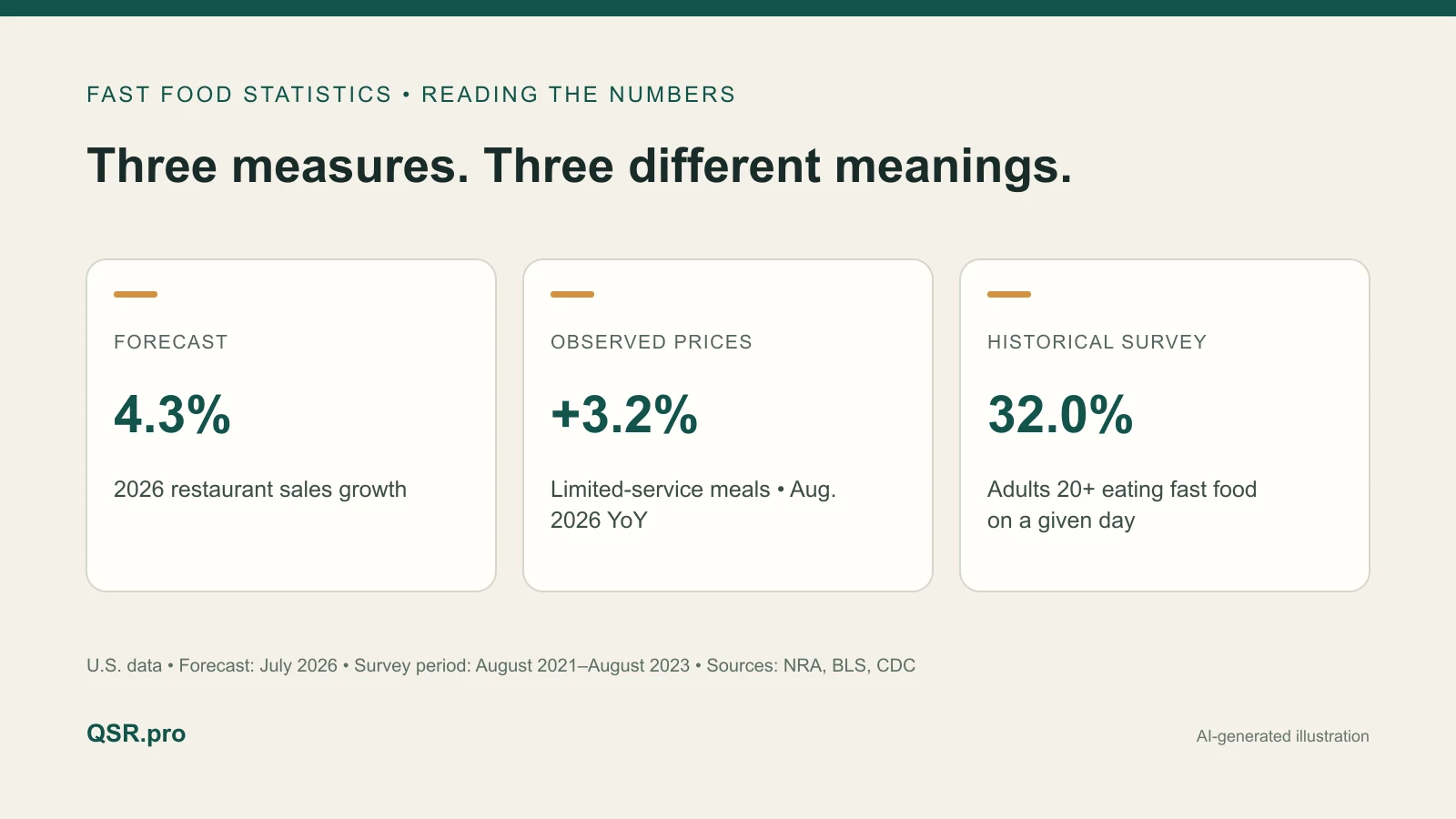
USDA projects food-away-from-home prices to rise 3.7% to 4.6% in 2026, while grocery inflation is forecast at just 1.7%. The widening gap is changing how middle-income consumers spend their food budgets, and QSR operators are caught in the middle.
The USDA projects egg prices will fall 27.4% in 2026 as avian flu pressure eases and U.S. flock sizes recover. For QSR operators sitting on compressed breakfast margins, the relief could be significant — but the timing depends on contract structures and how fast chains move to capitalize.
McDonald's has deployed AI-powered Accuracy Scales across thousands of restaurants, weighing every order before it reaches the customer. Here's what the technology does, why it matters, and what it signals about where QSR AI investment is actually heading.
Domino's posted 3.7% U.S. same-store sales growth in Q4 2025, extending a nine-quarter streak that has redrawn competitive lines across the $46 billion U.S. pizza market. As Pizza Hut sheds 250 locations and Papa John's winds down 300, the gap between the category leader and the rest of the field keeps widening.
After pulling the Charged Lemonade amid wrongful death lawsuits, Panera Bread is re-entering the beverage space with a reformulated, lower-caffeine lineup. The move signals a broader menu reset as new management works to win back lost ground at the second-largest fast-casual chain in the country.
Only one-third of restaurant brands saw positive comp sales in 2025, and 2026 is shaping up as the year the middle disappears. The gap between QSR's strongest performers and its struggling chains is turning into a chasm, driven by consumer spending polarization, digital investment gaps, and a brutal new calculus on value.
Taco Bell launched Dirty Sips as a permanent customizable beverage platform in March 2026, targeting $5 billion in drink sales by 2030. For operators and investors, the math behind the move is more compelling than the menu.
FAT Brands and affiliate Twin Hospitality filed Chapter 11 bankruptcy on January 26, 2026, capping a years-long acquisition binge that loaded the company with debt across 17 brands and 2,300-plus locations. The collapse is a case study in franchise rollup risk, and it carries direct consequences for hundreds of franchisees now operating inside a restructuring.
Burger King announced its first major Whopper recipe change in 10 years on February 26, 2026, updating the bun, mayo, and packaging. The upgrade carries a $4,000-per-year cost per location across 7,000+ US restaurants, arriving at an unusual moment: the brand is simultaneously closing 400+ locations and pressing through a $400 million turnaround plan.
McDonald's trialed humanoid robots at a Shanghai restaurant in March 2026, then quickly downplayed the whole thing. The real story isn't the robots. It's the gap between front-of-house optics and back-of-house economics.
With traffic flat to negative across most QSR segments, major chains have pivoted to premium limited-time offerings to drive average check and generate headlines. McDonald's Big Arch, Burger King's Steakhouse Whopper, and a string of elevated seasonal items signal a new strategic playbook for a consumer base that won't give up restaurant visits but increasingly expects more.
From Ash Wednesday through Easter Sunday, the QSR industry fights an annual battle for fish sandwich supremacy. In 2026, rising pollock prices, aggressive promotions, and shrinking margins are reshaping how chains approach the season.
The National Restaurant Association's 2026 State of the Restaurant Industry report found 26% of operators now use AI-related tools, with marketing leading adoption and customer ordering lagging far behind. Here's what the data actually shows about where the industry stands.
Port of Subs, a Nevada sandwich chain that's operated quietly in the West for five decades, has inked deals for more than 450 new locations nationwide. Backed by Area 15 Ventures and RE/MAX co-founder Dave Liniger, the brand is targeting markets where Subway is retreating and Jersey Mike's hasn't yet saturated the field.
Burger King is rolling out an AI assistant named 'Patty' to 500 restaurants, monitoring employee drive-thru greetings in real time. The system flags hospitality cues, answers operational questions, and is heading toward a full U.S. deployment by end of 2026.
A new Qu survey found that 37% of restaurant brands cite fragmented systems and disconnected data as the primary barrier to getting value from technology. As AI promises transform the industry, the unsexy infrastructure problem of the fractured tech stack is quietly blocking the revolution.
The global quick service restaurant market was valued at $323.46 billion in 2025 and is projected to reach $520 billion by 2033. But the headline number obscures a more complicated story about where real growth is happening, which markets are saturated, and what operators and investors should actually watch.
More than half of limited-service restaurant brands are spending on AI, but the gap between investment and measurable return is widening. Here's what's blocking ROI and which use cases are actually delivering results.
Roark Capital paid $9.6 billion for Subway in 2023 and has since posted 12 consecutive quarters of same-store sales growth. Yet the U.S. store count has dropped below 20,000 for the first time in two decades. Understanding that contradiction is the key to understanding Roark's playbook.
Smithfield Foods is buying Nathan's Famous for approximately $450 million, converting a licensing arrangement into outright ownership. The deal raises pointed questions about supplier-operator relationships, franchise economics, and whether vertical integration is becoming the supply chain strategy of choice for the industry's biggest players.
Wingstop posted adjusted EPS of $1.00 against a $0.83 consensus, shares jumped 11%, and the company rolled out Smart Kitchens to 2,000 locations. A national loyalty program launching in Q2 2026 could be the next catalyst.
The ghost kitchen industry that was supposed to be worth $1 trillion is now consolidating around two companies. Purpose-built facilities are closing. The model that's actually working looks nothing like what investors were promised.
With 210 million active loyalty members and a Google Cloud partnership powering AI kitchens, McDonald's is turning its app into the operating system for 43,000 restaurants. The target: 250 million members and $45 billion in loyalty-driven sales.
Dine Brands is betting its future on a dual-branded Applebee's-IHOP concept that generates up to 2.5x the revenue of standalone locations. With 80 open by year-end and a target of 900 over the next decade, this is the biggest format experiment in casual dining.
The fast-casual pasta chain more than doubled its 2026 closure target to 35 restaurants. After shedding 42 locations in 2025, Noodles & Company could fall below 400 units for the first time in years.
AI-powered dynamic pricing and real-time menu engineering are moving from pilot programs to mainstream adoption in 2026. With food costs still 35% above pre-pandemic levels, operators who treat the menu board as a static document are leaving margin on the table.
From Checkers' 570-square-foot prototype to Taco Bell's dual-lane Go Mobile concept, the industry's biggest operators are cutting footprints in half. It's not a stylistic choice: it's the only math that works when real estate costs, construction expenses, and labor rates all move in one direction.
Potbelly will open its 500th shop in 2026, powered by a new parent company, a 40%-plus digital mix, and $1.3 million average unit volumes. Here is how a brand that once seemed headed for irrelevance engineered one of fast casual's quietest turnarounds.
Wingstop opened 493 net new restaurants in 2025, reaching 3,056 locations at a 19.2% unit growth rate that outpaces almost every major QSR brand. With 2026 guidance set at 15-16% more global unit development and a long-term vision of 10,000 locations, the Dallas-based wing chain is building a case that it belongs in the same conversation as Domino's and Subway.
Shake Shack is guiding for 55-60 new company-operated Shacks in 2026, the largest development pipeline in company history, while simultaneously cutting average net build costs below $2 million. The combination is reshaping the chain's unit economics and putting it on a credible path to 23%-23.5% restaurant-level margins.
The International Franchise Association projects total franchise output to exceed $920 billion in 2026, yet QSR unit growth is stalled at just 0.5%. Here is where the money is actually flowing, and what it means for operators and investors trying to figure out what to do next.
Restaurant technology M&A activity jumped 45% in H1 2025, and 2026 is moving even faster. The industry is consolidating from a fragmented patchwork of point solutions into unified platforms. Here's who's winning the race, who's buying what, and what it means for operators betting on their tech stack.
While overall QSR franchise growth has stalled at 0.5%, fried chicken chains are on a tear. Dave's Hot Chicken, Wingstop, Slim Chickens, and Raising Cane's are collectively planning 750+ new locations in 2026, fueled by favorable protein economics, cult-level brand loyalty, and white space in markets that legacy burger chains already saturated.
Jollibee Foods Corporation is pursuing one of the most aggressive international expansion plays in quick service, targeting 500 U.S. locations by 2030 with a U.S. IPO on the horizon. Here's what operators and investors need to understand about the $4.5 billion Filipino giant's American bet.
Travis Kalanick has rebranded his restaurant empire as Atoms, unifying CloudKitchens ghost kitchen real estate, Otter POS software, Lab37 kitchen robotics, and Picnic office catering into one vertically integrated bet. We break down whether the integrated stack strategy can actually work, and what it means for operators watching from the sidelines.
The International Franchise Association projects QSR franchise growth below 0.5% in 2026, the weakest showing of any major franchise sector. With food costs 36% above pre-pandemic levels, labor costs up 35%, and tariffs hitting supply chains, operators are cutting menus and switching suppliers rather than signing new leases.
Industry projections put AI-handled drive-thru orders at 50% of U.S. locations by late 2026. With SoundHound powering 10,000+ restaurants and Presto backed by fresh capital, the technology has cleared the novelty stage. Now comes the hard part: proving it works at scale.
Chick-fil-A is marking its 80th anniversary with a yearlong campaign the company calls the biggest promotional push in its history. Behind the retro cups and Golden Fan Cups lies a calculated strategy to defend its position as McDonald's most dangerous competitor while addressing its first growth deceleration in over a decade.
McDonald's CEO Chris Kempczinski posted a promotional video for the new Big Arch that promptly went viral for all the wrong reasons. What happened next became a masterclass in competitive marketing opportunism, and somehow the burger still beat sales expectations.
Jack in the Box is closing up to 200 locations, sitting on $1.7 billion in debt, and posting its second straight quarter of 7%-plus sales declines. New CEO Lance Tucker's 'Jack on Track' plan is the chain's last clear shot at a sustainable future.
Denny's completed its $620 million sale to a consortium led by TriArtisan Capital Advisors on January 16, 2026, ending nearly three decades as a public company. The deal loaded $335 million in new debt onto a chain already managing thin margins and declining traffic, and the buyer's track record with TGI Fridays and Hooters raises pointed questions about what comes next for 1,500 franchisees.
Serve Robotics reached 2,000 deployed sidewalk delivery robots across 20 cities by the end of 2025, a 20x increase from the prior year. With a 99.8% delivery completion rate, 4,500 merchant partners, and a new White Castle partnership through Uber Eats, autonomous last-mile delivery is shifting from experiment to operational reality for QSR brands.
Something unexpected is happening in American dining: a sit-down restaurant chain with table service is beating fast food at its own game. Chili's has posted six consecutive quarters of double-digit same-store sales growth, driven by a $10.99 combo that directly competes with McDonald's and Wendy's value meals. For QSR operators, the implications are serious.
Six years after the chicken sandwich that broke the internet, Popeyes is facing a very different kind of attention. Same-store sales fell for four consecutive quarters in 2025, and Sailormen Inc., one of the chain's largest franchisees with 136 locations across Florida and Georgia, filed Chapter 11 in January 2026 with $342 million in liabilities against $232 million in assets.
Chipotle posted its first negative annual same-store sales since 2016, with traffic declining in all four quarters of 2025. Rather than join the industry's value meal arms race, the chain is betting on protein premiums and a stepped-up LTO calendar to win customers back. The strategy is a high-stakes test of whether brand equity can outweigh price sensitivity in a softening consumer environment.
McDonald's is overhauling more than 27,000 drive-thru locations worldwide with multi-lane designs, AI-powered ordering, dynamic menu boards, and mobile pickup lanes. With drive-thru accounting for 70% of U.S. sales, the redesign is the operational centerpiece of the Accelerating the Arches strategy.
RBI has reaffirmed its target of 8%-plus organic operating income growth through 2028 and plans to return $1.6 billion to shareholders in 2026. With Burger King's turnaround still proving itself, Tim Hortons expanding internationally, and Popeyes moderating, the question is whether the math works.
While the industry obsesses over hourly wages, GM salaries have surged 12% in a single year. The real labor crisis in QSR is not finding crew members. It is finding the experienced operators who can run a $2-3 million restaurant.
Steak 'n Shake has deployed biometric payment at over 300 locations. Whataburger is piloting palm vein scanning. As QSR chains race to shave seconds off drive-thru times, biometric checkout promises sub-5-second transactions, but privacy laws and consumer trust remain open questions.
One year after California raised its fast food minimum wage to $20 per hour, a UCSC study and franchise-level data reveal the real costs: 12% fewer labor hours at McDonald's locations, 8-12% menu price increases, and an acceleration of automation investment across major chains.
McDonald's is rolling out its Best Burger program to every U.S. market by the end of 2026. The initiative overhauls cooking methods, seasoning, and bun preparation across 14,000 locations. It is the most ambitious quality push since the Made for You system two decades ago.
The restaurant industry still needs 200,000 workers to reach pre-pandemic staffing levels. Rising minimum wages, tighter immigration enforcement, and shifting generational expectations are making the gap harder to close. Automation is no longer optional.
The restaurant industry is projected to hit $1.55 trillion in sales in 2026. But 42% of operators lost money last year. The gap between top-line growth and bottom-line reality is the defining challenge of this era in foodservice.
McDonald's is rolling out a $4 breakfast meal deal and sub-$3 menu items in April 2026. For franchisees already squeezed by costs 35% above pre-pandemic levels, the move forces a hard conversation about traffic versus margin.
Chick-fil-A is testing a standalone beverage concept called Daybright, its first venture outside the core chicken restaurant format. With Starbucks in turnaround mode and the U.S. specialty beverage market worth over $48 billion, the timing could not be better.
The National Restaurant Association projects industry sales will hit $1.55 trillion in 2026, an all-time record. Yet 42% of operators reported their restaurants weren't profitable in 2025. Understanding this disconnect is the defining challenge of the current operating environment.
Grubhub, Wonder, and drone manufacturer Dexa launched New Jersey's first drone food delivery program on March 18, 2026. The three-month pilot signals a potential turning point for QSR last-mile logistics, with implications for labor costs, delivery speed, and the gig economy model that most chains depend on today.
While Chipotle missed estimates and Sweetgreen's stock cratered 27.7%, CAVA posted $331.8M in revenue and 10.8% same-restaurant sales growth in Q1 2026. Here's what the Mediterranean chain is doing differently and why it matters for the fast-casual sector.
Blackstone paid $8 billion for a majority stake in Jersey Mike's, making it one of the most expensive QSR acquisitions in history. Now the private equity giant is executing a textbook franchise growth play: 400+ new units in 2026, international expansion into the UK and Ireland, and whispers of an IPO before the decade ends.
Dutch Bros posted $1.64 billion in 2025 revenue, a 27.9% jump, while expanding to 1,136 locations and guiding toward $2 billion in 2026. As Starbucks stumbles through a complicated turnaround, the Oregon-born drive-thru chain is writing a different kind of growth story.
Eight out of ten QSR locations now have self-service kiosks, McDonald's alone has deployed them in 20,000 stores worldwide, and operators report 15-30% higher average tickets. With a 73.8% annual quit rate hollowing out front-of-house teams, the traditional counter is being redesigned from scratch.
Restaurant Brands International has completed a joint venture with CPE that injects $350 million into Burger King China, targeting 4,000 locations by 2035. With CPE taking 83% ownership and a 20-year master development agreement in place, this is the biggest QSR international expansion bet of 2026.
Sweetgreen's Q4 2025 same-store sales plunged 11.5%, its stock sits 89% below IPO price, and closures are mounting. With CAVA surging and Noodles & Company shrinking, the fast-casual segment is splitting into clear winners and losers. Here is what went wrong and what operators can learn.
Chipotle and CAVA have jointly invested $25 million in Hyphen, the startup building automated makelines that can assemble 350 bowls per hour at 99% accuracy. With 65% of Chipotle's digital orders eligible for automation and the industry bleeding workers at a 73.8% annual quit rate, the robotic kitchen is no longer a science project.
While major chains shutter hundreds of locations, Raising Cane's is opening nearly 100 new company-owned restaurants in 2026 and launching into London and Mexico. The privately held chicken finger chain's radical simplicity is proving to be its greatest competitive advantage.
Yum! Brands has crossed 2 million voice AI orders across 300-plus Taco Bell drive-thrus, making it the largest QSR voice AI deployment in the world. For the industry, the message is clear: this technology has graduated from experiment to infrastructure.
McDonald's U.S. same-store sales grew 6.8% in Q4 2025, the chain's best domestic quarter since Q3 2023. A value reset, seasonal promotions, and a recovery from last year's E. coli crisis all played into results that significantly beat Wall Street expectations.
A new wave of tariff-driven cost pressure is hitting restaurant operators at the worst possible time, with food costs up 40% over five years while menu price increases lag at 30%. With consumer spending softening and supply chains in flux, the traditional tools for protecting margins are losing their edge.
The USDA's proposed increase in poultry and pork slaughter line speeds could expand supply capacity at a moment when food costs are climbing. For QSR chains that rely on chicken and pork as their primary proteins, the regulatory shift carries real implications for procurement costs and supply chain stability.
Papa John's will shutter roughly 300 underperforming North American locations by end of 2027, with 200 closures targeted for this year alone. New CEO Todd Penegor, who previously led Wendy's through its own reset, is cutting dead weight while laying the groundwork for what the company hopes will be a durable recovery.
Every major fast food chain is running some form of value promotion in 2026, and the math is punishing franchisees while rewarding brands with digital infrastructure and scale. The winners and losers of this price war are becoming clear.
Wendy's posted its worst same-store sales decline since the pandemic and is now closing up to 358 U.S. restaurants in the first half of 2026. A breakdown of what went wrong: breakfast underperformance, value messaging failures, leadership instability, and franchise economics that no longer work.
Yum! Brands is shuttering 250 Pizza Hut locations in the first half of 2026 as part of a program called 'Hut Forward.' But the store count is a symptom, not the disease. A structural mismatch between the brand's legacy dine-in identity and a delivery-dominated market has left Pizza Hut fighting for relevance while Domino's laps it on every metric that matters.
For the first time in U.S. history, more states have minimum wages at or above $15 per hour than at the federal floor of $7.25. Twenty-two states are raising wages in 2026, with Arizona, Colorado, Hawaii, Maine, Missouri, and Nebraska crossing $15 for the first time. Here is what QSR operators need to know about the numbers, the P&L impact, and the levers available to protect margins.
The maker of Flippy just bought a workforce management platform, signaling that the future of kitchen automation isn't just robots replacing workers. It's a single integrated platform managing robots, labor, and operations together. Here's what operators need to know.
Starbucks posted its first U.S. transaction growth in eight quarters under CEO Brian Niccol. The playbook is surprisingly simple: faster drinks, fewer menu items, and a $600 million bet on people.
Chick-fil-A has committed $1 billion to expand into Europe and Asia by 2030. With $9.3 million AUVs and a fiercely guarded owner-operator model, the chain faces a fundamental question: does the formula translate?
Taco Bell posted 7% same-store sales growth in 2025 while most QSR chains struggled. Its RING strategy targets $3 million AUVs, $5 billion in Cantina Chicken sales, and 10,000 units. Here is how the chain plans to get there.
Forget chatbots and voice-ordering gimmicks. The real AI revolution in restaurants is happening in the back office, where agentic systems are autonomously managing schedules, inventory, and demand forecasting without human prompting.
McDonald's launched the Big Arch on March 3, but early traffic data tells a more complicated story. The premium burger generated just a 2.2% visit lift, far below recent LTOs. Here is what it means for the chain's strategy.
The U.S. cattle herd has shrunk to its smallest size since 1951. With beef prices surging past records and no relief in sight for years, burger chains face a fundamental question about their business model.
Wendy's, Papa John's, Pizza Hut, and Jack in the Box are collectively shuttering close to 1,000 locations this year. The closures signal a structural reset driven by traffic declines, margin compression, and a consumer base that has hit its spending ceiling.
Wingstop has quietly become one of the most successful QSR brands in the country. While competitors chase viral moments and trend cycles, Wingstop has built a digital-first, delivery-optimized busines
Jersey Mike's Subs is one of the fastest-growing QSR brands in the country. The chain has grown from a regional East Coast concept to a national powerhouse, adding hundreds of locations annually and c
Domino's has transformed from a regional pizza delivery chain into one of the most technologically advanced QSR brands in the world. The company's digital transformation over the last 15 years has mad
Wendy's has spent the last decade repositioning itself as the quality leader in the burger category. Fresh, never frozen beef. Sea salt fries. Made-to-order burgers. The brand's commitment to quality
Popeyes Louisiana Kitchen has spent the last five years on a growth tear. The 2019 chicken sandwich launch wasn't just a viral moment. It fundamentally shifted the brand's position in the QSR chicken
Taco Bell is the dominant player in Mexican-inspired QSR, with over 8,000 locations generating more than $13 billion in annual system sales. The brand has spent the last decade evolving from a late-ni
Dunkin' has spent the last decade transforming from a regional donut shop into a national beverage-led, on-the-go brand. The rebrand from "Dunkin' Donuts" to just "Dunkin'" in 2019 signaled the shift:
Subway has long been one of the most accessible franchise opportunities in quick-service restaurants. The initial investment is lower than most major brands. The footprint is flexible (you can open in
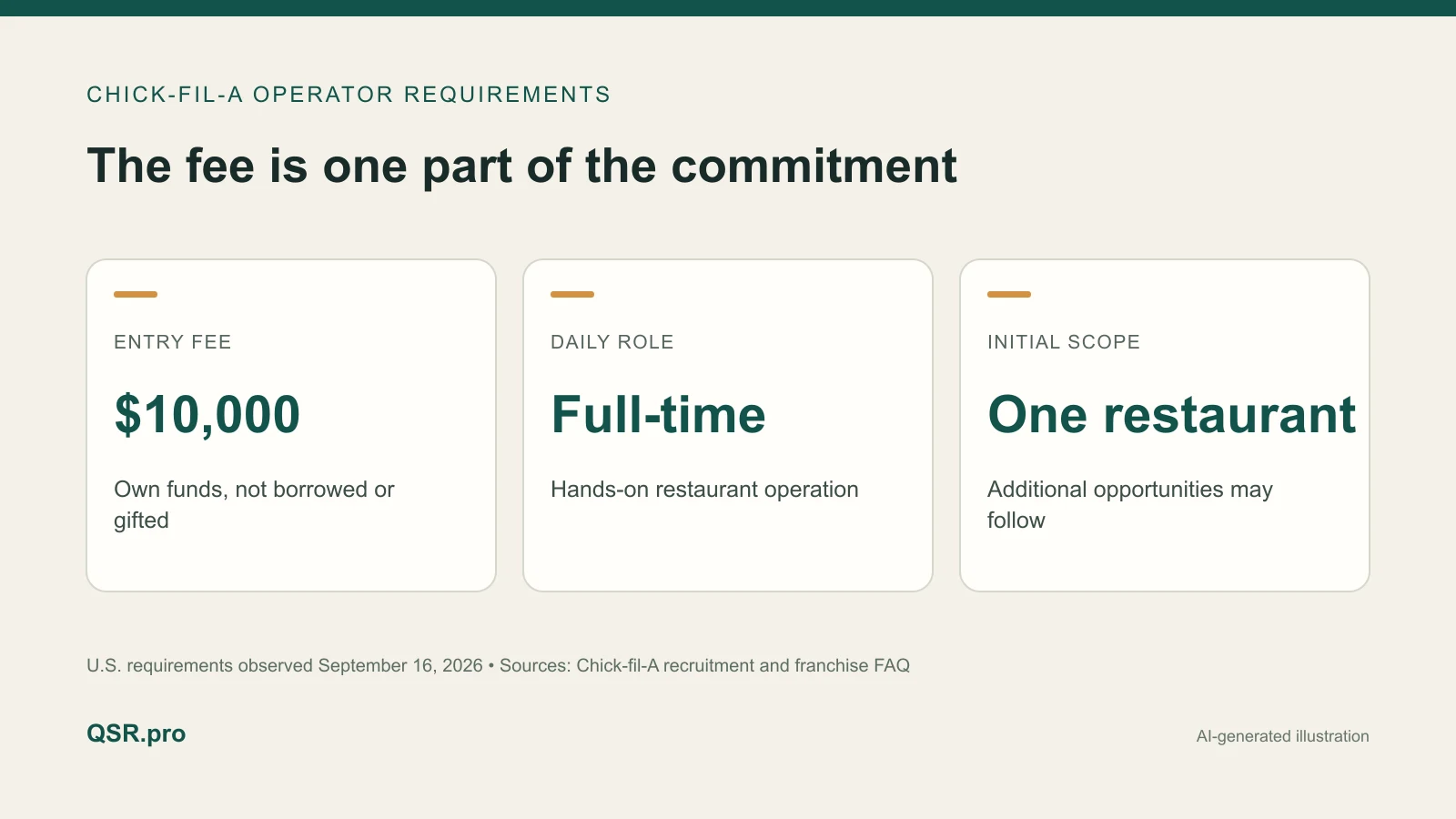
Chick-fil-A's franchise model is unlike any other major quick-service restaurant chain. The initial investment is shockingly low. The selection process is shockingly competitive. And the financial str
Opening a McDonald's franchise remains one of the most coveted opportunities in quick-service restaurants, but it's also one of the most demanding. The Golden Arches don't hand out franchises to just
Chipotle opened a record 334 restaurants in 2025 and grew revenue 5.4% to $11.9B, but restaurant-level margins contracted to 23.4%. The fast-casual leader faces a new equation.
Raising Cane's opened its 1,000th restaurant on Hollywood Boulevard in March 2026. The privately held chain plans 100+ new locations this year as it targets 1,600 total and top-10 QSR status.
DoorDash's $3.9B acquisition of Deliveroo, completed in October 2025, gives the company a presence across Europe, Asia, and the Middle East. The food delivery market consolidation accelerates.
Two years after AB 1228 imposed a $20 minimum wage on California fast food workers, new UC Santa Cruz research shows higher prices, reduced employment, and accelerated automation.
Miso Robotics' Zignyl acquisition signals a new phase in restaurant automation. The global market is projected to hit $28B in 2026, with robots making everything from fries to salads.
Starbucks delivered 4% global comparable sales growth in Q1 FY2026, with $9.9B in revenue. U.S. transaction growth turned positive for the first time in two years.
RBI delivered 5.3% system-wide sales growth for 2025, with Burger King U.S. comps up 2.6% and Popeyes scaling to a $2B run-rate. The $550M Royal Reset is showing results.
Wendy's reported an 11.3% decline in U.S. same-restaurant sales in Q4 2025, with global systemwide sales falling 8.3% to $3.4B. Digital grew 12.4%, but is it enough?
The selection process, interview stages, what they look for, and why operators can't own multiple stores. Harder than Harvard, more selective than MIT, and structured to filter for a rare combination of traits.
Yum Brands posted a 27% jump in Q4 net income to $535M, opened 4,500+ new KFC, Taco Bell, and Pizza Hut locations in 2025, and hiked its dividend 6%.
McDonald's closed 2025 with $7.01B in Q4 revenue, beating estimates by nearly 3%. With 2,600 new openings planned for 2026, the chain is racing toward 50,000 global locations.
The complete story of how the largest franchise system in history collapsed. Dollar footlongs, franchisee revolts, market saturation, and the $9.6 billion Roark Capital acquisition that inherited the mess.
U.S. plant-based meat sales have fallen 19% since 2023, Beyond Meat's stock collapsed below $1, and QSR chains are quietly pulling plant-based items from their menus. The once-booming alternative protein segment is in a full-blown retreat.
A $900 million lawsuit, an FTC investigation, and the story of how copyright law turned soft serve maintenance into a federal case. Inside the Taylor Company monopoly and the right-to-repair battle that followed.
Checkers & Rally's franchise investment ranges from $124,000 to $2,132,000. The dual-brand operates 860 locations with unique modular format and double drive-thru model.
Captain D's franchise costs $1,005,600 to $1,223,600 (excluding real estate). As the leading seafood QSR with 540 locations, the brand targets Southeast markets with battered fish and shrimp focus.
Church's Texas Chicken franchise investment ranges from $644,366 to $1,808,972. With 1,600 global locations across 24 countries, the brand focuses on value-positioned fried chicken.
Bojangles franchise costs range from $2,650,870 to $3,829,400. With 825 locations and $600,000 development incentives, the brand focuses on Southern chicken and made-from-scratch biscuits.
Carl's Jr franchise requires minimum $1,300,000 investment. Owned by CKE Restaurants with 1,100+ locations, the brand emphasizes charbroiled burgers and premium positioning in Western markets.
Hardee's franchise investment ranges from $1,303,000 to $3,436,000. Owned by CKE Restaurants, the brand focuses on premium burgers and made-from-scratch biscuits across 1,600+ Southeast locations.
Marco's Pizza franchise costs range from $287,000 to $807,000. With 1,100+ locations and targeting 80+ new stores in 2026, the brand focuses on quality ingredients and Roma-style pizza.
Multi-lane configurations, mobile pickup windows, AI-powered order verification, and accuracy scales are transforming the fast food drive-thru. After 75 years with essentially the same design, the industry's most important channel is getting a complete overhaul.
Taco Bell hit $1 billion in annual operating profit, announced plans to enter nine new countries, and promised to double its menu innovation in 2025. The Yum! Brands subsidiary is executing one of the most aggressive growth strategies in QSR.
Smoothie King franchise costs range from $346,000 to $1,278,000. With 1,400+ locations, the brand focuses on functional nutrition and health-conscious consumers.
Jimmy John's franchise investment ranges from $366,200 to $728,200. Owned by Roark Capital, the brand focuses on delivery speed and operational simplicity with 2,695 locations.
Brian Niccol left Chipotle to take over Starbucks in September 2024. Eighteen months later, the former fast-casual star has delivered his first positive comparable sales quarter, announced a 1,000-store renovation plan, and outlined a strategy to turn the coffee giant around.
Complete investment breakdown for Firehouse Subs franchises in 2026. Initial costs range from $379,000 to $1,392,000, with Inspire Brands offering $100,000 development incentives.
Kernel is dead. Sweetgreen sold its robotics division. Chipotle's automated makeline is still in testing. The promise of fully automated QSR kitchens has collided with the messy realities of food production at scale.
850 locations, $881K AUV, and 16% annual growth. Can Scooter's drive-thru kiosk model compete with Dutch Bros and Starbucks?
550 locations, $1.88M AUV, and 70% of new openings from existing franchisees. How Freddy's combines burgers and custard for franchisee profitability.
Wendy's is closing 6% of its U.S. restaurants and launching a sweeping operational overhaul called Project Fresh. For the number-three burger chain, the stakes could not be higher.
270 locations, 57.7% revenue growth in 3 years, and 96% franchised. How Slim Chickens competes with Raising Cane's in the chicken tender wars.
Panda Express runs 2,200+ company-owned locations generating $6.2 billion in U.S. sales. Wingstop operates 3,056 mostly franchised restaurants with $5.3 billion in systemwide sales. Both are growing fast, but their business models could not be more different. Which one is actually better?
The FDD is 300+ pages of legal disclosure that most franchise buyers barely skim. Items 7, 19, and 20 contain the most critical financial information, and the red flags hiding in them can mean the difference between a profitable franchise and a $2 million mistake.
The average QSR operator now pays $1,500 to $3,000 per month in stacked SaaS fees before a single customer walks through the door. POS systems, delivery commissions, loyalty platforms, and scheduling tools are eating into margins that were already thin.
Culver's average unit volume hit $3.69 million in 2024, with locations near interstates generating $3.7 million. The chain grew to over 1,000 locations while keeping its franchise model uniquely operator-focused. Here is how butter burgers built a billion-dollar system.
The restaurant industry lost 29,700 jobs in February 2026 alone. Turnover still exceeds 100% annually at many chains. Wages rose 6.3% in 2024 and keep climbing. Here is what the BLS data and industry reports actually show about the QSR workforce.
McDonald's generates roughly 30% of its U.S. sales from breakfast. Wendy's is targeting a 50% bump in morning revenue. Taco Bell is pushing hard into the daypart. The morning meal is the most profitable, most competitive fight in QSR.
Shake Shack reported $1.45 billion in total revenue for 2025 and opened 85 new Shacks system-wide, all while keeping its domestic restaurants company-owned. The strategy defies conventional QSR wisdom, and the numbers show why it works.
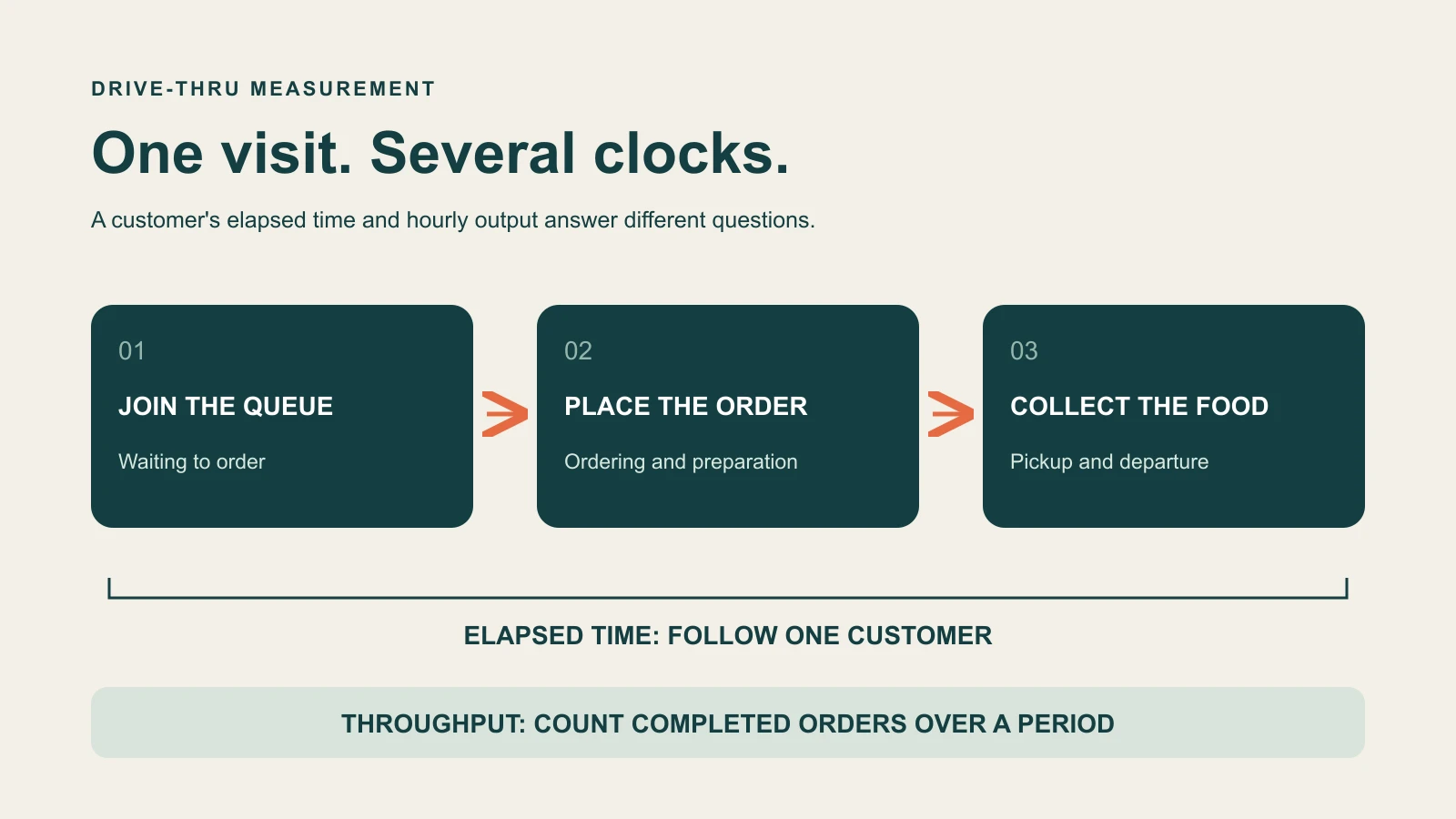
Average drive-thru service times have climbed past 370 seconds at many major chains, according to Intouch Insight and SeeLevel HX studies. Despite billions spent on technology, the line is moving slower. Here is why.
A Taco Bell franchise requires between $575,600 and $3.37 million in total investment, plus a $45,000 franchise fee and $1.5 million in liquid capital. Here is what the FDD actually says about costs, earnings, and the realistic path to ROI.
Portillo's reported $732 million in fiscal 2025 revenue across 102 locations, but same-restaurant sales declined 3.3% in Q4. The Chicago icon is rethinking its expansion playbook under new leadership, and the numbers tell a complicated story.
176 new locations in 2024, $2B Blackstone acquisition, and 12 straight years of same-store sales growth. Why smoothies plus wraps is a winning QSR formula.
A Cornell study found households on GLP-1 medications cut fast food spending by more than 5% within six months. With projections showing GLP-1 users could account for 35% of all food and beverage spending by 2030, the QSR industry faces a demand shift it cannot ignore.
941 locations, $2.66M AUV, and Goldman Sachs pushing expansion. Can Zaxby's compete with Raising Cane's and Chick-fil-A in an overcrowded chicken segment?
1,000+ locations, $4.2M AUV, and a franchisee selection process tougher than most MBA programs. How Culver's grew without compromising ButterBurgers or frozen custard quality.
How BDT Capital turned a regional cult favorite into a controlled national expansion - 88 new stores in 2024, $3.54M AUV, and a $6B+ valuation built on Texas identity.
After decades as a domestic powerhouse, Chick-fil-A is committing $1 billion to international expansion across Europe and Asia, with a target of five new international markets by 2030. The move is the biggest strategic shift in the chain's history.
McDonald's launched the Big Arch in March 2026, its biggest burger ever and a direct challenge to Burger King's Whopper and Wendy's premium lineup. The move signals a fundamental shift in how the world's largest restaurant chain thinks about its menu.

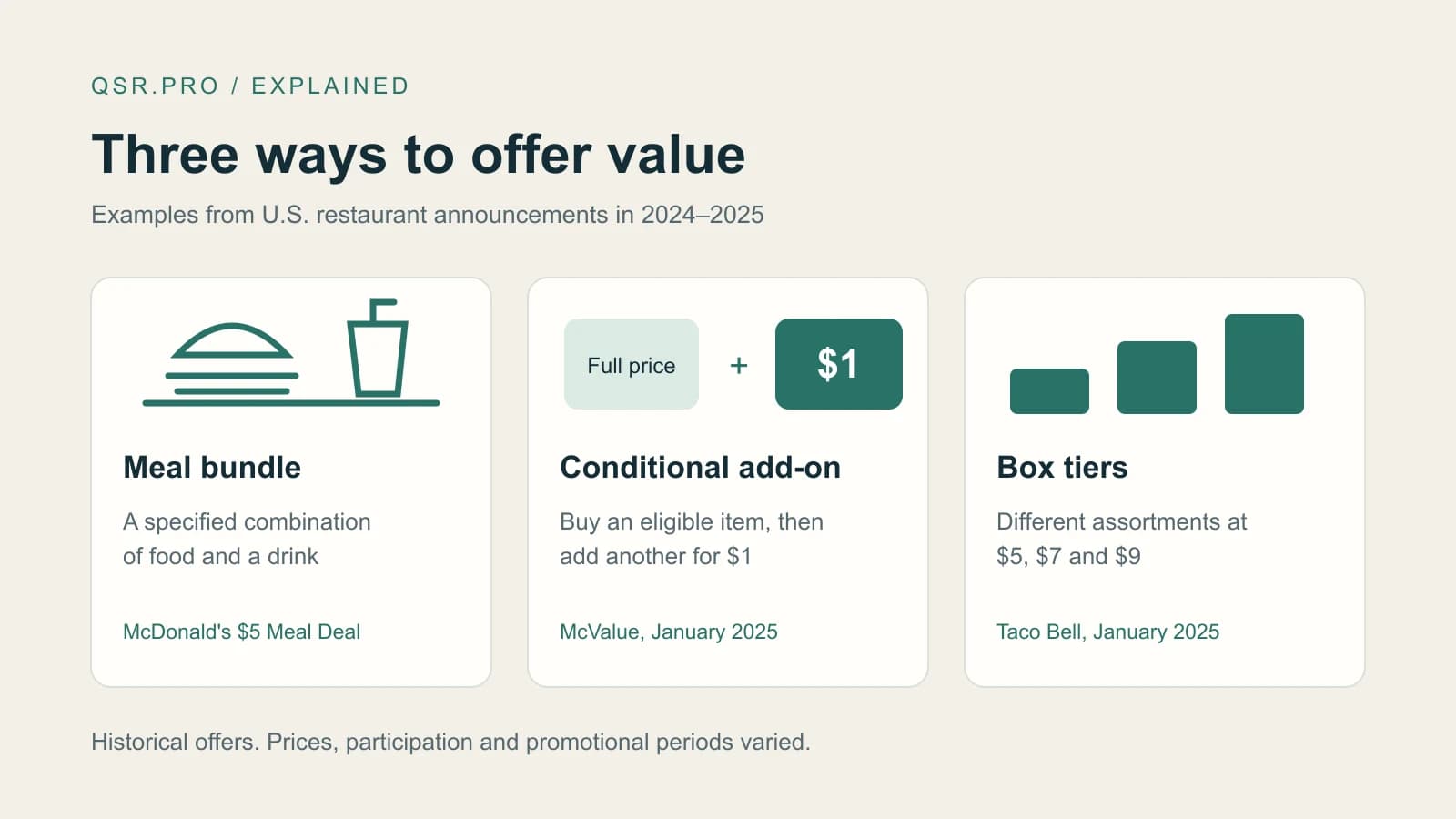
How McDonald’s and Taco Bell structured their 2025 value offers, with dates, bundle contents and the difference between historical promotions and current prices.
Female CEOs, franchisees, and executives - the numbers and the stories. Why progress is slow, where barriers remain, and which chains are actually changing.
Wages, benefits, scheduling tech, and applicant quality. The shortage didn't end - it restructured. Current state of the market and what actually works.
Subway, McDonald's, and Burger King lawsuits exposing the power imbalance. Why franchisees are organizing, what's broken in the model, and which systems actually work.
Beyond apps and points. Research-backed insights on convenience, consistency, value perception, and why most loyalty programs miss the mark.
Menu hacks going viral, employee content, the algorithm's impact on sales. Real case studies of what drives revenue and what flops on TikTok in QSR.
C-suite demographics, franchisee diversity, and DEI programs by chain. What's real vs performative, the wealth gap in franchise ownership, and which brands are actually changing.
GM turnover, compensation gaps, and burnout. Why this is the most important role in the restaurant, what's driving the talent shortage, and which chains are solving it.
McDonald's Hamburger University, Chick-fil-A's leadership program, Taco Bell's Start with Us. An honest ranking of who actually invests in people and who doesn't.
The snarky social media strategy that turned Wendy's into a Twitter powerhouse. Real engagement numbers, failed copycats, and the disciplined execution behind the roasts.
What's working on TikTok, Instagram, and Twitter for fast food brands in 2026. Viral campaigns, UGC strategies, influencer partnerships, and the tactics driving real sales.
The FDD is 200+ pages of legal text. Most franchisees skim or ignore it. That's a ,000 mistake. Here's how to read Items 7, 19, 20, and 21 - the sections that actually matter.
Overleveraged franchisees, loose lending standards, government guarantees. It's not 2008, but it rhymes. Here's why QSR franchise debt is becoming a problem - and who pays the price.
Earnings calls are choreographed performances. CEOs spin, obfuscate, and bury the important information. Here's how to decode the language, spot the red flags, and find the truth underneath.
Inspire Brands, JAB Holdings, and Restaurant Brands International control 100,000+ locations. Private equity owns more QSR brands than ever. The consolidation wave shows no signs of slowing.
Across the country, franchisees are quietly filing for bankruptcy, defaulting on loans, and walking away. Rising costs, margin compression, and overleveraged operators who can't service their debt. This is the crisis nobody's talking about.
McDonald's doesn't make money selling Big Macs. It makes money leasing land to franchisees. Ground leases, NNN deals, sale-leasebacks - the real money in QSR is real estate, not burgers.
AUV, four-wall EBITDA, payback period, sales-to-investment ratio - these are the metrics that separate winning QSR concepts from value traps. Here's how to read the numbers that actually matter.
Flynn Restaurant Group operates 2,600 locations. Sun Holdings runs 1,300. You've never heard of them, but they control more of QSR than most brands. Here's how the mega-operators are quietly taking over the industry.
Roark Capital controls Subway, Dunkin', Arby's, Jimmy John's, and Buffalo Wild Wings. That's 70,000 locations and 0 billion in sales. The QSR industry isn't run by restaurant operators anymore. It's run by private equity.
McDonald's, Chipotle, Yum, Wingstop, CAVA, and Shake Shack are all public QSR stocks. But they're playing entirely different games - and Wall Street is making very different bets on who wins.
Beyond Meat's stock is down 90% from peak. Impossible shelved its IPO. Most QSR chains quietly removed plant-based items. The revolution that was supposed to replace meat fizzled. Here's the autopsy: overestimated markets, price premiums, taste gaps, and novelty fatigue.
A Big Mac costs .49 normally, .99 at JFK Airport. Airport QSR locations generate M-M annually vs .2M-M for standard stores. Stadium locations do M-M in just 80-100 operating days. The economics, the markups, and why customers pay.
Haldiram's generates .5B+ annually. Rebel Foods operates 450+ cloud kitchens globally. Wow! Momo has 600+ locations. India's QSR market is projected to hit B by 2028, growing 4x faster than the U.S. These brands are the future of global QSR.
Cava's IPO tripled in value. Wingstop returned 20x. Portillo's struggled. Several major chains are eyeing public offerings: Panera (complicated by debt), Raising Cane's (no rush), and others. Here's the pipeline and what makes a successful QSR IPO.
Dutch Bros went public at , hit , crashed to , now trades around -. The chain operates 900+ drive-thru-only stands doing .8M-.2M per unit. Is the model a competitive advantage or a structural ceiling?
Wawa, Sheetz, and QuikTrip generate B+ combined in annual revenue, with food representing 35-45% of sales. They're stealing breakfast, lunch, and dinner traffic from McDonald's, Subway, and Dunkin' with better food, lower prices, and unbeatable convenience.
Individual Buc-ee's locations generate M-M annually, 5-10x typical gas stations. The chain operates 50+ stores with 100-120 gas pumps each, legendary bathrooms, and brisket sandwiches that drive cult loyalty. This isn't a gas station. It's a phenomenon.
Korean fried chicken chains grew from 200 to 500+ U.S. locations in six years. Bonchon (120+ stores), bb.q Chicken (50+), and Pelicana (40+) are expanding aggressively. Double-frying, thin crispy skin, and gochujang glazes are winning customers from KFC and Popeyes.
Mediterranean QSR grew 14% in 2024 vs 4% for fast-casual overall. Cava crossed B in revenue with 350+ locations heading to 1,000 by 2032. Average unit volumes hit .5M-.8M with 24-27% margins. This category is exploding.
Jollibee operates 1,700+ stores across 18 countries, growing 8-10% annually while McDonald's grows at 2-3%. In the Philippines, Jollibee owns 50% of the QSR market while McDonald's sits at 15%. The fast food map is being redrawn.
With $18.6 billion in estimated revenue and food accounting for over 50% of sales, Wawa's 1,200-plus locations are pulling breakfast, lunch, and dinner traffic from traditional QSR brands. The convenience chain plans to nearly double its store count to 1,800 by 2030, and the competitive implications are enormous.
Cornell research puts restaurant turnover costs at $5,864 per employee. With industry turnover hovering at 150%, a single 25-person location can lose $150,000 or more per year to churn. Here is who is winning retention, what actually works, and what is just theater.
Sysco, US Foods, Performance Food Group control ~50% of foodservice distribution. Consolidation creates pricing power and limited alternatives for operators. Small franchisees pay higher costs than national chains. Distribution concentration is permanent - here's how it affects margins and what operators can do.
Union battles, mobile order chaos, identity crisis. Schultz returned as interim CEO but couldn't solve structural problems he created. 350+ stores unionized. Mobile orders overwhelm operations. Menu complexity kills execution. The cautionary tale every QSR should study - founder magic has limits when problems are structural.
Water costs quintupled in California markets over 15 years. Southern California QSRs pay $3,000-6,000 monthly for water/sewer. Drought-exposed supply chains face produce inflation. Conservation requirements add compliance costs. Which chains are most exposed and what operators should do before crisis worsens.
Multi-unit operators buying struggling locations from failing franchisees. Valuations at 3-5x EBITDA for strong sites, steep discounts for weak operations. Resales cost 30-50% less than ground-up builds. Real estate matters more than current performance. Here's what buyers look for, what sellers need to know, and why the secondary market rivals new development.
Taco Bell loyalty members visit 76% more often. Starbucks Rewards hit 68% positive sentiment. McDonald's app wins on simplicity. Chick-fil-A uses tiers for premium customers. Wendy's confuses everyone. Chipotle frustrates with slow accumulation. Here's what separates programs that drive repeat business from those that sit unused on phones.
California's $20 fast food minimum wage took effect April 2024. Employment declined 9,600-19,300 jobs. Prices jumped 5-10%. Store closures accelerated. But the industry didn't collapse. Two years of real data shows both advocates and critics were partially right. Here's who won, who lost, and what other states should learn.
E. coli, norovirus, salmonella outbreaks nearly killed Chipotle in 2015-2016. Stock dropped from $750 to $360. Sales fell 20-30%. The company rebuilt from scratch: sous vide meats, DNA testing, supplier cuts, stricter kitchen protocols. Here's the recovery playbook every QSR should study.
Site selection determines success before the first burger gets flipped. Prime locations are finite. Drive-thru capability is non-negotiable. Ground-up builds cost $1-3 million depending on market. Here's what separates profitable stores from money pits and why the best real estate teams score every site against objective criteria.
CloudKitchens closed facilities. Local Kitchens shut half its locations. Ghost kitchen funding dropped 95%. The delivery-only restaurant model collapsed when operators discovered platform commissions and rent costs left no margin. Here's what actually survived and why the $85 billion market looks nothing like the 2020 hype.
Four platforms dominate QSR scheduling. HotSchedules owns enterprise with AI forecasting and compliance automation. 7shifts serves the mid-market with restaurant-specific tools. Deputy solves multi-jurisdiction compliance. Homebase offers free basics for small operators. Here's what 1000+ locations actually use.
Jersey Mike's is adding 200+ locations annually with investment ranging from $182K-$1.4M. Here's the complete breakdown of costs, AUV, and why this sub chain is crushing competitors.
Opening a KFC franchise requires $1.05M-$3.77M. Here's what you need to know about investment, Yum Brands requirements, international vs US opportunities, and unit economics.
The total investment to open a Wendy's franchise ranges from $393,000 to $2,992,000. Here's the complete breakdown of costs, requirements, AUV, and what the Square Deal strategy means for franchisees.
Franchises offer 75-85% survival rates with 6-14% ongoing fees. Independents keep all profit but face 60-70% failure rates. Complete economics, risk, and decision framework comparison.
Restaurant tech adoption reality: mobile ordering and kiosks mainstream (85%+), AI drive-thru struggling (15%), robot cooks mostly hype (<1%). What's working vs. what's not.
Fast food meals range from 300 to 3,000 calories. Subway and Panera offer healthiest options while Five Guys tops calorie counts. Complete chain comparison with sodium and sugar analysis.

Published drive-thru findings, the differences between timing metrics, and why customer wait time cannot be converted directly into hourly capacity.
Top 10 low-cost franchises under $100K ranked by investment, revenue potential, and support. From $2,295 (Cruise Planners) to $100K (The Maids) with realistic earnings data.
Restaurant failure rates: 20% in year one, 35% by year three, 50-60% by year five. Academic research debunks the 90% myth and reveals the real causes of restaurant closures.
Fast food profit margins range from 6% to 32% depending on brand and measurement. This analysis compares corporate and franchisee margins across major chains with real performance data.
Opening a Dunkin franchise costs $437,500 to $1,787,700. This breakdown covers franchise fees, real estate, equipment, ongoing costs, financial requirements, and realistic revenue expectations.
Chick-fil-A's franchise acceptance rate is 0.25% - harder than Harvard. This guide breaks down the 12-24 month application process, what they look for in operators, and the reality behind the $10,000 franchise fee.
Opening a Subway franchise in 2026 costs between $199,135 and $536,745. This complete breakdown covers every dollar required, from the $15,000 franchise fee through ongoing costs, with honest analysis of unit economics and profit expectations.
Commission rates are just the beginning. Data loss, operational friction, and brand damage push the true cost of aggregator delivery far higher than operators expect.
From McDonald's to Wendy's to Taco Bell, AI voice ordering is moving from pilot to large-scale deployment across the drive-thru lane
Rising water costs, mandatory restrictions, and supply chain pressures are forcing QSR brands to rethink operations in the driest region of the country
Double-digit premium increases, carrier withdrawals, and hidden coverage exclusions are squeezing QSR franchise economics
From competitive conquesting to predictive targeting, proximity-based promotions are becoming a core QSR marketing strategy
No drive-thrus. No freezers. burgers. Five Guys built a billion brand by breaking every QSR rule. Why the model works - and why it won't scale like McDonald's.
Domino's bet on technology and delivery. Pizza Hut clung to dine-in real estate. One is worth B and growing. The other is closing 250 stores and fighting for survival.
Five years after the legendary chicken sandwich launch, Popeyes' same-store sales grew just 0.6% in 2024. Did the boom fade, or did operational chaos kill the momentum?
Under CEO Sean Tresvant, Taco Bell transformed from late-night joke to QSR innovation leader. Doubling innovation output, tripling international footprint, targeting M AUVs and 10,000 units.
Roark Capital paid $9.6 billion for Subway in the largest franchise deal ever. 18 months later: 600+ more closures, franchisee pushback, and a brand still searching for a turnaround.
The Infinite Kitchen is delivering 7-point margin improvement, 45% lower turnover, and 10% higher tickets. If it scales, the fast casual labor model is rewritten.
A 950-square-foot coffee shop generating $2.1 million in AUV, outperforming Starbucks' $1.8 million from nearly double the footprint.
With $6.6 million in average unit volume and 90% company ownership, Todd Graves has built the most in-demand franchise opportunity in America by refusing to franchise.
At $298K to $1M in initial investment and $2.1 million in AUV, the numbers tell a story that 21 consecutive years of same-store sales growth only reinforces.
Taco Bell's Go Mobile is 1,325 square feet. McDonald's is testing carryout-only boxes. Chipotle's Chipotlane format eliminates dining rooms. The industry's biggest bet isn't on new menu items. It's on smaller buildings.
Institutional capital is flooding into QSR real estate through net-lease REITs, creating a new power dynamic between landlords, franchisees, and brands. Here's what operators and investors need to understand.
SBA loan defaults hit a 12-year high in 2024. The 7(a) program posted its first negative cash flow in 13 years. Restaurant lending standards are tightening. For overleveraged QSR franchisees, the math is getting ugly.
QSR turnover exceeds 130% annually. The industry spends billions on recruitment. Most retention programs do not work. The data on what actually does work is clear, but most operators ignore it.
A single drive-thru lane can process 120 cars per day. A dual lane can push past 140. And Chick-fil-A's four-lane prototype aims for 720 cars per hour. How lane configuration decisions translate directly into revenue.
IoT sensors prevent shutdowns. Blockchain traceability is mostly hype. Here's what food safety tech actually delivers in 2025.
DoorDash takes 30% of your sale. The math doesn't work. Some QSR brands broke free and kept their margins. Here's how.
Some chains run 40% turnover while the industry averages 73%. The difference isn't higher pay. It's five specific strategies that treat retention as operational science.
QSR operators opened renewal letters showing 25-50% premium increases. No new claims. No coverage changes. Just bills that didn't exist six months ago.
First-time franchise owners discover costs that transform a $1.2M investment into a $1.8M hole. The FDD discloses what it must - not what matters.
McDonald's loyalty participation jumped 18% in Q3 2025, driving 12% digital sales growth. Chick-fil-A One members show significantly higher retention rates. Starbucks Rewards generates billions in prepaid float. The economics of points vs cash-back, what drives repeat visits, and why the best programs focus on retention over acquisition.
Droughts in key agricultural regions are driving commodity price spikes and supply disruptions. Here's what smart operators are doing about water and climate risk.
Kiosks pay back in 3-6 months. Loyalty apps take years. AI drive-thrus mostly don't work. Here's the real ROI data on QSR tech investments.
Fast food used to mean cheap. Now a McDonald's meal costs $12 to $14 and customers are noticing. Here's how we got here and what chains are doing about it.
Franchise resales happen in the shadows with pricing rarely disclosed. Here's what multiples look like in 2026, who's buying, and which brands trade at premiums vs. distressed valuations.
The ghost kitchen revolution promised to reshape restaurants. Three years later, most are dead. Here's what survived and why the economics work for some but not others.
McDonald's pledged 100% renewable packaging by 2025. Sounds ambitious. But 'renewable' can mean almost anything. This is the sustainability challenge in QSR: big commitments, vague metrics, and real progress buried under layers of marketing.
When Tyson Foods announced a 50% drop in pork production in May 2020, it exposed vulnerabilities that had been invisible during normal operations. Four years later, some changes stuck and some reverted. Here's what actually changed and what vulnerabilities remain.
Flynn Restaurant Group operates 2,600+ restaurants generating $4.8 billion annually. Sun Holdings runs 1,500+ locations with $1.9 billion in sales. These mega-franchisees aren't just bigger - they're fundamentally different businesses with institutional capital, centralized operations, and acquisition expertise that's reshaping the franchise industry.
McDonald's $5 Meal Deal drove immediate foot traffic spikes. Starbucks saw similar lifts. The pattern is clear: LTOs work. But are they driving profitable traffic, or has the industry created an addiction it can't escape?
The FDD is legally required 14 days before you sign anything. Most prospective franchisees skim or ignore it. That's a mistake that costs millions collectively across the industry each year. Here's what actually matters.

A sourced U.S. reference separating 2026 restaurant forecasts, current prices and employment, historical fast-food consumption and chain sales definitions.
Complete step-by-step guide to opening a fast food restaurant, from concept to grand opening. Includes timelines, costs, permits, hiring, and common mistakes to avoid.
Ranked comparison of the best fast food franchises in 2026 with real investment costs, AUV data, ROI analysis, and franchise-specific pros and cons.
State-by-state and chain-by-chain breakdown of fast food wages in 2026, including base pay, benefits, advancement paths, and what it means for operators.
Complete breakdown of McDonald's franchise investment costs, fees, net worth requirements, expected revenue, and what it really takes to get approved in 2026.
Commuter breakfast collapsed post-pandemic. McDonald's breakfast dominance eroded while Taco Bell gained incremental revenue. Breakfast traffic jumped 4% in early 2020, then patterns shifted permanently. Mobile ordering penetration runs highest at breakfast. The chains that crack the new breakfast code generate meaningful incremental revenue.
High-traffic corners still matter, but delivery and mobile ordering broke the link between foot traffic and revenue. Chains allocate 30% of expansion to ghost kitchens in military bases, universities, and hospitals. Drive-thru-only formats cut square footage from 2,500 to 600. Second-generation sites open 6-12 months faster than new builds.
Popeyes' 2019 launch went viral. Chick-fil-A captured 41% market share. Raising Cane's became the dark horse, knocking off KFC. Seven years later, the wars matured into permanent category competition. Execution beats hype. Unit economics beats social media engagement.
McDonald's announced AI voice ordering at scale for 2026. Hi Auto operates in 1,000 locations with 93% completion rates. Dual lanes, pickup lockers, and digital boards reshape the drive-thru - but ROI timelines vary. The tech that actually improves unit economics wins.
Restaurant employment hit pre-pandemic levels in 2026, but 28% of locations cut weekend service due to staffing issues. Labor costs jumped from 30% to 35% of expenses while discouraged workers in food service rose 80%. Operators respond with automation - AI ordering, self-service tech, and ghost kitchens that eliminate front-of-house roles entirely.
Restaurant employment hit pre-pandemic levels in 2026, but 28% of locations cut weekend service due to staffing issues. Labor costs jumped from 30% to 35% of expenses while discouraged workers in food service rose 80%. Operators respond with automation - AI ordering, self-service tech, and ghost kitchens.
Western QSR giants are betting billions on emerging markets where rising middle classes and urbanization create massive growth runways.
Beyond Meat's stock is down 97% from its peak. The McPlant flopped. But the plant-based QSR story isn't over — it just changed.
The FDD is 200+ pages of dense legalese. Here are the items that actually determine whether your QSR franchise will make money.
Between Q4 2024 and Q2 2026, Gen Z's share of QSR transactions jumped from 18% to 34%. This isn't about TikTok menus—it's about refusing to tolerate friction.
The franchise industry markets itself on low failure rates. The reality is more complicated — and more sobering — than the brochures suggest.
Proven strategies to improve restaurant profitability across food cost, labor efficiency, revenue optimization, and operational excellence. Actionable tactics every QSR operator can implement.
The complete guide to restaurant technology systems. From POS to kitchen automation, understand every technology component required to run a competitive QSR in 2026.
Compare investment costs, fees, support, and requirements for 50 major QSR franchises. The most comprehensive franchise comparison resource available.
A comprehensive analysis of the Quick Service Restaurant industry in 2026. Market size, trends, challenges, opportunities, and forecasts for operators and investors.
The definitive reference guide to Quick Service Restaurant terminology. From AUV to zero waste, master every term that matters in the QSR industry.
McDonald's makes more from rent than burgers. Here's how NNN leases and sale-leasebacks power the QSR industry's real estate machine.
McDonald's $300 million pizza disaster, Burger King's 'Satisfries,' and the other bold ideas that flopped spectacularly but taught the industry critical lessons.
The untold story of how a PepsiCo spin-off became the world's largest restaurant company by unit count, mastering global franchising and brand portfolio management.
The immigrant cook, the orphan, the Colonel, and the milkshake machine salesman who turned small restaurants into billion-dollar empires.
A complete timeline of how America's Quick Service Restaurant industry evolved from a single burger stand in 1921 Wichita to a global $300 billion juggernaut powered by apps and algorithms.
With $45B in system sales across four brands, RBI is betting that a multi-brand QSR portfolio can outperform single-brand operators.
What started with Popeyes in 2019 has become a permanent shift in QSR strategy. Every major chain now has a premium chicken sandwich — and chicken has overtaken beef as the growth engine of fast food.
Mobile represents 60% of all digital restaurant orders. Starbucks drives 59% of U.S. sales through its app. McDonald's has 210 million loyalty users. The QSR transaction is moving permanently to the phone.
A recession playbook for quick-service restaurant operators
Industry maturation makes comp growth elusive for established brands
Consolidation trends reshape the quick-service restaurant industry
California's $20 minimum wage, the FTC's franchise disclosure crackdown, and a new wave of state-level legislation are changing the rules for QSR operators
With $1.64 billion in revenue, 28% growth, and a cult following, Dutch Bros is proving the drive-thru-only coffee model works at scale.
Site selection trends and market opportunities shaping the industry's expansion
Why B2B catering represents the industry's biggest growth opportunity
Q4 planning strategies that separate winners from those left scrambling
How to navigate the annual workforce transition when student workers return to class
The compressed summer window demands strategic execution to capture seasonal opportunity
With 73% digital sales, 21 consecutive years of same-store growth, and a radical tech-forward model, Wingstop rewrote the QSR rules.
While most QSR chains wind down after 10 PM, Jack in the Box leans into the hours that others abandon — and it's a core part of the business model.
Should you own multiple brands under one roof? We examine the portfolio strategy sweeping franchising, including co-branding economics, operational complexity, and whether diversification actually reduces risk.
You don't need half a million dollars to enter franchising. We identify legitimate low-cost QSR opportunities under $100K and explain what you're really getting for your investment.
Three sandwich giants compete for franchise dominance. We compare investment costs, profit potential, and operational differences to reveal which sub shop offers the best franchise opportunity.
Coffee shop franchising comes down to two major players with vastly different models. We compare costs, profits, operations, and growth potential to help you choose the right brew.
McDonald's and Chick-fil-A represent opposite ends of the franchise spectrum. One costs 2 million dollars and builds generational wealth. The other costs 10,000 dollars and pays a million a year but builds nothing. Here is the complete comparison.
One menu item reshaped Popeyes' identity, boosted AUVs by $400K per store, and ignited a category war across the QSR industry.
Sonic's carhop-and-stall model is unlike anything else in QSR. The question is whether nostalgic differentiation can survive modern operational demands.
McDonald's is opening 9,000 stores by 2027. Starbucks added 791 net new locations in fiscal 2025. The battle for the next billion QSR customers is being fought outside the United States.
Proven strategies to control your largest controllable operating expense
Complete guide to meeting ADA standards in restaurants, websites, and mobile apps
Essential legal framework for making informed franchise decisions
Real-world analysis of AB 1228's first year reveals complex mix of wage gains, job impacts, and industry transformation
McDonald's hit its 2025 packaging deadline. Starbucks is still chasing its cup problem. Here's the real progress report.
Three pizza giants, three different strategies, one brutal market. Here's who's winning the pizza wars and why.
Domino's didn't just add digital ordering. They rebuilt themselves as a technology company that happens to sell pizza. Here's how they did it and what it means.
From a single Jersey Shore sub shop to a $3.3 billion empire, Jersey Mike's has cracked the code on franchise growth. Here's how they did it.
From Bojangles to Taco Bell, fast food chains are reimagining locations around EV charging infrastructure
Understanding why 70-80% of new menu items don't survive and what separates winners from the graveyard
Machine learning and AI are transforming fast food from intuition-driven to algorithmically optimized
CAVA, Sweetgreen, and Chipotle are redefining fast food while legacy brands struggle to respond
Five Guys has become a lightning rod for fast food sticker shock. But the pricing isn't accidental — it's the entire business model.
Why catering represents one of the fastest-growing, highest-margin opportunities in quick service restaurants, and how operators can capture their share of this massive market with the right strategy and execution.
An analysis of the subtle and not-so-subtle brand signals that determine whether customers perceive a QSR as premium, value-focused, or somewhere in between, and what operators can learn from these psychological mechanisms.
A detailed breakdown of the true costs of DoorDash, Uber Eats, and Grubhub, revealing why the advertised commission rates tell only part of the story and what restaurants can do about it.
A comprehensive analysis of the most successful QSR loyalty programs, comparing earning rates, redemption value, app experience, and actual customer behavior data to reveal which chains deliver the best rewards.
A practical, budget-conscious guide for single-unit QSR operators covering digital advertising, local SEO, community engagement, and measurement strategies that drive foot traffic without breaking the bank.
Roark Capital paid a reported $9.55 billion for a chain in decline. Here's what the new owners have done — and what's still broken.
Domino's posts 6.4% revenue growth and 32 consecutive years of international same-store gains while Pizza Hut announces 250 U.S. closures
One viral video can destroy a brand. Here's how to survive when disaster strikes.
Between strategy and execution sits the role that actually determines success.
Raising wages doesn't solve turnover. These benefits do.
The era of single-location ownership is ending. Multi-unit groups are taking over.
Most training programs don't work. Here's how to build one that does.
Chipotle followed the rules and still had outbreaks that cost them hundreds of millions. Compliance isn't enough. The chains that avoid catastrophe build food safety cultures where doing the right thing is automatic.
Energy costs eat 3-5% of every sales dollar, often invisibly. A typical QSR location spends $45,000-$75,000 annually on utilities. Smart operators are cutting that by 20-30% with strategic improvements that pay for themselves.
Your burger's journey started days ago and thousands of miles away. The supply chain systems that deliver consistent quality at massive scale make Amazon's logistics look simple.
Chick-fil-A's average drive-thru takes 224 seconds. McDonald's takes 280. That 56-second difference represents hundreds of millions in revenue. Every second matters when it compounds across millions of transactions.
Food waste accounts for 4-10% of total food purchases in quick service restaurants. Smart inventory management isn't just about tracking products; it's about building systems that make waste reduction automatic and profitable.
Chick-fil-A generates more revenue per restaurant than any other fast food chain — while operating six days a week instead of seven.
Net income down 44%, revenue declining, and a new interim CEO — Wendy's bets on technology and international growth to reverse course
Understanding and defending against the rising threat of restaurant data breaches
Decision framework for choosing the right mobile ordering path for your operation
Separating real AI deployments from marketing claims in quick service restaurants
An in-depth analysis of how Roark Capital, Inspire Brands, JAB Holding, and other PE firms are transforming the restaurant landscape.
A detailed analysis of publicly traded QSR companies for investors seeking exposure to the fast-food sector in 2026.
Complete breakdown of essential equipment and realistic pricing
Practical strategies for turning TikTok engagement into restaurant traffic

Chick-fil-A’s initial fee, current U.S. qualifications and single-restaurant opportunity, with the disclosure sections that explain the full financial terms.
Everything you need to know to ace your health inspection
In 2015, Chipotle was a Wall Street darling posting double-digit growth. Then came the food safety crisis that nearly destroyed the brand. Here's how the company rebuilt itself into a stronger business than before.
While other chains chase younger consumers with cringe-worthy campaigns, Taco Bell has built a marketing machine that actually understands internet culture, authenticity, and the economics of viral engagement.

McDonald’s 2026 plans cover restaurant growth, U.S. value offers and digital service. Here are the published targets and results through the second quarter.
Value menus and promotional pricing were supposed to be temporary traffic drivers. Instead, they've become a permanent race to the bottom that's eroding margins across the industry.
The industry complains it can't find workers while offering poverty wages, erratic schedules, and toxic conditions. That's not a shortage. That's a refusal to compete.
The industry has mastered the art of eco-friendly marketing while changing almost nothing about their actual operations. Let's examine the gap between promise and practice.
Behind the glossy brochures and promises of business ownership lies a system designed to extract wealth from franchisees while protecting corporate interests. The rebellion has begun.
Calorie labels, packaging laws, and sustainability mandates heading stateside
Localization, vegetarian menus, and the price points that make or break success
The konbini model that's redefining fresh food retail
Market dynamics, cultural adaptation, and the massive growth opportunity across the Gulf
What US operators can learn from Seoul's restaurant technology revolution
Turnover costs QSRs $52,500-$122,500 annually. This guide reveals strategies operators use to reduce turnover from 130% to under 60%—without breaking the labor budget. Beyond 'just pay more,' learn what actually keeps great employees.
Franchise agreements aren't as 'non-negotiable' as franchisors claim. Learn which provisions are actually negotiable, how to approach changes professionally, when you have leverage, and what mistakes to avoid in this critical 10-20 year contract.
Most QSR operators spend $2,000-5,000 monthly on digital marketing with little return. This guide cuts through the noise to show what actually drives measurable traffic and revenue: local search, targeted ads, email/SMS, and loyalty programs.
Most QSRs waste 4-10% of food inventory before it reaches customers. This comprehensive guide shows you how to cut waste by 30-60% within 90 days through systematic tracking, better forecasting, inventory management, and staff training.
Yum! Brands built nearly 3,000 new KFC locations in 2025 — a record. Now it's turning attention to Pizza Hut's turnaround.
Sweetgreen has bet $186 million that automation is the answer to labor shortages, margin compression, and the existential question of whether premium fast-casual can ever be truly profitable. The results so far are promising—and unsettling.
In an industry obsessed with menu innovation and value deals, Raising Cane's has built a $5.1 billion empire selling exactly one thing: chicken fingers. Here's why radical simplicity is winning.
With 21 consecutive years of same-store sales growth and a market cap that rivals legacy players, Wingstop has become the QSR industry's most consistent performer. Here's how they did it—and the challenges ahead.
Every menu is a carefully engineered sales tool designed to guide your choices, increase your ticket size, and maximize profit margins. Here's how QSR chains use decoy pricing, anchoring, and menu engineering to control what you order.
Behind every QSR location is a complex web of landlords, franchisors, and REITs extracting value through lease structures most operators never fully understand. Here's how the real estate game really works — and who's winning.
Chick-fil-A sauce at Target. Taco Bell shells at Walmart. QSR brands are building a second revenue stream in retail—and the strategy is smarter than you think.
Consumers have noticed portions getting smaller while prices stay the same—or go up. The backlash is real, and QSR brands are scrambling to respond without tanking their margins.
Multiple chains are racing to deploy AI voice ordering at drive-thrus. Some are doubling down while others are backing away. Here's what the data actually shows.
AB1228 raised California fast food wages 25 percent overnight. Two years later, the apocalypse did not arrive, but neither did the workers' paradise. Here is what the data actually shows, what operators did to survive, and what every other state should learn.
Minimum wage varies wildly across the U.S., and fast food workers are often at the center of the debate. Here's what QSR employees actually earn in every state—and why some are making $23/hour while others are stuck at $7.25.
Drive-thru lanes generate 70% of fast food revenue, and the technology behind them is more sophisticated than most people realize. Here's how the entire system works—from the moment you pull up to the menu board to the hand-off at the window.
Not all fast food franchises are created equal. We analyzed revenue, margins, failure rates, and ROI to identify the ten best franchise investments in the industry right now.
From Flippy to Autocado, QSR robotics is further along than you think — and further away than vendors claim. A reality check.
Taco Bell unveiled 15 new menu items at Live Más Live 2026, including permanent Nacho Fries. Inside the chain's innovation strategy.
EXCERPT:
EXCERPT:
EXCERPT:
EXCERPT:
Chick-fil-A is investing $1B to expand into the UK, Singapore, and beyond. Can America's chicken king win overseas?
McDonald's posted 5.7% same-store sales growth in Q4 2025. Here's how digital ordering, value menus, and the Big Arch are fueling the turnaround.
The generation that built the QSR franchise empire is aging out. Most don't have succession plans, and the buyers waiting in the wings want very different deal terms than the ones boomers signed.
They order the same combo at 47 locations in a month. They time the drive-thru to the second. They grade your bathroom on a 15-point scale. Mystery shoppers are the most influential quality control tool in QSR — and most crew members never know they're being evaluated.
Thousands of franchise agreements are expiring in the next 3-5 years. The renewal terms being offered look nothing like the original deal — and operators who aren't preparing now will face impossible choices.
Casinos spend billions engineering spaces that keep people spending. QSR chains are quietly borrowing their playbook — from lighting psychology to traffic flow patterns that maximize impulse purchases.
Branded hoodies, limited-edition sauce bottles, and collaboration drops are turning QSR chains into lifestyle brands — and the merch margins dwarf anything on the food menu.
That Cinnabon smell isn't an accident. Neither is the Subway bread aroma or the Chick-fil-A waffle fry fragrance. QSR brands are investing in scent engineering as a serious marketing tool — and the science behind it is more sophisticated than you think.
Locked bathrooms, purchase requirements, and code-only access are spreading across QSR. The policy decisions seem small — but they're reshaping foot traffic, brand perception, and liability exposure in ways operators underestimate.
Most operators think overnight hours are a money pit. The ones running the numbers know better — and the 2am-6am window is their most profitable per-labor-hour daypart.
Late-night hours used to be a profit center. Now they're an operational nightmare — understaffed, unprofitable, and increasingly dangerous for the skeleton crews stuck running them.
Third-party delivery apps know your customers better than you do. The battle over who owns that data — and who profits from it — is the most important fight in QSR that nobody's talking about.
A single TikTok video can send 10x normal traffic to a location overnight. Most QSR operations aren't built for that — and the viral moments that drive brand awareness can simultaneously destroy the customer experience.
Every chain upgraded their chicken sandwich. Consumers said they wanted better quality. Then they bought the cheapest option anyway. The premium chicken paradox reveals an uncomfortable truth about QSR consumer behavior.
Franchisors negotiate supplier rebates worth millions. Franchisees pay above-market prices for approved vendors. The gap between those two facts is where the real money is made — and it's not by the operators.
Fast-casual brands rode premium positioning to $15+ check averages. Now consumers are pushing back — and the segment is discovering there's a ceiling on what people will pay for a bowl with a story.
AI-powered kiosks and apps now suggest items based on weather, time of day, and your order history. The upsell lift is real — but so are the privacy questions operators need to answer.
Free refills have been a QSR institution for decades. Rising cup costs, syrup inflation, and tighter margins are making them an endangered species — and most chains would rather you didn't notice the change.
When a shift manager makes $3 more than the crew member they're supervising, the title isn't worth the stress. The wage compression crisis is hollowing out QSR middle management.
The economics of kitchen automation finally work — but only when operators lease robots monthly instead of buying them. RaaS is transforming both the adoption curve and the investment thesis.
The brand that redefined fast-casual is watching traffic slide for the first time in years. The problems are operational, not cyclical — and the fix isn't a value meal.
Burns, repetitive stress, and unrelenting heat make the fry station the most hated position in QSR. It's also the hardest to fill — and the first in line for a robot replacement.
McDonald's is writing its biggest capital check in years. Where the money goes — and where it doesn't — tells you everything about corporate priorities vs. franchisee needs.
Income bifurcation is splitting the restaurant industry into two distinct consumer economies — and the earnings data proves it
Chili's is posting 8.6% same-store sales growth while McDonald's fights traffic declines. The unlikely winner of the QSR value war might be the sit-down chain that figured out bundled pricing.
A single allergen incident can cost a QSR operator millions in liability, a career in reputation, and — in the worst cases — a life. Most chains still aren't taking it seriously enough.
Yum Brands partnered with NVIDIA to put cameras in every kitchen. The technology can catch food safety violations in real time — but it also raises questions operators need to answer before deploying.
McDonald's, Dunkin', and a growing list of QSR chains are spending billions on espresso equipment and barista training — and Starbucks is finally feeling the pressure
Restaurant insurance premiums have doubled in four years. For single-unit franchisees already running on thin margins, it's becoming the cost that breaks the business.
The US halal food market alone is worth $20 billion and growing double digits. Most QSR chains are leaving the money on the table — and the ones that aren't are outperforming expectations.
Loss prevention cameras were one thing. AI-powered productivity tracking, wearable monitors, and real-time behavior scoring are something else entirely.

How commissary production, distribution and restaurant finishing connect, illustrated by Portillo’s, Domino’s and Illinois State University.
The generation that swiped before they spoke is approaching spending age, and QSR brands that don't rethink their digital experience from scratch will lose them before they start
Every major QSR brand has a franchisee advisory council. Most operators think they're window dressing. The reality is more complicated — and more consequential — than either side admits.
Desserts were once a guaranteed upsell. Now they're being cut from menus faster than any other category — and the economics explain exactly why.
The chicken fingers chain that stayed company-owned, stayed simple, and stayed patient is now executing one of the most ambitious expansion plans in QSR history
Algorithmic scheduling promised to optimize labor costs. Instead, it's driving the best employees out the door with unpredictable hours and last-minute changes.
Extra sauce, premium cheese, double protein — QSR brands have turned customization into one of the most profitable margin plays in the industry
At $3M+ average unit volume, Chipotle doesn't just outperform its fast-casual peers — it embarrasses most QSR franchises. Here's how the math actually works.
Tighter lending standards, rising net worth requirements, and SBA approval rates in freefall are shutting first-time franchisees out — and accelerating industry consolidation
The industry's flirtation with algorithmic pricing crashed into consumer rage—but the underlying technology isn't going away
The pandemic's favorite ordering channel is quietly dying — and the chains that bet big on curbside infrastructure are now ripping it out
When your average crew member lasts 90 days, spending a week on training feels like a luxury operators can't afford — but the shortcuts have consequences
The world's largest restaurant chain by unit count is losing its most experienced operators — and the reasons go deeper than foot traffic
Domino's isn't just making pizza faster — it's rebuilding the entire operational model around speed, and forcing every competitor to respond
Panera started it. Now every major chain is building a subscription play — and the economics are more compelling than most operators realize.
The generation that grew up with smartphones is reshaping what QSR management looks like — and the operators who adapt fastest will have a decisive talent advantage
Royalties are just the beginning — the real cost of being a franchisee is buried in marketing funds, tech fees, and line items most operators never question
The 4,000-square-foot dine-in box is dying. The chains that figure out 1,200 square feet will own the next decade of QSR expansion.
The line between inspired fusion and tone-deaf appropriation is thinner than most QSR marketing teams realize
Opening a franchise is sold as a path to business ownership with reduced risk. But when QSR concepts fail, franchisees lose everything: their investment, their livelihood, and sometimes their life savings.
While the restaurant industry is projected to grow just over 4% in 2025, a select group of quick-service chains is crushing that benchmark. These 25 brands are expanding at breakneck speed, opening hundreds of locations, and reshaping the competitive landscape through smart strategies, loyal...
Customer satisfaction drives repeat visits, and repeat visits drive profit. The American Customer Satisfaction Index (ACSI) has been measuring how QSR chains stack up for over a decade, and the 2025-2026 data reveals clear winners, persistent losers, and a few surprises.
Drive-thru speed matters. Every second counts when you're hungry, on a lunch break, or managing a car full of restless kids. The 2025 QSR Drive-Thru Study from Intouch Insight and QSR Magazine tested actual wait times at major chains across America, and the results might surprise you.
The gap between what QSR executives earn and what frontline workers make has never been wider or more visible. In 2026, as minimum wage debates rage and labor shortages persist, the numbers tell a stark story about who captures the value in America's fast-food industry.
With food costs up 30%+ since 2019, the brands winning on margin aren't just raising prices — they're ruthlessly optimizing what's on the menu and how it's positioned
The industry's obsession with crew-level turnover is masking a more expensive problem — the managers who train and retain those crews are leaving even faster
As ESG commitments meet operational reality, Wendy's packaging transformation reveals the true cost of corporate sustainability
Machine learning is transforming how restaurants predict traffic, schedule labor, and reduce waste — but adoption remains surprisingly uneven
Inside the overlooked science of keeping food hot, intact, and sustainable from kitchen to doorstep
The line between quick service and fast casual is disappearing — and that changes everything about how the industry competes
Store-level leaders are burning out and leaving faster than ever — and the math says it's costing the industry billions
From menu localization to master franchise deals, the strategies that determine whether U.S. chains thrive or fail overseas
How fountain sodas, coffee programs, and premium shakes became the financial backbone of quick-service restaurants
From material inflation to labor shortages, franchisees face unprecedented barriers to expansion as build-out costs surge past historical norms
The industry uses billions of gallons annually — and the supply is getting more expensive, less reliable, and harder to ignore
Eighteen months into his tenure, the former Chipotle CEO has closed 600 stores, cut 2,000 corporate jobs, and finally delivered the traffic growth Wall Street has been waiting for
From $7.25 in Texas to $20 for fast food in California, multi-state franchisees face a compliance maze that is reshaping everything from menu prices to kitchen technology
While national brands spend billions on TV spots and celebrity endorsements, savvy franchisees are proving that hyperlocal tactics — from school spirit nights to geofenced mobile ads — deliver outsized returns on modest budgets
Contactless payments have conquered the counter. Now palm scanners, facial recognition, and crypto are vying for what comes next. A clear-eyed look at the technologies delivering ROI — and the ones still searching for a use case.
While McDonald's languishes at the bottom of satisfaction rankings, regional powerhouses are proving that disciplined growth, owner-operator culture, and geographic identity are the real competitive moats in QSR.
With traffic declining and middle-income consumers fleeing to grocery stores, the Big Three burger chains are locked in the most aggressive value battle since the dollar menu era
Inside the corporate universities and tuition programs reshaping what it means to work in quick service
From commodity hedging and AI-powered waste tracking to menu mix optimization and consolidated procurement, the industry's best operators are deploying a sophisticated playbook to protect margins even as input costs climb
As multi-unit operators now control 82% of all QSR units in the U.S., the operational complexity of running a growing portfolio has become the industry's defining leadership challenge
From Wendy's savage roasts to Chipotle's billion-view challenges, QSR brands are rewriting the rules of digital engagement — and turning followers into foot traffic
Private equity dry powder, aging franchisees, and a consolidation arms race are pushing QSR resale valuations to unprecedented heights — and reshaping who owns America's fast food.
The QSR industry's biggest operators are deploying machine learning to forecast demand hour by hour — and the early results are reshaping how restaurants think about inventory, labor, and margin recovery.
As the U.S. catering market races toward $130 billion, fast-casual and quick-service chains are treating group orders as their next major growth engine
Everything first-time QSR franchise buyers need to know about SBA 7(a) and 504 loans — from current rates and equity injection rules to the reinstated Franchise Directory and common deal-killers
From eye-tracking research to AI-powered kiosks, the quick-service industry has turned menu design into a billion-dollar behavioral science
With Chick-fil-A properties trading at sub-4.5% cap rates and institutional capital pouring into drive-thru assets, quick-service restaurant real estate has cemented its status as the bond market's cooler cousin.
From nuclear verdicts to carrier exits, the forces reshaping restaurant insurance — and the strategies operators are deploying to survive the hard market
From Legion to CrunchTime, intelligent scheduling engines are reshaping how quick-service chains deploy their most expensive asset — people
From Chick-fil-A's $22 billion empire to Raising Cane's explosive expansion, chicken has reshaped the quick-service landscape — and the transformation is accelerating
From micro-influencers to mega deals, QSR brands are spending millions on social campaigns. Here's what the data says about attribution, ROI, and whether it beats traditional advertising.
Behind the convenience of mobile ordering lies a complex financial calculus that determines whether apps create value or erode margins
Inside the commission structures, margin pressures, and strategic choices defining the future of restaurant profitability
While competitors fumbled their morning strategies, the Golden Arches quietly cemented a daypart dominance that may never be challenged.
Data analytics, billion-dollar unit volumes, and drive-thru-only formats are transforming the battle for prime restaurant locations
Major chains are betting billions on automated ordering systems, but the technology still can't match human performance when it matters most
After years of cautious adoption, kiosk technology has hit critical mass—driven by economics, consumer demand, and a fundamental reimagining of restaurant labor
While operators obsess over labor costs and food prices, the payment processing industry quietly siphons billions from an already thin-margin business
From McDonald's $300M bet on Dynamic Yield to Wendy's pricing backlash, the race to optimize every transaction is reshaping fast food economics—and customer trust
A data-driven ranking of the top 25 quick-service chains by unit growth, same-store sales trajectory, and breakout potential — plus our predictions for who crosses 5,000 units by 2030
A data-driven look at the three structural forces that permanently reset quick-service pricing — and what operators and investors need to understand about the new baseline
The industry has shaved seconds for a decade but can't crack the four-minute barrier. The reasons—and the solutions—are more complex than anyone expected.
With 210 million active McDonald's users and Starbucks processing 57% of U.S. sales through rewards members, QSR loyalty programs have evolved from punch cards to the industry's most powerful competitive weapon
The chains with the highest throughput per labor hour share a radical commitment to menu simplicity — and their kitchen designs, training programs, and operating models reveal why fewer items almost always means faster, more profitable service
Behind the $65 million earned-media moments and 90-day innovation pipelines that turned limited-time offers from promotional gimmicks into the QSR industry's most potent growth engine
Beyond the posted letter grade, a single failed inspection triggers a cascading chain of lost customers, algorithmic demotion, and reputational damage that can take years to reverse.
Inside the operational playbook that turns parking-lot gridlock into the industry's highest per-unit revenue